You just found an old rabbit hutch on the curb. Or maybe a friend’s dusty bird cage is taking up garage space. Your first thought? “Can quail really live in that?” The answer is a resounding yes—with a few clever modifications. This article walks you through the exact process of turning a free or discarded cage into a thriving quail paradise, saving you money while giving your Coturnix quail the enriched life they deserve. Let’s dive into the DIY hack that changes everything.
Why Repurpose? The Philosophy Behind Free Cages
Quail keeping doesn’t have to be an expensive hobby. Many new keepers spend hundreds on purpose‑built coops, but a free cage can work just as well—if you understand what your birds truly need. The beauty of repurposing lies in upcycling: you reduce waste, save cash, and often get a sturdier frame than cheap commercial options. Plus, when you modify a cage yourself, you tailor every inch to your flock’s specific behaviors.
“I grabbed a six‑foot dog kennel from a garage sale for $5. After adding a hardware‑cloth floor and a few PVC hides, my quail laid more eggs and stopped pecking each other. Best investment I never made.” — Kate, backyard quail keeper, Ohio
The key is shifting your mindset: a “cage” isn’t a prison; it’s a canvas. With the right additions, even a rusty enclosure becomes a stimulating home.
Assessing Your Free Cage: What to Look For
Before you haul that abandoned cage into your yard, run through this quick checklist. Not every freebie is safe for quail.
- Size matters: Coturnix quail need at least 1 square foot per bird inside the cage (more is better). A typical rabbit hutch works for 3–4 quail; a large dog crate holds 6–8.
- Bar spacing: Quail can squeeze through gaps larger than ¾ inch. If the cage has wide slats, plan to wrap it with ½‑inch hardware cloth.
- Material safety: Avoid cages with chipped paint (lead risk) or rusty wire that could cut feet. Plastic bottoms are fine if covered with bedding.
- Height: Coturnix quail are ground birds that startle and jump straight up. A ceiling shorter than 12 inches risks head injuries. Adding a soft fabric or net ceiling can mitigate this.
Once you’ve inspected the cage, give it a thorough cleaning with a 10% bleach solution (rinse well) to remove any pathogens from previous pets.
The Triad of Enrichment: Dust Baths, Hides, and Flooring
Three elements separate a depressing “cage” from a true quail paradise. Neglect any one of them, and your birds will show stress through feather picking, lethargy, or egg‑eating.
Dust Baths: More Than Just Clean Feathers
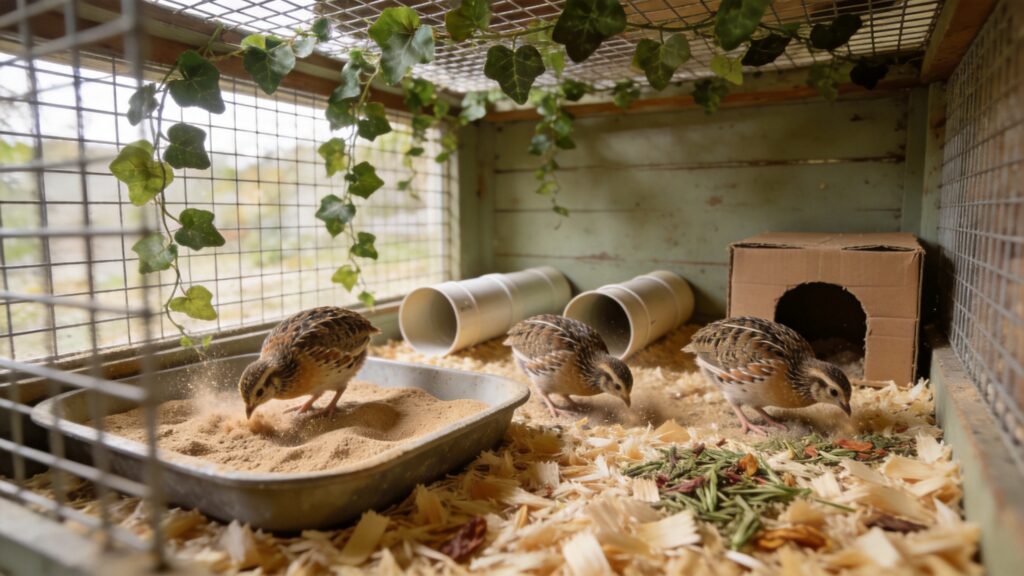
Quail instinctively bathe in dry dirt to control parasites and remove excess oil. A dust bath is non‑negotiable for happy birds. Here’s how to repurpose:
- Use a cheap cat litter pan (low sides work best) or a plastic takeout container.
- Fill with a mix of play sand (no silica dust) and a little wood ash or diatomaceous earth (food grade).
- Place it in a corner away from food and water. Quail will use it multiple times a day.
Pro tip: If your free cage has a wire floor, the dust bath will spill through. Set the pan on a solid tray or use a shallow plastic bin that clips onto the cage bars.
Hides: Safety and Social Structure
In the wild, quail dart into dense vegetation to escape predators. A cage without hiding spots creates chronic stress, which weakens immunity and reduces egg production.
- PVC pipe tunnels
- Cut 4‑inch diameter PVC into 12‑inch lengths. Bury one end in bedding so it feels like a burrow. Quail love running through them.
- Cardboard boxes
- Cut a quail‑sized door in a small shoebox. Replace every two weeks (they get soiled).
- Fake plants
- Secure sturdy plastic greenery (like ivy vines) to the cage roof. The leaves break up sightlines and reduce bullying.
Aim for one hide per two birds. Arrange them in different areas of the cage to prevent dominant hens from monopolizing the space.
Flooring: The Foot‑Friendly Foundation
Standing on bare wire 24/7 causes bumblefoot and sores. The best flooring for repurposed cages is solid with a soft top layer. Here’s a comparison table to help you choose:
| Material | Pros | Cons | Best for |
|---|---|---|---|
| Pine shavings | Absorbent, cheap, smells good | Dusty; can mold if wet | Dry indoor cages |
| Hemp bedding | Highly absorbent, low dust | More expensive | All setups (ideal) |
| Sand (play sand) | Excellent for dust bathing; easy to scoop | Heavy; needs sifting | Warm climates, large cages |
| Rubber stall mats | Soft, durable, easy to clean | Heavy; can hold moisture underneath | Outdoor coops with drainage |
Practical tip: If your free cage has a removable plastic tray, cover it with 2–3 inches of pine shavings and add a few handfuls of dried herbs (lavender, mint) to repel flies.
Step‑by‑Step: Transforming Your Cage into a Quail Paradise
Let’s put theory into practice. Follow these actionable steps for a 60‑minute makeover of that rescued cage.
- Secure the perimeter: Patch any gaps larger than ½ inch with hardware cloth and zip ties. Ensure the door closes tightly.
- Install a solid floor insert: Cut a piece of plywood or thick plastic to fit inside the cage bottom, then cover with bedding. This prevents foot injuries and makes cleaning easier.
- Add the dust bath station: Place the pan in one corner and anchor it with a heavy rock or a bendable wire hook so quail can’t tip it.
- Create a hide “zone”: Put two or three PVC tunnels, a cardboard box, and a fake plant cluster in opposite corners. Stagger the heights—some on the floor, some elevated on low platforms.
- Provide a low perch (optional): Coturnix rarely perch high, but a 2‑inch‑tall wooden dowel gives their legs exercise. Avoid elevated perches that can cause injury during startle flights.
- Add foraging enrichment: Scatter a tablespoon of cracked corn, mealworms, or millet into the bedding once a day. Quail love scratching and pecking for treats—this natural foraging behavior lowers stress hormones.
Case example: A keeper in Texas turned a free wire rabbit cage into a quail palace by adding a plastic tub as a floor, a deep sandbox, and hanging spinach leaves from the roof. Her quail stopped screaming and started laying daily.
The Science of Enrichment: Why Happy Quail Are Healthy Quail
Enrichment isn’t just about making the cage look pretty; it directly affects neurobiology and behavior. Studies show that quail provided with hiding spots, varied substrates, and dust baths have:
- Lower corticosterone (stress hormone) levels
- Reduced feather pecking and cannibalism
- Higher egg production and hatch rates
- Stronger immune responses to common diseases
Without enrichment, quail become apathetic or aggressive. A free cage that lacks these elements is no better than a crowded wire box. By adding just three components—dust bath, hide, and proper flooring—you trigger natural behaviors that keep birds physically and mentally fit.
“I rescued a dozen quail from a barren wire cage. Within a week of adding a sand bath and cardboard tunnels, two hens started laying again. They stopped fighting over the feeder. It was like flipping a switch.” — Dr. Leah Martinez, avian welfare researcher
Common Mistakes and Pro Tips
Even experienced DIYers slip up. Avoid these pitfalls that can turn a paradise into a problem.
- Mistake: Placing the dust bath under the waterer. Wet sand clumps and becomes useless. Keep baths dry and clean weekly.
- Mistake: One hide for ten birds. Bullying intensifies when only one safe spot exists. Distribute hides evenly.
- Mistake: Using slippery surfaces. Quail feet lack grip on smooth plastic or newspaper. Stick with textured bedding or add a layer of straw.
- Pro tip: Elevate food and water off the ground (but still within easy reach) to reduce bedding contamination. Use a small brick or a wooden block as a base.
- Pro tip: Rotate enrichment items every two weeks. Swap a cardboard box for a paper bag or introduce a new fake branch. Novelty keeps quail curious.
Don’t forget lighting: quail need 14–16 hours of light per day for laying, but a dark corner with a hide lets them rest. Use a simple timer for consistency.
Conclusion: Your Free Cage Is a Starting Point, Not a Limitation
A discarded cage doesn’t have to mean a dreary life for your Coturnix quail. With a dust bath, well‑placed hides, and comfortable flooring, you can build an enriched environment that rivals any expensive setup. Saving money while boosting your birds’ happiness is the ultimate win‑win. So grab that free cage, follow the steps above, and watch your quail thrive—one scratch and dust plume at a time.