Introduction
Finding red or bloody droppings in your baby chicks can be frightening. One moment, your chicks seem active and healthy; the next, you notice something reddish in the bedding and start wondering whether you’re dealing with a serious disease.
One of the first conditions that comes to mind is coccidiosis, a common intestinal disease caused by microscopic Eimeria parasites. It can damage a chick’s intestinal lining, cause bleeding, and become life-threatening if severe cases are not treated promptly.
But here’s something every backyard chicken keeper should know: not every red dropping is proof of coccidiosis.
Chickens occasionally pass normal cecal droppings that look different from ordinary feces. Small amounts of shed intestinal lining can also create reddish or orange streaks. Other intestinal diseases and injuries may cause similar changes.
The important thing is knowing what to look for, when to worry, and when to contact a poultry veterinarian.
Let’s break it down. 🐥
🩸 1. Does Bloody Poop Always Mean Coccidiosis?
No, but it should always be taken seriously.
Coccidiosis is an important possible cause, especially in young chicks. Certain Eimeria species damage the intestinal tract and can cause visible blood in droppings.
However, appearance alone cannot confirm the diagnosis.
Consider these possibilities:
- Coccidiosis: May cause bloody or mucus-filled diarrhea, weakness, reduced appetite, and poor growth.
- Normal intestinal lining shedding: Small reddish or orange mucus-like material may occasionally appear in otherwise normal droppings.
- Other intestinal infections: Bacterial and viral diseases can cause digestive problems, inflammation, and abnormal feces.
- Digestive or nutritional problems: Feed changes, poorly tolerated ingredients, or other digestive disturbances may alter droppings.
- Injury around the vent: Blood may come from a wound or irritated tissue rather than the intestinal tract.
The overall condition of the chick matters just as much as the color of its droppings.
🔍 2. How to Recognize Different Types of Red Droppings
Before assuming the worst, observe the appearance and consistency of the dropping.
A. Small reddish or orange streaks
A small amount of reddish or orange material mixed with otherwise formed droppings may be shed intestinal lining.
Chickens naturally pass different types of droppings, including cecal droppings, which can be softer and more unusual-looking than ordinary feces.
An occasional unusual dropping from an otherwise active chick is not enough to diagnose coccidiosis.
However, repeated red material, increasing amounts, or changes in the chick’s behavior need investigation.
B. Bright red blood in watery droppings
<badge color=”danger”>Urgent warning sign</badge>
Bright red blood mixed with loose or watery feces is concerning.
It can occur with intestinal coccidiosis, including infections involving the ceca.
Watch for additional signs such as:
- Weakness or unusual inactivity.
- Reduced appetite.
- Ruffled feathers.
- Hunched posture.
- Pale appearance.
- Dehydration.
Contact a poultry veterinarian promptly, especially if more than one chick is affected.
C. Dark red or bloody mucus
Dark red material, mucus, or clots may indicate intestinal irritation or bleeding.
Possible causes include severe coccidiosis and other intestinal conditions.
Do not assume that darker blood means the condition is less serious. A veterinarian needs to assess the bird and determine the likely source.
D. Orange or rusty-colored droppings
Orange or rusty material can sometimes be associated with intestinal mucus or shed lining.
It may also occur with intestinal disease.
Color alone cannot distinguish normal shedding from infection. Look at how often it occurs and whether the chick is eating, drinking, and behaving normally.
🦠 3. Coccidiosis: The Most Important Disease to Rule Out
Coccidiosis is caused by microscopic parasites called Eimeria.
Chicks become infected when they swallow infective parasite stages from contaminated litter, soil, water, feed, or equipment.
After entering the digestive tract, the parasites multiply inside intestinal cells and damage the lining.
This can interfere with nutrient absorption and, in more severe infections, cause intestinal bleeding.
Common symptoms of coccidiosis
- Bloody or mucus-filled droppings.
- Diarrhea.
- Reduced appetite.
- Weight loss or poor growth.
- Ruffled feathers.
- Weakness and lethargy.
- Huddling or hunched posture.
- Dehydration.
- Pale appearance.
Not every infected chick develops all these symptoms. Some infections cause subtle signs, while severe infections can progress quickly.
Important: Coccidiosis is not diagnosed simply by finding a few parasite eggs in droppings. A veterinarian interprets laboratory findings alongside symptoms, flock history, and, when necessary, intestinal lesions.
🐣 4. What Else Could Cause Bloody Droppings?
Coccidiosis is a major concern, but it is not the only possible explanation.
| Possible cause | What you might notice |
|---|---|
| Normal intestinal lining shedding | Occasional small reddish or orange mucus-like material; chick otherwise appears healthy |
| Coccidiosis | Bloody or mucus-filled diarrhea, weakness, poor appetite, poor growth |
| Bacterial enteritis | Diarrhea, poor condition, reduced appetite, sometimes sudden illness or deaths |
| Other intestinal infections | Abnormal droppings, digestive problems, weakness, and sometimes blood |
| Vent injury | Visible blood or irritation around the vent |
These signs overlap, so this table is a guide to possibilities—not a diagnostic checklist.
For example, bacterial enteritis can occur alongside coccidiosis. Treating only one suspected problem may not address the full illness.
A veterinarian may recommend fecal testing, bacterial testing, or a postmortem examination depending on the situation.
🚨 5. When Should You Be Worried?
Use the chick’s behavior and the pattern of abnormal droppings to judge urgency.
Monitor closely
This may be reasonable when:
- You see one unusual dropping.
- There is only a small reddish or orange streak.
- The chick remains active.
- It eats and drinks normally.
- There are no other signs of illness.
Continue observing the chick and the rest of the flock. If the abnormal material returns, seek veterinary advice.
Contact a veterinarian promptly
Do this if:
- Bloody droppings appear repeatedly.
- Several chicks develop abnormal droppings.
- A chick eats less or becomes unusually quiet.
- You notice diarrhea, weight loss, or poor growth.
- The vent appears irritated or injured.
Seek urgent veterinary help
Do not delay if you notice:
- Significant amounts of fresh blood.
- Severe weakness or inability to stand.
- A chick that cannot or will not drink.
- Marked paleness or signs of dehydration.
- Multiple sick chicks or sudden deaths.
Young chicks can deteriorate quickly. Do not wait for every symptom to appear.
🩺 6. What to Do If You Find Blood in Chick Droppings
If you discover bloody droppings, take practical steps immediately while arranging veterinary advice.
Step 1: Observe the affected chick.
Check whether it is eating, drinking, walking, and responding normally. Look for ruffled feathers, weakness, a hunched posture, and a pale appearance.
Step 2: Check the vent area.
Gently observe the area around the vent for visible blood, swelling, stuck droppings, or an injury. Avoid pulling dried material or manipulating injured tissue.
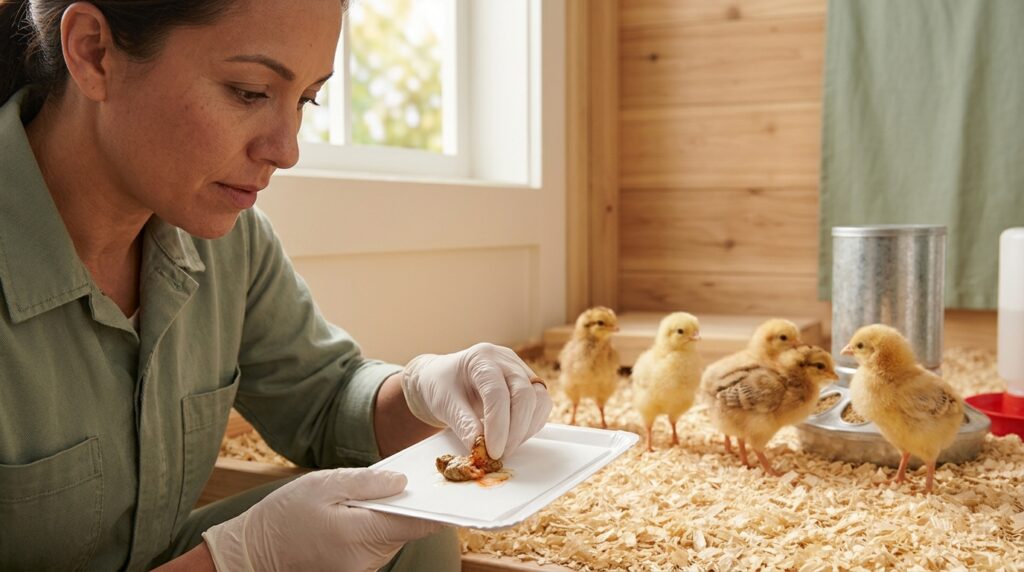
Step 3: Collect a fresh dropping sample.
If possible, collect a fresh sample in a clean, sealed container. Keep it cool and follow the veterinary clinic’s instructions for storage and delivery.
A clear photograph of the dropping can also help explain what you observed, but it cannot replace laboratory testing.
Step 4: Separate visibly sick chicks when appropriate.
If a chick is being bullied or cannot compete for food and water, place it in a clean, appropriately warm hospital area where you can monitor it closely. Avoid unnecessary handling and maintain suitable biosecurity.
Step 5: Clean contaminated areas.
Remove wet or heavily soiled bedding. Clean feeders and waterers, provide fresh water, and keep the brooder dry.
If several chicks are affected, tell the veterinarian. The entire group may need assessment even if only one bird looks sick.
💊 7. Treatment: Should You Give Amprolium?
Amprolium is an anticoccidial medication used in some poultry treatment programs. It interferes with the parasite’s ability to use thiamine (vitamin B1).
It may be appropriate when coccidiosis is suspected or diagnosed, but it is not a universal treatment for every cause of bloody droppings.
Before using it:
- Confirm that the product is appropriate for chickens of the affected age.
- Follow the specific product label and veterinary instructions.
- Check the concentration and administration directions.
- Make sure chicks can access the treated drinking water if that is the approved route.
- Check whether the chicks have received a live coccidiosis vaccine.
Do not guess a dose from an online discussion or use instructions intended for a different formulation.
Also, antibiotics do not directly eliminate Eimeria parasites. They should only be used when a veterinarian identifies a reason to treat a bacterial infection or complication.
Remember: Treatment cannot instantly repair intestinal damage. Severely affected chicks may need additional supportive veterinary care.
🌱 8. How to Reduce the Risk of Coccidiosis
Good brooder management helps reduce exposure to infective coccidia.
Keep bedding dry. Check around waterers every day. Remove wet, compacted litter and replace it with clean bedding.
Avoid overcrowding. Give chicks enough room to move, eat, drink, and rest comfortably.
Clean feeders and waterers. Prevent droppings and wet litter from contaminating feed and drinking water.
Use suitable chick starter feed. Provide a complete feed formulated for the chicks’ age and type.
Understand vaccination history. Ask your chick supplier whether the birds received a coccidiosis vaccine. Some anticoccidial medications can interfere with live vaccine programs.
Limit contamination between areas. Clean equipment and use dedicated footwear where practical. Avoid moving dirty bedding between brooders.
Monitor growth and behavior. Daily observation helps you recognize changes before an outbreak becomes severe.
No management system can guarantee that chicks will never encounter coccidia. The goal is to prevent heavy environmental contamination and reduce the risk of clinical disease.
❌ 9. Common Mistakes to Avoid
- Assuming every red dropping is coccidiosis: Normal intestinal shedding and other conditions can look similar.
- Waiting for severe symptoms: Weakness, reduced appetite, and repeated abnormal droppings deserve early attention.
- Treating without checking the product: Medication concentration and instructions vary.
- Ignoring the rest of the flock: Other chicks may have been exposed even if they look healthy.
- Using antibiotics as a coccidiosis cure: Coccidia are protozoan parasites, not bacteria.
- Relying only on photographs: Dropping appearance cannot reliably identify the cause.
- Forgetting environmental management: Medication does not replace dry bedding, clean water, and good brooder hygiene.
Final Thoughts: Look Beyond the Color 🐥
Bloody poop in baby chicks is a warning sign worth taking seriously, but it does not automatically mean coccidiosis.
An occasional small reddish or orange streak may be shed intestinal lining. Repeated bloody diarrhea, especially when accompanied by weakness, poor appetite, ruffled feathers, or dehydration, is much more concerning.
The safest approach is to observe the whole chick, check the flock, collect a fresh sample when possible, and contact a poultry veterinarian when blood is repeated or the bird appears unwell.
Good poultry care is not about guessing the disease from one dropping. It is about recognizing changes early, confirming the cause, and responding appropriately.
A healthy flock starts with attentive daily care—and knowing when a small warning sign needs professional attention. ❤️