Starting a backyard chicken flock sounds simple: buy a few chickens, put them in a coop, and collect fresh eggs. But there is an important decision to make before you buy anything. Should you start with day-old chicks, young pullets, or mature hens?
The right choice depends on your budget, how quickly you want eggs, how much daily care you can provide, and whether you actually want to raise baby chicks.
For many first-time chicken keepers, the cheapest bird is not necessarily the easiest bird. Chicks require special equipment and several weeks of intensive care, while pullets can eliminate much of the most demanding early work. Mature hens may provide eggs sooner, but their age and health need careful consideration.
Here is how the three options compare.
Starting With Chicks
Day-old chicks are the traditional choice for people who want to experience the entire chicken-raising process. They are usually the least expensive option per bird, especially when purchased from a hatchery or feed store.
However, the purchase price is only part of the cost.
Chicks need a brooder during their first weeks of life. A brooder provides a warm, protected environment until the chicks develop enough feathers to regulate their body temperature. You will also need appropriate bedding, feeders, waterers, chick starter feed, and a reliable heat source.
Temperature management is one of the first major challenges for beginners. Chicks cannot simply be placed in an outdoor coop when they arrive. Their environment needs to be monitored and adjusted as they grow.
You also need to check chicks frequently for problems involving water, feed, temperature, injuries, and bullying.
The biggest advantage is the experience. Raising chicks allows you to watch them develop from tiny, fluffy birds into young chickens. It can also give you more choices when selecting breeds.
The downside is time. You will wait several months before most pullets begin producing eggs.
Starting With Pullets
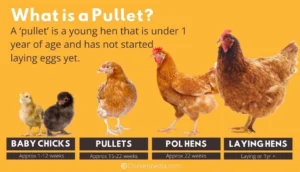
A pullet is a young female chicken that has not yet reached full maturity. For beginners who want to skip the brooder stage, started pullets can be an attractive middle ground.
A pullet around 12 to 16 weeks old, for example, has already passed through the most demanding chick stage. She has feathers, is much more independent, and generally does not need supplemental brooder heat.
This means you can avoid buying or setting up a brooder, purchasing chick-specific equipment, and managing the intense care required during the first weeks.
You will still need a secure coop, appropriate feed, clean water, bedding, and protection from predators. But the daily routine is generally much simpler than raising day-old chicks.
Another advantage is that you are closer to the egg-producing stage. Depending on breed, individual development, nutrition, and other factors, a pullet may begin laying relatively soon after you purchase her.
The trade-off is cost. Started pullets generally cost more than day-old chicks because the seller has already invested money, feed, housing, labor, and time into raising them.
For a beginner who does not want to deal with a brooder, however, that additional purchase price may be worthwhile.
Starting With Mature Hens
Mature hens are another option, particularly if your primary goal is to have an established flock rather than raise young birds.
The biggest attraction is that a healthy laying-age hen may already be producing eggs. You do not have to wait through the chick and pullet stages.
Mature hens can also be easier to evaluate. You can see their size, feather condition, temperament, and general behavior before purchasing them.
But buying adult chickens comes with its own questions.
Age matters. A hen’s laying performance changes over her lifetime, so you should know approximately how old the bird is and, when possible, understand her production history.
Health is equally important. A bargain-priced adult hen may not actually be a bargain if she arrives with an illness or parasite problem that affects the rest of your flock.
If you already have chickens, quarantine procedures become particularly important when introducing new birds. Even apparently healthy chickens can carry problems that are not immediately obvious.
Chicks vs. Pullets vs. Hens: The Cost Question
It is tempting to compare only the purchase price, but that does not tell the whole story.
Chicks may have the lowest upfront price, but you need to account for brooder equipment, heat, bedding, chick starter feed, electricity, and your time.
Pullets cost more upfront, but much of the early investment has already been made by the breeder or seller.
Hens can cost more than chicks and may provide eggs sooner, but their remaining productive years depend heavily on their age and condition.
A simple way to think about the three choices is:
Chicks = lower purchase price + more equipment and work
Pullets = higher purchase price + less early-stage work
Hens = potentially higher purchase price + fastest route to eggs
Actual prices vary considerably by breed, location, seller, season, and availability, so beginners should compare the total cost rather than focusing on the price of a single bird.
What About the Brooder?
The brooder is often the first major obstacle for inexperienced chicken keepers.
A brooder does not have to be complicated, but it does need to provide warmth, protection, ventilation, clean bedding, food, and water. Chicks are also vulnerable during this stage, so mistakes can have serious consequences.
If the thought of managing a brooder makes you uncomfortable, there is no reason you must start with day-old chicks.
Buying started pullets can allow you to become comfortable with chicken care without immediately taking on the most demanding stage of chicken development.
This is especially useful for people who want backyard eggs but are more interested in maintaining adult birds than raising babies.
Which Option Fits Your Goal?
Consider these questions before buying:
Do you want to raise baby chickens?
If yes, chicks may be the right starting point.
Do you want to avoid a brooder?
Consider started pullets or mature hens.
Do you want eggs as soon as reasonably possible?
A laying-age hen may get you there fastest, while a started pullet can provide a middle-ground option.
Is your budget very limited?
Chicks may have a lower initial purchase price, but remember to include equipment and feed in your budget.
Do you want specific breeds?
Chicks may provide more selection, particularly when purchasing from a hatchery. Availability of pullets and hens can depend heavily on your local area.
A Simple Beginner Decision Tree
Use this basic decision process:
Do you want to raise baby chicks?
→ Yes: Consider chicks.
→ No: Continue.
Do you want to avoid setting up a brooder?
→ Yes: Consider started pullets or hens.
→ No: Chicks remain an option.
Do you want eggs soon?
→ Yes: Consider a started pullet or laying hen.
→ No: A younger pullet may work well.
Are you comfortable evaluating the age and health of an adult bird?
→ Yes: Mature hens may be an option.
→ No: Buying younger birds from a reputable source may make the starting process simpler.
The Best Starting Point Is About More Than Price
There is no single correct answer for every first-time chicken keeper.
Chicks are ideal for people who want the full experience of raising chickens from the beginning and are prepared to manage a brooder. Pullets can be a practical compromise for people who want to skip the most labor-intensive stage while still starting with young birds. Mature hens can make sense for people who want to establish a flock and potentially begin collecting eggs sooner.
Before you buy, think beyond the price tag. Consider your time, equipment, housing, local chicken-keeping rules, feed budget, desired breeds, and how soon you want eggs.
For many beginners, the most important question is actually the simplest:
Do you want to raise baby chickens, or do you simply want to keep chickens?
If you enjoy the idea of watching tiny chicks grow, start with chicks. If you would rather skip the brooder and make the transition into chicken keeping easier, started pullets may be a better fit. If your priority is an established flock and eggs sooner, mature hens may be worth considering.
Choosing the right starting point can make the first season of backyard chicken keeping much more manageable—and much more enjoyable.