When it comes to building a thriving compost pile, nitrogen is the spark that ignites microbial activity. But not all nitrogen sources are created equal. Chicken manure, kitchen scraps, and grass clippings each bring unique strengths and challenges to the heap. For home composters in the United States—from suburban gardeners to urban balcony growers—understanding these differences can mean the difference between a hot, fast-working pile and a smelly, sluggish mess. This article dives deep into the science and practical realities of these three common nitrogen sources, helping you choose the best materials for your specific composting goals.
Nitrogen Content Comparison: Chicken Manure vs. Kitchen Scraps vs. Grass Clippings
Nitrogen content is typically expressed as a percentage of dry weight, but in real-world composting, moisture levels vary dramatically. Fresh chicken manure is exceptionally rich, but its nitrogen availability depends on bedding material and age. Kitchen scraps are variable, and grass clippings offer a more consistent, moderate dose. The table below summarizes typical values:
| Material | % Nitrogen | C:N Ratio (approx.) | Moisture Content |
|---|---|---|---|
| Fresh chicken manure (with litter) | 2.5–3.5% | 10:1 – 15:1 | 50–75% |
| Aged chicken manure | 1.5–2.5% | 15:1 – 20:1 | 30–50% |
| Kitchen scraps (mixed fruit/veg) | 1.0–2.0% | 15:1 – 25:1 | 70–85% |
| Fresh grass clippings | 2.5–4.0% | 12:1 – 20:1 | 75–85% |
| Dried grass clippings | 2.0–3.0% | 20:1 – 30:1 | 10–15% |
Key takeaway: Chicken manure and fresh grass clippings are both high-nitrogen players, with chicken manure often carrying slightly more concentrated nitrogen—but with important caveats about handling and potential pathogens. Kitchen scraps, while convenient, generally provide less nitrogen per pound and often come with high moisture that can waterlog a pile if not balanced with dry carbon sources.
When comparing by volume—the way most home composters measure—grass clippings feel lighter and fluffier, while chicken manure is denser and heavier. A five-gallon bucket of fresh chicken manure (with bedding) might contain 2–3 times more actual nitrogen than the same volume of mixed kitchen scraps. However, that density also means it can easily overload a small pile.
Impact on Compost Temperature and Decomposition Speed
Nitrogen content directly influences the carbon-to-nitrogen (C:N) ratio of your pile, which is the primary driver of microbial metabolism and heat generation. Microbes need carbon for energy and nitrogen to build proteins; the sweet spot for hot composting is a C:N ratio around 25:1 to 30:1.
Chicken manure, with its low C:N ratio (often below 15:1), is a powerful thermogenic material. When mixed with high-carbon bedding like straw or wood shavings (which the manure already contains if you use litter), it can rapidly push pile temperatures into the 130°F–150°F (55°C–65°C) range within 24–48 hours. This high heat accelerates decomposition, killing weed seeds and many pathogens—but only if the pile is large enough (at least 3×3×3 feet) and turned regularly.
Grass clippings, especially fresh ones, also produce significant heat. A pile consisting solely of grass clippings can become anaerobic and slimy, but when layered with browns (dried leaves, cardboard), they provide a steady, moderate temperature rise. The decomposition speed is slightly slower than chicken manure because grass decomposes more evenly and doesn’t have the same concentrated nitrogen punch.
Kitchen scraps, on the other hand, are the slowest of the three. They contain varied materials—peels, cores, coffee grounds, eggshells—and their high moisture content can cool a pile if added in large quantities without dry bulking agents. A pile relying mainly on kitchen scraps may never reach thermophilic temperatures (above 113°F/45°C) unless you deliberately supplement with a high-nitrogen source like chicken manure or fresh grass clippings.
Real-World Case: Turning a Cool Pile Hot
A suburban composter in Ohio complained that his all-kitchen-scrap-plus-leaves pile stayed at 80°F for three weeks. He added a layer of chicken manure from his neighbor’s coop (about 2 gallons mixed with pine shavings), turned the pile, and within 36 hours the core temperature hit 140°F. Within another week, the pile volume had shrunk by 30%. That’s the difference a concentrated nitrogen source can make.
Pros and Cons of Using Chicken Manure in Home Composting
Chicken manure is often touted as “black gold” by experienced gardeners, but it demands respect. Here is a balanced breakdown:
✅ Pros
- High nitrogen concentration – speeds up decomposition and boosts final compost nutrient value.
- Creates intense heat – excellent for breaking down woody materials and killing weed seeds.
- Often comes pre-mixed with carbon – bedding (straw, wood shavings) improves aeration and C:N balance.
- Rich in secondary nutrients – contains phosphorus, potassium, calcium, and trace minerals.
- Free and abundant – if you have chickens or a local source, it’s a zero-cost resource.
❌ Cons
- Pathogen risk – fresh manure can harbor E. coli, Salmonella, and other bacteria. It must be hot-composted (140°F+ for several days) or aged 6–12 months.
- Strong ammonia odor – poorly managed piles (too much manure, not enough carbon) can produce foul smells and attract flies.
- Potential for burning plants – fresh manure applied directly to soil can harm roots due to high ammonia and soluble salts.
- Variable quality – nutrition depends on chicken feed, bedding type, and age of manure.
- Regulatory concerns – some community gardens or municipalities restrict use of raw manure due to food safety.
Expert Tip from Dr. Linda Chalker-Scott (Washington State University): “Chicken manure is one of the best nitrogen sources for hot composting, but never use it un-composted on edible crops. If you can’t guarantee consistent high temperatures (above 130°F for at least three consecutive days), consider using aged manure or grass clippings instead.”
Practical Tips for Balancing Nitrogen Sources in Your Pile
No single material is perfect. The most effective composters blend nitrogen sources to harness their strengths while mitigating weaknesses. Here are actionable strategies:
1. The “Layer Cake” Method
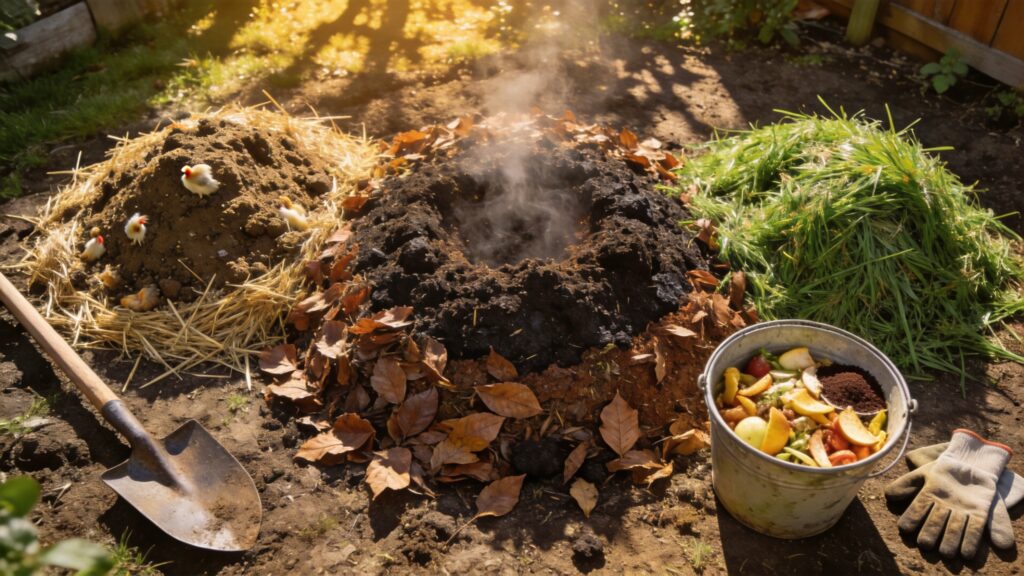
Start with a 4–6 inch base of coarse browns (twigs, straw). Add a 2-inch layer of chicken manure mixed with bedding. Top that with 4 inches of grass clippings, then 2 inches of kitchen scraps. Repeat, finishing with a 4-inch cap of browns. This layering ensures even distribution of nitrogen and prevents clumping. Moisten each layer as you go — the pile should feel like a wrung-out sponge.
2. When to Use Chicken Manure vs. Alternatives
- Use chicken manure when you need a fast, hot start (e.g., breaking down a pile of woody prunings) or when you want to boost phosphorus and potassium.
- Use grass clippings as a moderate nitrogen source that’s safer for continuous addition. They work well when you have a steady supply of browns (leaves, cardboard) to mix with.
- Use kitchen scraps as a constant, low-effort nitrogen source. Combine them with a high-carbon absorbent (shredded paper, sawdust) to prevent odors.
3. Dealing with Odor and Pests
If your chicken manure pile smells like ammonia, you have too much nitrogen relative to carbon. Immediately add a thick layer of browns—straw, shredded cardboard, dry leaves—and turn the pile. For rodent deterrence, never add raw meat or oily food scraps; if using chicken manure from coops, ensure it’s free of spilled feed that attracts rats.
4. A Sample Weekly Schedule for a 3-Bin System
- Day 1
- Collect 5 gallons chicken manure (with pine shavings) from coop. Add to bin #1 with 10 gallons dry leaves. Turn and water.
- Day 3
- Add 2 gallons kitchen scraps mixed with 1 gallon shredded cardboard. Turn bin #1 again. Begin collecting grass clippings.
- Day 5
- Add 4 gallons grass clippings to bin #1, plus more browns if pile feels wet. Temperature should be 130–150°F.
- Day 7
- Turn bin #1 and move material to bin #2 for curing. Start fresh pile in bin #1.
5. Combining Manure with Other Nitrogen Sources
For gardeners who want the best of all worlds: Mix chicken manure with grass clippings in equal volumes (by loose measure). This creates a nitrogen density roughly equivalent to a 12:1 C:N ratio—potent but manageable. Then add twice that volume of browns (e.g., 2 parts leaves to 1 part manure-clipping mix). This recipe reliably produces temperatures above 140°F and yields well-balanced compost in 8–12 weeks.
Conclusion
Chicken manure is the powerhouse of home composting, delivering unmatched heat and nutrient density, but it requires careful handling to avoid pathogens and odor. Grass clippings offer a reliable, moderate alternative that’s easier to manage, while kitchen scraps provide a steady—if slower—nitrogen source. The best approach is to blend these materials strategically: use chicken manure for kick-starting cold piles, grass clippings as a workhorse, and kitchen scraps as a daily supplement. With attention to C:N balance and moisture, any home composter can turn these “wastes” into garden gold.