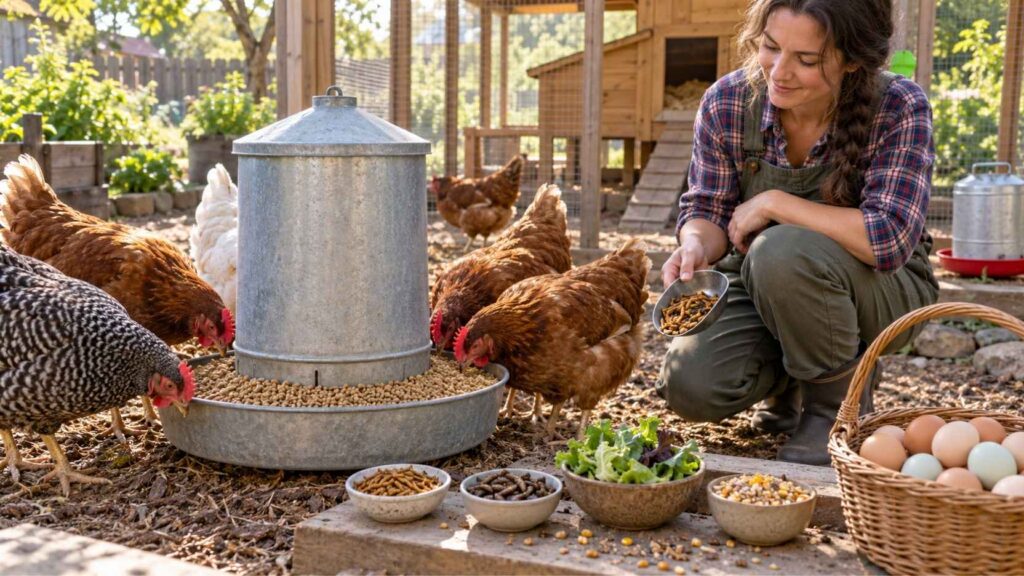
Treats can help you bond with hens, call them into the run, and simplify flock care. 🐔 The problem begins when mealworms, black soldier fly larvae, scratch grains, vegetables, and other extras become frequent enough that birds eat less complete layer feed. The most useful question is therefore not simply “Is this treat healthy?” but “How much complete feed did this replace?”
That distinction explains why a nutritious treat can still create a feeding problem. Hens have limited appetites, so every extra food changes the total mixture of protein, energy, vitamins, and minerals they consume. 🥚 Treats can stay in the routine, but they should complement the feeding system rather than quietly become the feeding system.
The Feed Bag Is Designed To Be The Main Meal
A complete layer ration is formulated to provide balanced nutrition when used as the primary feed. 🌾 Choose one appropriate for the birds’ age and production stage, then follow the manufacturer’s feeding directions. Complete feed is designed as a diet, while a handful of insects, corn, fruit, or kitchen scraps is not.
Individual foods can contain useful nutrients without supplying everything a laying hen needs in the right proportions. Mealworms may contribute protein and fat, greens add variety, and scratch supplies energy, but none automatically duplicates the balance of a complete ration. If extras reduce regular feed intake, the flock can end up eating plenty while receiving a less predictable overall diet.
The Question Isn’t “Is This Treat Healthy?”
Backyard keepers often judge treats one item at a time: mealworms contain protein, seeds provide energy, and vegetables seem wholesome. 🍃 Nutrition, however, depends on the whole day’s intake rather than whether each ingredient sounds healthy on its own. Whenever a treat becomes routine, ask how much complete feed it may be displacing.
Frequency can matter as much as portion size because several small servings add up. Larvae in the morning, scraps at midday, scratch later, and another reward at coop time may each look modest yet collectively teach hens to wait for favorites. 🍽️ That is how “just a little” can become a meaningful share of the daily diet.
Mealworms And Soldier Fly Larvae Aren’t A Complete Layer Ration
Mealworms and black soldier fly larvae can be useful poultry foods, and insect ingredients are also used in research on formulated chicken diets. 🔬 But using an insect ingredient inside a ration balanced for energy, amino acids, minerals, and other nutrients is different from replacing an unknown amount of complete feed with repeated handfuls of larvae. A useful ingredient is not automatically a complete diet.
This matters when owners give mealworms for chickens every day because protein is often associated with better eggs. Egg formation needs protein, but it also depends on adequate energy, vitamins, minerals, water, and calcium, so more protein-rich treats do not guarantee better production. 🥚 A high-value treat can still unbalance the total ration if hens begin eating noticeably less complete feed.
Signs Your Treat Routine May Be Too Generous
The clearest warning signs often appear at the feeder: hens rush toward you but show less interest in regular feed, the ration lasts much longer than expected, or birds wait for the next snack session. 👀 You may also see more selective eating when several foods are offered together and the flock can pick out favorites. These behaviors do not prove a deficiency, but they justify reviewing how much daily intake comes from extras.
Do not assume every egg change is caused by treats, because laying can also shift with age, molt, daylight, heat, stress, broodiness, illness, and other factors. A temporary drop in eggs or an unusual shell should therefore trigger broader observation rather than an instant conclusion. The strongest feeding clue is high treat intake combined with a clear drop in complete-feed consumption.
Use Treats As Tools, Not The Diet
Treats are easiest to control when they have a specific purpose. 🐓 A small reward can call chickens back into the run, reinforce a routine, help with handling, or provide enrichment without becoming a second meal plan. This keeps treats useful while preserving complete feed as the nutritional foundation.
It also prevents yesterday’s handful from becoming several servings simply because the birds react enthusiastically. Chickens can behave as though they are starving while standing near a full feeder, so excitement should not be confused with nutritional need. 😄 Keep the layer ration available, use extras deliberately, and judge the routine by what the birds eat across the entire day.
Run A Simple 7-Day Feed Reset
If you suspect treats are crowding out the layer ration, simplify the routine for one week. 📋 Keep appropriate complete feed and clean water consistently available, sharply reduce routine extras, and observe whether the birds return to the feeder more regularly. If the flock forages outside, record that too because pasture and insects can also affect commercial feed consumption.
A seven-day reset is an observation tool, not a diagnosis or a promise that egg production will immediately change. Record feed use, flock behavior, eggs, weather, molt, and unusual events, then look for patterns rather than reacting to one day. If birds show illness, marked weight loss, lethargy, breathing problems, persistent diarrhea, or other concerning changes, seek veterinary help rather than trying to solve everything through treat changes.
7-Day “Feed Reset” Observation Sheet
| Day | Complete Feed | Treats | Feeder Behavior | Eggs / Changes | Notes |
|---|---|---|---|---|---|
| 1 | Record baseline | None or minimal | Waiting or eating? | Record output | Weather, molt, stress |
| 2 | Compare use | Minimal | More feeder visits? | Record changes | Note waste |
| 3 | Watch trend | Minimal | Less treat-seeking? | Record changes | Note forage |
| 4 | Keep consistent | Minimal | Normal rhythm? | Record changes | Note disruptions |
| 5 | Compare intake | Minimal | Feed interest stable? | Record changes | Observe condition |
| 6 | Maintain routine | Minimal | Consistent use? | Record changes | Avoid new extras |
| 7 | Review week | Plan future use | Establish baseline | Compare pattern | Decide next step |
The sheet helps remove noise from the feeding routine. 📊 If complete-feed consumption becomes steadier after extras are reduced, the old treat schedule may have been displacing the ration; if nothing changes, that is useful information too. Reintroduce treats conservatively so their management value remains without rebuilding the same pattern.
Do not use the reset as a search for instant egg improvement because egg production does not respond to only one variable. Instead, use it to establish a clearer baseline for what the hens actually eat, how often they visit the feeder, and whether treats are acting as extras or meals. That makes future troubleshooting much easier.
The “More Is Better” Trap Is The Real Problem
There is nothing inherently wrong with giving laying hens appropriate mealworms, black soldier fly larvae, greens, scratch, or other treats in moderation. ⚖️ The mistake is assuming that because an ingredient contains something beneficial, increasing it must improve the flock; nutrition depends on balance, and maximizing one food can reduce intake of the ration designed to provide everything else. The same principle applies to protein snacks, mineral supplements, and many other “healthy” additions.
If you are wondering whether too many chicken treats are affecting egg production, start by watching the feeder. Make sure the complete layer ration remains the main food, use treats for purposeful jobs such as training and enrichment, and pay attention when regular feed consumption falls. 🐔 The simplest rule is also the easiest to remember: “How much complete feed did this replace?”