You installed shade cloth, moved the waterer out of direct sunlight, and made sure your chickens have somewhere to escape the summer sun. ☀️ Yet by late afternoon, the run still feels uncomfortable, the ground is warm, and your hens seem more interested in panting than scratching around. If you are wondering how to keep a chicken run cool when shade is already available, the answer may be hiding in the surrounding surfaces and airflow.
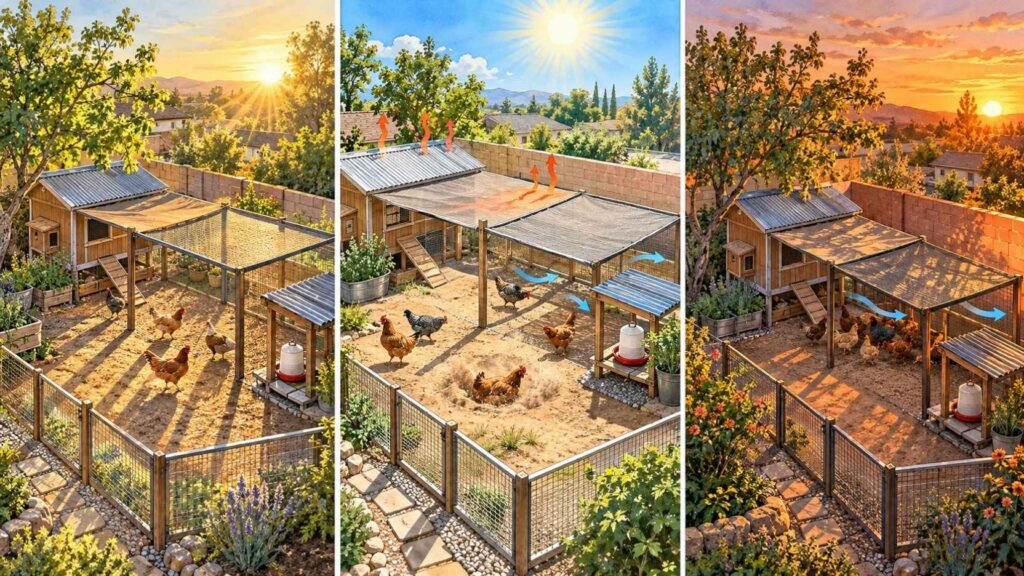
A shaded run is not automatically a cool run because sunlight is only one source of environmental heat. Nearby brick walls, metal roofing, concrete floors, and poorly ventilated corners can keep radiating heat even after direct sunlight disappears. 🐔 A practical three-time-of-day heat audit helps you identify these hidden problems before spending money on unnecessary improvements.
Why Does a Shaded Chicken Run Still Feel Hot?
Shade reduces direct solar exposure, but it does not necessarily lower the surrounding air temperature enough to keep chickens comfortable. 🌡️ Heat absorbed by nearby surfaces can radiate toward the birds, while restricted airflow allows warm air to remain trapped around resting areas. A chicken run surrounded by walls or solid fencing may therefore feel hotter than an open enclosure receiving similar amounts of shade.
Humidity adds another complication because chickens rely partly on evaporative cooling through panting rather than sweating like humans. When the surrounding air is humid, that cooling process becomes less effective, especially when airflow is limited. 💨 This means a genuinely comfortable resting area needs a combination of shade, ventilation, accessible water, and surfaces that do not continually contribute additional heat.
How to Check Your Chicken Run in the Morning, Noon, and Late Afternoon
Instead of relying on how the enclosure feels during one quick visit, inspect it at three different times on a typical hot day. Use an inexpensive digital thermometer and hygrometer to record temperature and relative humidity near chicken height, keeping the sensor shaded from direct sunlight. 📋 Record where sunlight lands, whether air moves through the enclosure, and which resting spots the flock actually uses.
Consistency matters more than expensive equipment because the goal is to compare conditions between locations and times. Check the same spots during each visit, including the waterer, dust-bathing area, coop doorway, and any wall-facing corner. Repeat the audit during a hotter day if necessary, since cloud cover, wind, and seasonal sun angles can change the results.
Morning: Find the Areas That Heat Up First
Begin your inspection between approximately 8 and 9 a.m., adjusting the schedule to local sunrise and weather conditions. 🌅 Notice which surfaces already receive direct sunlight, especially metal panels, dark fencing, bare ground, and east-facing sections of the run. These locations may become increasingly uncomfortable as the day progresses.
Watch where chickens naturally gather before the strongest heat arrives. If they consistently avoid a particular corner or exposed patch, note whether it lacks shade, airflow, or comfortable ground. A morning observation gives you a useful comparison for understanding how conditions change later.
Midday: Identify Hot Surfaces and Stagnant Air
Return around noon or early afternoon, when solar exposure is often intense, although the day’s highest air temperature may occur later. ☀️ Check whether overhead shade is actually protecting the ground where chickens rest, rather than simply covering the roofline. Compare shaded corners with more open sections and look for areas where warm air seems trapped.
Pay attention to the ground because chickens spend much of their time close to surfaces that absorb sunlight. A shaded concrete slab may remain warm after earlier exposure, while loose soil beneath established shade may offer a more comfortable resting location. 🪨 Never assume that two shaded areas provide identical conditions simply because neither receives direct sunlight.
Late Afternoon: Look for Heat That Refuses to Leave
The final inspection is particularly important because some enclosures become most uncomfortable after several hours of heating. 🌇 Between approximately 3 and 5 p.m., depending on local conditions, check whether west-facing sunlight reaches areas previously protected by midday shade. Also inspect walls, roofs, and paving that have absorbed heat throughout the day.
A brick boundary wall can continue releasing stored heat after the sun moves away, creating a warm zone beside the enclosure. Meanwhile, a solid west-facing barrier may block direct sunlight but also restrict the breezes needed to remove accumulated heat. Record whether your chickens avoid these locations or gather toward the breezier side.
Which Materials Can Create Heat Traps Around Your Coop?
Different construction materials absorb, reflect, and release heat differently, making material choice an important part of chicken-run temperature management. 🏠 Metal roofing exposed to sunlight can become extremely hot, while brick, stone, and concrete can store substantial heat and release it gradually. Dark surfaces commonly absorb more solar energy than comparable light-colored surfaces, although color alone does not determine how hot an enclosure becomes.
Check for chicken coop heat traps around roof overhangs, uninsulated metal panels, paved floors, and walls facing afternoon sunlight. An infrared thermometer can help identify unusually hot surfaces, but it measures surface temperature rather than the actual air temperature surrounding your birds. 🔍 You can conduct a useful initial inspection without one by recording sunlight exposure, airflow, surface materials, and chicken behavior without touching potentially hot metal.
How Can You Make a Chicken Run Cooler Without Rebuilding It?
Low Budget: Improve Shade Placement and Ground Comfort
Start by moving existing shade to the locations that need protection during the hottest hours, rather than covering whichever section is easiest to reach. 🌿 Provide accessible shaded loose soil for dust bathing, and consider lightly dampening a separate small patch of ground during dry weather without saturating litter or creating stagnant puddles. These changes can improve resting options without major construction.
Keep drinking water cool, clean, and continuously available, refreshing containers whenever they become excessively warm. Remove unnecessary obstacles blocking natural breezes, and inspect whether nearby vegetation offers shade without creating stagnant corners. Small adjustments often reveal whether the main problem is solar exposure or inadequate ventilation.
Medium Budget: Install Adjustable Shade Cloth and Better Ventilation
An adjustable shade cloth for a chicken run can protect different sections as sunlight changes direction. 🧵 Position it to reduce direct exposure while preserving open sides for airflow, and securely anchor the material against wind damage. A higher shade percentage is not automatically better if installation turns an otherwise breezy enclosure into a poorly ventilated space.
Consider adding safely positioned vents to an enclosed coop or an outdoor-rated fan where natural airflow is consistently inadequate. Keep electrical components protected from rain, dust, curious birds, and water sources, using properly installed outdoor electrical connections. 💨 If you add misting, monitor humidity and bedding moisture because evaporative cooling becomes less effective when the air is already humid.
Higher Budget: Address Roof Heat and Structural Airflow Problems
Persistent overheating may justify improvements to roofing, wall exposure, or the overall enclosure layout. 🏗️ Suitable roof insulation, reflective roofing materials, properly designed ventilation openings, and increased separation from heat-retaining walls can reduce unwanted heat gain. Evaluate how each change affects rain protection, predator security, and winter ventilation before construction begins.
Avoid surrounding the entire run with solid panels simply to block sunlight, since doing so can reduce the movement of fresh air. Where appropriate, combine overhead shade with open mesh sides and strategically positioned afternoon barriers. The objective is not maximum enclosure coverage but reliable shade with enough airflow to carry heat away.
When Is Your Chicken Run Too Hot for the Birds?
Chickens can begin showing heat-stress behaviors as temperatures approach approximately 80–85°F (27–29°C), although individual tolerance varies with humidity, breed, age, health, and acclimatization. 🐔 Common warning signs include panting, holding wings away from the body, reduced activity, and increased drinking. Treat these behaviors as reasons to assess conditions and improve cooling rather than relying on a single thermometer reading.
Severe lethargy, weakness, loss of balance, collapse, or persistent distressed panting require immediate attention. Move the affected bird to a cooler, shaded, well-ventilated location, offer fresh cool water without forcing it to drink, and contact a veterinarian promptly. 🚨 Gentle cooling with cool—not icy—water around the lower body may help while seeking veterinary guidance, but delaying urgent care to experiment with home remedies can be dangerous.
Chicken-Run Heat Map: Morning, Midday, and Afternoon
Use this worksheet to compare how different sections of the enclosure behave throughout the day. 📝 For each location, record air temperature, relative humidity, sunlight exposure, airflow, and whether chickens appear comfortable. The purpose is to identify recurring hot spots rather than assume every location needs the same improvements.
| Run Location | Morning | Midday | Late Afternoon |
|---|---|---|---|
| Coop doorway | ______ | ______ | ______ |
| West-facing wall | ______ | ______ | ______ |
| Water station | ______ | ______ | ______ |
| Dust-bathing area | ______ | ______ | ______ |
| Center of run | ______ | ______ | ______ |
| Shaded resting corner | ______ | ______ | ______ |
Record for each location: Temperature ___°F/°C · Humidity ___% · Sun/Shade ___ · Airflow ___ · Chicken behavior ___
After recording your observations, circle the locations where heat repeatedly builds up or ventilation appears weakest. Compare those findings with the materials, barriers, and shade patterns around each location before choosing a solution. ✅ Repeat your measurements after making changes to determine whether the improvements actually produced a more comfortable environment.
Build a Cooler Chicken Run by Fixing the Actual Problem
Learning how to cool a chicken run naturally starts with understanding where unwanted heat comes from and why it remains trapped. 🌤️ A roof may block sunlight while a nearby wall radiates heat, or an additional shade panel may unintentionally prevent the breeze that previously cooled the enclosure. Your three-time-of-day audit helps separate these problems so each improvement addresses a specific cause.
The best chicken-run cooling strategy does not necessarily require expensive equipment or a complete rebuild. By improving moving shade, airflow, ground comfort, water availability, and protection from heat-retaining surfaces, you can create more reliable resting areas throughout the day. 🐓 Most importantly, judge success by the environment at chicken level and the birds’ behavior—not simply by how much of the run is covered with shade.