
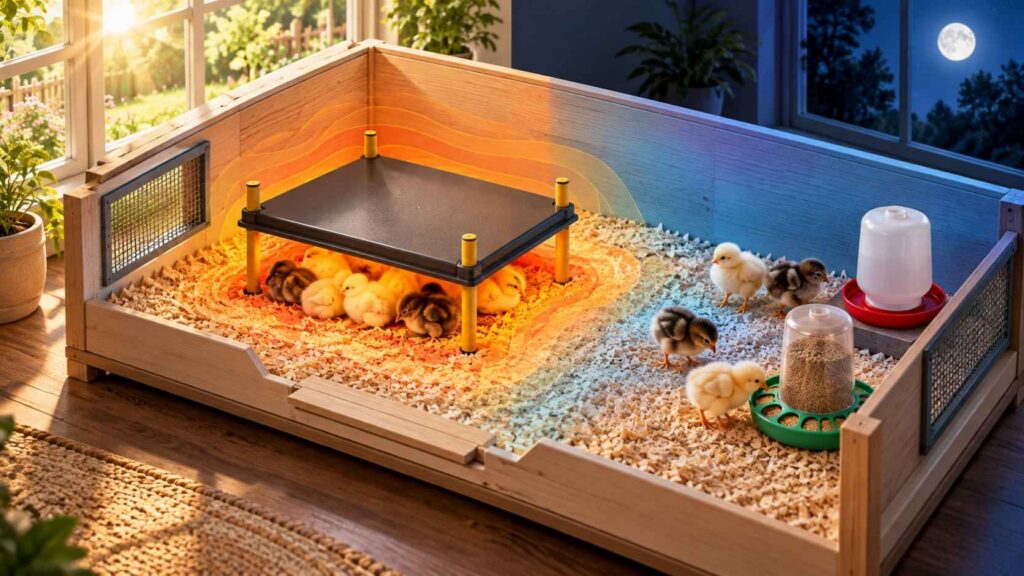
When summer temperatures climb, keeping baby chicks warm can suddenly feel like the opposite of what you should be doing. 🐣 You know young chicks need supplemental heat, but watching them spread out around the brooder during a heatwave raises an understandable question: Should you turn off the chick heat plate in summer? The answer depends on your chicks’ age, their actual environment, their behavior, and whether they can move freely between warmer and cooler areas.
A heat plate does not work exactly like a traditional heat lamp, so outdoor temperature alone cannot tell you when to unplug it. ☀️ A young chick may need a warm refuge during a cool night even if the same brooder becomes uncomfortably hot during the afternoon. This guide explains how to manage chick heat plates during summer, recognize temperature problems, and make safer daytime and nighttime decisions without relying on a universal switch-off age.
Do Baby Chicks Need A Heat Plate When It’s Already Hot Outside?
Newly hatched chicks cannot regulate their body temperature as effectively as older, fully feathered chickens, making supplemental warmth especially important during their earliest weeks. 🐥 However, a heatwave can make additional heating unnecessary during certain hours if the brooder is already warm enough and the chicks show no signs of chilling. The important measurement is the actual temperature around the chicks, not merely the temperature reported outside.
Most chick heat plates create a sheltered warm area through direct or radiant heating rather than warming the entire brooder like a heat lamp. This allows chicks to move underneath when they need warmth and leave when they become comfortable, provided the surrounding space remains suitable. 🌡️ The goal is not to keep the entire brooder hot but to give chicks access to appropriate warmth without trapping them in excessive heat.
The First Six Weeks: How Temperature Requirements Change
Traditional brooding recommendations commonly begin around 90–95°F during the first week and decrease approximately 5°F each week as chicks develop feathers. University poultry extension guidance uses these temperatures as general starting points, with adjustment based on flock behavior and environmental conditions. 📅 These values describe conventional brooding conditions and must not be treated as required heat-plate surface temperatures, because contact and radiant heat plates operate differently.
Typical Brooder Temperature By Age
| Chick Age | Conventional Brooding Reference |
|---|---|
| Week 1 | 90–95°F (32–35°C) |
| Week 2 | 85–90°F (29–32°C) |
| Week 3 | 80–85°F (27–29°C) |
| Week 4 | 75–80°F (24–27°C) |
| Week 5 | 70–75°F (21–24°C) |
| Week 6 | Approximately 65–70°F (18–21°C), depending on conditions |
These ranges are useful references, but chicks growing under a contact-style heat plate may experience adequate warmth even when a nearby air thermometer reads lower. Many chicks become substantially better at regulating temperature around four to six weeks as feather coverage develops, although breed, growth, health, and weather can affect readiness. Always follow the heat plate manufacturer’s operating instructions and use chick behavior alongside temperature measurements, rather than trying to force the plate itself to match this table.
When Is It Reasonable To Switch The Heat Plate Off During The Day?
Turning off a chick heat plate during the hottest afternoon hours may be reasonable when the environment is already sufficiently warm and the chicks are active, comfortable, and not seeking additional heat. ☀️ This is especially relevant for older, well-feathered chicks that no longer rely heavily on supplemental warmth. For newly hatched chicks, however, removing the only warm refuge requires much greater caution because their temperature needs can change quickly.
Before switching off the plate, measure the brooder’s air temperature at chick level and observe the birds for several minutes while they move, eat, drink, and rest. If they are panting, avoiding the heater, or gathering in the coolest area, additional heat may be worsening an already uncomfortable situation. 💧 Turning the plate off does not solve a dangerously overheated brooder, so shade, safe ventilation, appropriate space, and consistently available drinking water remain essential.
Should The Chick Heat Plate Go Back On At Night?
A summer afternoon and the following night can create completely different brooding conditions. 🌙 An outdoor brooder may lose heat rapidly after sunset, particularly when wind, rain, or a sudden weather change lowers the temperature. This means a heat plate that was unnecessary during the afternoon might still provide an important warm retreat overnight.
Before bedtime, review the forecast, check the actual brooder temperature, and consider how well-feathered your chicks are. Younger chicks should retain reliable access to suitable warmth whenever nighttime conditions could leave them chilled, and older chicks should be assessed based on their development rather than their age alone. 🐣 If you have temporarily switched the plate off, restore appropriate heat before the temperature falls too low and verify that the equipment is working correctly.
How To Tell Whether Chicks Are Too Hot Or Too Cold
Chick behavior is one of the most useful indicators of whether the brooder’s heating arrangement is suitable. Comfortable chicks typically move around normally, visit food and water, rest peacefully, and use the warm area when needed rather than staying tightly crowded together. 😊 Some will sleep beneath the plate while others explore, and that variation can be normal when all chicks have adequate space.
Signs Your Chicks May Be Too Hot
Chicks experiencing excessive warmth may move away from the heat source, spread their wings, pant, or appear unusually inactive. 🥵 Persistent panting or weakness deserves immediate attention because heat stress can become serious, especially when the entire enclosure is hot. Reduce unnecessary heating, improve the environment safely, provide accessible drinking water, and seek veterinary guidance for severe or persistent distress.
Signs Your Chicks May Be Too Cold
Cold chicks often huddle tightly, crowd beneath the heat plate, or produce repeated loud, distressed chirps. ❄️ Crowding against one side can also indicate an uncomfortable draft rather than insufficient heating alone. Check the plate’s operation, height, surrounding temperature, and airflow before making adjustments, then observe whether normal activity returns.
Heat Plate Positioning Mistakes That Can Make Summer Brooding Harder
Even a properly functioning heat plate can become troublesome when positioned incorrectly. A plate placed too low may prevent growing chicks from entering comfortably, while one positioned too high may fail to provide enough warmth for smaller birds. 🛠️ Follow the manufacturer’s height recommendations, remembering that some contact-style models are designed to sit close to chicks’ backs while other designs have different requirements.
Your brooder should provide enough open floor space for every chick to leave the heated area without crowding, and feeders and waterers must remain easily accessible. Avoid positioning equipment so close to corners that chicks can become trapped, and do not allow bedding to cover heating equipment or electrical connections. 🌬️ Maintain fresh airflow without strong drafts directly across the chicks, and keep the brooder protected from rain, direct sunlight, and dangerous temperature buildup.
What If The Power Goes Out Or The Weather Suddenly Changes?
Power interruptions are especially concerning when chicks still rely on their heat plate for warmth during cooler hours. 🔌 Keep a suitable backup plan that includes a safe indoor location, a thermometer, and an appropriate alternative heating arrangement if supplemental heat becomes necessary. Never use improvised open flames, indoor generators, or unapproved heating devices that could create fire, electrical, or carbon monoxide hazards.
During a sudden weather change, observe the flock immediately rather than assuming yesterday’s heat settings remain appropriate. ⛈️ Move chicks away from rain and drafts, restore an appropriate heat source when necessary, and avoid sealing the brooder so tightly that ventilation becomes inadequate. If chicks become weak, unresponsive, or severely distressed, treat the situation as urgent and consult a qualified veterinarian.
Chick Heat-Plate Decision Flowchart
This simple decision guide helps you decide whether your chicks need continued access to supplemental heat during summer. 📋 Begin with chick age, check actual conditions, observe behavior, and assess whether nighttime cooling could change the situation. The flowchart is a practical observation aid, not a replacement for manufacturer instructions or individual chick health assessment.
Heat Plate On Or Off? Follow The Decisions
| Decision Point | Follow This Direction |
|---|---|
| START → Are the chicks newly hatched or still poorly feathered? | Yes: Prioritize a safe warm refuge and monitor closely. No: Continue assessing temperature and behavior. |
| ↓ Is the brooder already excessively hot? | Yes: Reduce unnecessary heating and correct the overheated environment. No: Continue. |
| ↓ Are chicks huddling or giving repeated distress calls? | Yes: Investigate chilling, drafts, and heat-plate operation. No: Continue. |
| ↓ Are chicks comfortable without supplemental heat? | Yes: A monitored daytime switch-off may be appropriate. No: Maintain suitable supplemental warmth. |
| ↓ Will temperatures fall overnight? | Yes: Reassess and restore needed heat before cooling occurs. No: Continue monitoring. |
| FINISH → Are chicks eating, drinking, and behaving normally? | Yes: Maintain the appropriate setup. No: Investigate and adjust promptly. |
Copy and Print the table and keep it near your brooder alongside a thermometer and the heat plate’s operating instructions. 📝 Check the chicks during the morning, afternoon, and evening, with additional checks during extreme weather or after changing heating arrangements. A thermometer that records daily maximum and minimum air temperatures can also help reveal overnight drops or afternoon heat spikes that you might otherwise miss.
Final Thoughts: Let Conditions And Chick Behavior Guide The Decision
So, when should you turn off a chick heat plate in summer? The practical answer is when the chicks are sufficiently developed, their environment provides adequate warmth without the plate, and their behavior shows that they remain comfortable. 🐔 For younger chicks, the safest routine usually involves preserving access to a suitable warm area while preventing excessive heat throughout the rest of the brooder.
There is no single birthday when every chick becomes ready to live without supplemental warmth, and summer weather does not remove the need for observation. 🌡️ Monitor temperature changes, watch how chicks use the plate, and reassess the setup before nighttime cooling or sudden storms. A successful brooder gives chicks a choice between warmth and cooler space while keeping the entire environment safe.




