
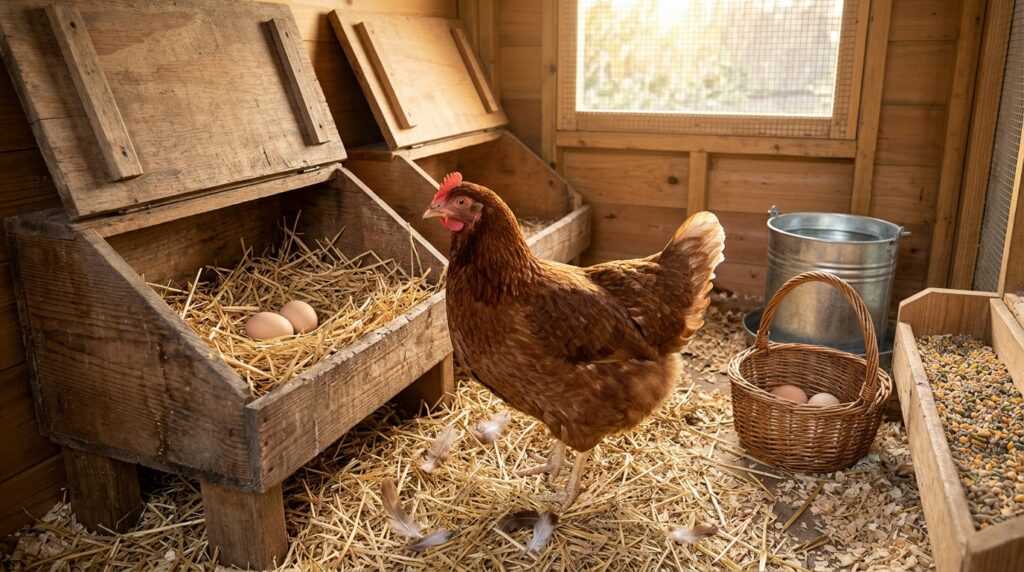
You walk into the chicken coop expecting to collect fresh eggs, but the nesting boxes are empty. Yesterday there were three eggs. Today, there are none.
If your hens have suddenly reduced their egg production or stopped laying altogether, it is natural to wonder whether something is wrong.
The good news is that a drop in egg production does not always mean your chickens are sick. Hens naturally lay fewer eggs as they age, daylight changes, and their bodies go through molting or broody periods. However, nutrition problems, heat stress, parasites, and illness can also affect laying.
The important thing is to understand what is normal for your flock and recognize when a change needs attention.
This guide explains the most common reasons hens stop laying eggs, what you can check at home, and when to contact a poultry veterinarian.
🥚 1. Age: Older Hens Naturally Lay Fewer Eggs
One of the most common reasons for declining egg production is age.
Young pullets generally begin laying at around 18–22 weeks, although breed, nutrition, health, and season can affect the timing. Egg production typically increases after laying begins and reaches a peak before gradually declining. Ask IFAS+1
Many hens produce their highest number of eggs during their earlier laying years. As they get older, they may:
- Lay fewer eggs per week.
- Take longer breaks between eggs.
- Produce eggs with changing shell quality.
- Experience more irregular laying cycles.
- Spend longer periods resting or molting.
This does not mean an older hen suddenly becomes useless.
Backyard hens can remain part of a flock for years, even when their egg production declines. Some owners keep older birds because they are valued companions and established members of the flock.
What to do: Keep records of each hen’s age and laying history. Compare her current production with her own previous pattern rather than expecting every bird to lay at the same rate.
🍂 2. Seasonal Changes and Shorter Daylight
Light plays an important role in a hen’s reproductive cycle.
As natural daylight decreases, many hens reduce egg production or temporarily stop laying. This is especially noticeable in locations with pronounced seasonal changes and shorter winter days.
Extension guidance commonly identifies approximately 14 hours of daily light as a useful reference for maintaining egg production, although recommendations and management programs vary. Ask IFAS+2
If your hens receive only natural daylight, you may notice:
- Fewer eggs during shorter days.
- More irregular laying.
- A seasonal pause in production.
- Molting around the same general period.
Should you add artificial lighting?
Some flock owners use supplemental lighting to maintain more consistent egg production.
However, artificial lighting should be planned carefully. Sudden changes in lighting can disrupt the flock, and hens still need a regular dark period for rest.
Before adding lights:
- Check the recommendations for your hens’ age and breed.
- Use a consistent lighting schedule.
- Avoid sudden increases or decreases in light exposure.
- Provide a daily dark period.
- Consider the birds’ overall health and welfare, not only egg numbers.
You do not have to force hens to lay throughout the year. A seasonal production break can be a reasonable part of natural flock management.
🪶 3. Molting: Your Hen Is Replacing Her Feathers
Molting is a natural process in which chickens lose old feathers and grow new ones.
During this period, a hen’s body directs resources toward feather replacement, and egg production often decreases or temporarily stops.
Chicken Molting: Help Feathers Regrow Faster – Happy Cluck Organics
Common signs of molting include:
- Loose feathers around the coop.
- Thinning feathers on the body.
- New pin feathers emerging through the skin.
- A temporary reduction in egg production.
- Changes in appearance and activity.
Molting can vary in duration and intensity. Not every hen molts at exactly the same time or follows the same pattern. Ask IFAS+1
How should you care for molting hens?
- Provide a complete, balanced diet formulated for the flock’s needs.
- Keep clean water available at all times.
- Reduce unnecessary handling if birds seem uncomfortable.
- Maintain clean, dry, well-ventilated housing.
- Monitor body condition and general behavior.
Avoid adding large amounts of random protein supplements without considering the nutritional balance of the complete feed.
Molting is not automatically a sign of disease, but a hen that is weak, losing weight, or showing other concerning symptoms should be assessed.
🥚 4. Broodiness: When a Hen Wants to Hatch Eggs
Sometimes a hen stops laying because she becomes broody.
A broody hen has a strong instinct to sit on eggs and incubate them, even when the eggs are not fertile.
You may notice that she:
- Spends most of the day inside the nesting box.
- Refuses to leave the nest for long periods.
- Becomes defensive when you approach.
- Fluffs her feathers or makes distinctive clucking sounds.
- Collects or sits on eggs from other hens.
Broodiness can last for several weeks if the hen is allowed to continue sitting. During this time, she generally stops laying. MSD Veterinary Manual+1
What should you do?
If you want to hatch chicks, make sure you have a suitable plan for fertile eggs, incubation, and chick care.
If you do not want chicks, monitor the hen to ensure she leaves the nest to eat, drink, and move around. Some owners use a suitable broody-breaking setup, but it should be safe, well-ventilated, and appropriate for the bird.
Avoid repeatedly frightening or roughly handling a broody hen. If she becomes weak, stops eating or drinking, or appears unwell, seek veterinary advice.
🌾 5. Poor Nutrition or Not Enough Water
Egg production requires consistent nutrition. A hen that does not receive enough energy, protein, calcium, or other essential nutrients may lay fewer eggs.
One common problem is allowing treats and scratch grains to replace too much of the complete feed.
Corn, table scraps, vegetables, and kitchen leftovers can be enjoyable additions, but they should not displace a nutritionally balanced ration.
Check the basics
Complete layer feed: Provide an age-appropriate, nutritionally balanced feed designed for laying hens.
Calcium: Laying hens need adequate calcium for eggshell formation. Offer an appropriate calcium source, such as oyster shell, according to feeding guidance.
Clean water: Keep fresh water available throughout the day. Water intake is particularly important during hot weather.
Treat portions: Keep treats limited so the main diet remains nutritionally balanced.
Feed storage: Store feed in a dry, secure container to protect it from moisture, pests, and contamination.
A hen that eats less because of poor feed quality, competition, or illness may also produce fewer eggs. Nutrition problems can therefore be connected to other flock-management issues. Ask IFAS+1
☀️ 6. Heat Stress and Environmental Conditions
High temperatures can affect appetite, water intake, and egg production.
Chickens may eat less during hot weather, which can reduce the nutrients and energy available for laying. Heat stress can also affect egg size and shell quality. Ask IFAS+1
Watch for:
- Panting or open-mouth breathing.
- Wings held away from the body.
- Reduced appetite.
- Unusual inactivity.
- Excessive drinking.
- Fewer eggs or thinner shells.
Help hens stay comfortable
- Provide continuous access to clean, cool drinking water.
- Make sure the coop has good airflow.
- Provide reliable shade in outdoor areas.
- Avoid overcrowding.
- Keep bedding dry and housing well maintained.
- Check waterers frequently during hot weather.
Do not rely on fans or shade alone if a hen is already showing signs of serious heat stress. Move her to a cooler, safe environment and contact a veterinarian if she is weak, distressed, or not recovering.
Cold, damp, drafty housing and other environmental stressors can also affect flock health and production. The goal is a comfortable, clean, and appropriately ventilated coop rather than simply making it warmer or colder.
🐛 7. Parasites and Disease
A hen may stop laying because she is dealing with a health problem.
External parasites, such as mites and lice, can irritate birds, interfere with rest, and contribute to poor condition. Internal parasites and infectious diseases can also affect appetite, health, and egg production.
Look for:
- Pale combs or wattles.
- Weight loss.
- Dirty feathers around the vent.
- Excessive scratching or feather picking.
- Visible mites or lice.
- Diarrhea or unusual droppings.
- Reduced appetite.
- Lethargy or isolation from the flock.
Some illnesses cause a sudden drop in egg production, particularly when several birds are affected.
Do not assume that an empty nesting box is simply a seasonal issue if your hens also appear sick.
Contact a poultry veterinarian if you notice persistent symptoms, unexplained weight loss, breathing problems, or multiple birds becoming ill. Sudden deaths or suspected avian influenza require prompt reporting to the appropriate animal-health authority.
🏡 8. Stress, Moving, and Changes in the Flock
Chickens are sensitive to changes in their surroundings.
A hen may reduce or temporarily stop laying after experiencing stress.
Possible triggers include:
- Moving to a new coop.
- Introducing unfamiliar chickens.
- Predator attacks or frightening encounters.
- Changes in the daily routine.
- Excessive handling.
- Overcrowding.
- Competition for food and water.
- Persistent noise or disturbance.
For example, introducing new hens can disrupt the flock’s social order. Established birds may chase newcomers away from feeders or nesting boxes, creating stress and limiting access to essential resources.
Make the environment more predictable
- Introduce new birds gradually.
- Provide enough feeder and waterer access.
- Maintain suitable nesting areas.
- Reduce unnecessary disturbances.
- Protect the flock from predators.
- Observe whether individual birds are being bullied.
A hen that is being kept away from food or water may need more than time to adjust. Check her condition and make sure she can access essential resources.
🥚 9. Could Your Hens Be Laying Somewhere Else?
Sometimes the hens have not stopped laying. They have simply changed where they lay their eggs.
This is especially possible when birds have free-ranging access to the yard.
Check:
- Under bushes and shrubs.
- Behind storage containers.
- In sheltered corners.
- Under decks or outdoor structures.
- In hidden areas near fencing.
- Inside alternative nesting spots.
Also inspect the usual nesting boxes. Hens may avoid them if they are dirty, overcrowded, uncomfortable, or occupied by a dominant bird.
Make nesting boxes clean, dry, quiet, and easy to access. Collect eggs regularly so you can monitor production more accurately.
🚨 10. When Is a Drop in Egg Production a Warning Sign?
A gradual decline across older hens or a seasonal reduction may be expected. A sudden change accompanied by illness deserves more attention.
| What you notice | Possible explanation | What to do |
|---|---|---|
| Fewer eggs during shorter days | Seasonal light changes | Monitor the flock and lighting |
| Feather loss and new pin feathers | Molting | Support normal nutrition and care |
| Hen sitting in the nest all day | Broodiness | Monitor eating, drinking, and condition |
| Thin or soft eggshells | Nutrition or health issue | Review diet and seek advice if persistent |
| Panting and reduced appetite | Heat stress | Provide cooling and fresh water |
| Weight loss and pale comb | Parasites or illness | Arrange veterinary assessment |
| Sudden flock-wide production drop | Stress, environmental change, or disease | Investigate promptly |
| Breathing problems or sudden deaths | Potential serious illness | Contact animal-health authorities urgently |
Keep a simple egg-production record
Recording egg collection helps you identify patterns rather than relying on memory.
| Date | Eggs collected | Flock observations |
|---|---|---|
| Monday | 6 | Normal activity |
| Tuesday | 5 | One hen eating less |
| Wednesday | 3 | Two hens unusually quiet |
| Thursday | 2 | Veterinary advice requested |
These figures are an example, not a diagnostic threshold. The important thing is to compare current production with your flock’s usual pattern and note other changes.
📋 11. A Practical Checklist When Your Hens Stop Laying
Before assuming that your flock has a serious problem, work through these checks:
- Are the hens old enough to be laying consistently?
- Has the flock entered a seasonal period with shorter daylight?
- Are any birds molting?
- Is a hen spending most of her time in a nesting box?
- Are the birds receiving complete layer feed?
- Is clean drinking water always available?
- Is the coop comfortable, ventilated, and protected from extreme heat?
- Have new birds, predators, or other stressors affected the flock?
- Are there signs of mites, lice, weight loss, or illness?
- Could the hens be laying eggs in hidden locations?
If you cannot identify a reasonable explanation, or if the decline is sudden and accompanied by concerning symptoms, contact a poultry veterinarian.
Final Thoughts: Healthy Hens Matter More Than a Full Egg Basket ❤️
When hens stop laying eggs, it is tempting to focus immediately on getting production back.
But egg production is only one part of poultry care.
Age, daylight, molting, broodiness, nutrition, heat, parasites, stress, and disease can all influence how often a hen lays. Some changes are natural and temporary, while others need attention.
Instead of immediately changing feed or adding artificial lighting, observe your flock, check its environment, and keep simple production records.
Most importantly, do not judge a hen’s health by the number of eggs she produces. An older hen that lays occasionally can still be a healthy and valuable member of your backyard flock.
The goal is not to make chickens lay every day of the year. It is to understand their natural cycles, recognize warning signs, and give them the care they need. 🐔




