
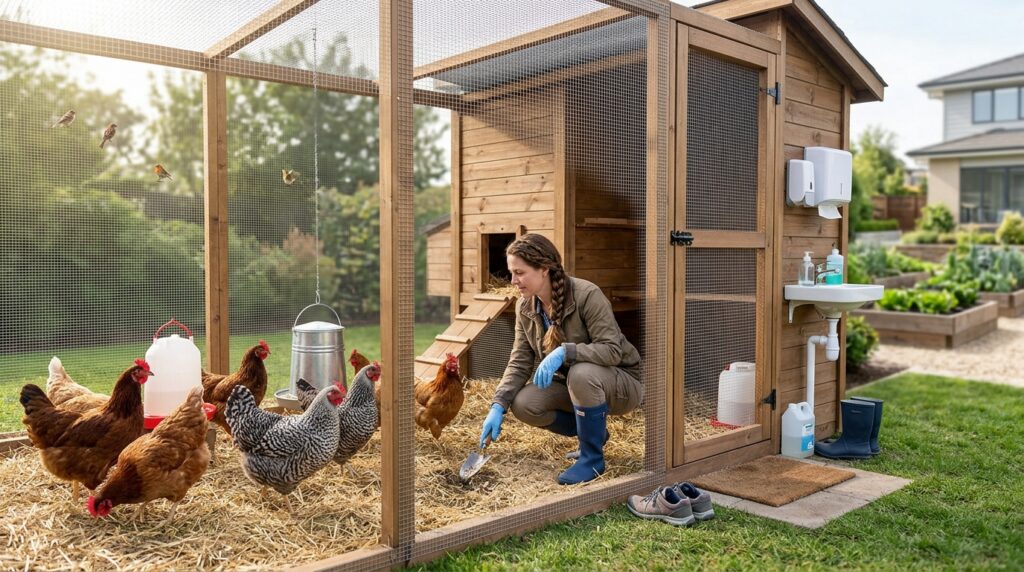
Keeping backyard chickens can be rewarding. Fresh eggs, daily routines, and the enjoyment of caring for a small flock are some of the reasons people raise poultry at home.
But backyard chicken owners also need to understand a serious risk: avian influenza, commonly called bird flu.
Highly pathogenic avian influenza (HPAI) can spread among birds and cause severe illness or death in poultry. Wild birds, particularly waterfowl, can carry avian influenza viruses and potentially introduce them into backyard environments.
Even a small flock is not automatically protected because it lives in a residential yard rather than a commercial poultry farm.
The good news is that practical biosecurity habits can reduce opportunities for exposure. You do not need an expensive commercial setup to start protecting your chickens. Consistent cleaning, controlled access, safe feeding practices, and daily observation can make a meaningful difference.
This guide explains what backyard chicken owners should know, how to reduce exposure risks, and what to do if a bird becomes sick or dies unexpectedly.
Important: Avian influenza guidance can change as outbreaks develop. Always check current instructions from your local veterinary authority before making decisions about sick birds, testing, movement, or disposal.
🦠 1. What Is Avian Influenza?
Avian influenza is an infectious disease caused by influenza A viruses that primarily affect birds.
Some strains are classified as low pathogenic avian influenza (LPAI), while others are highly pathogenic avian influenza (HPAI).
HPAI can cause serious disease in domestic poultry, including chickens, turkeys, and ducks. It can also affect wild birds and other animal species.
Possible signs in poultry include:
- Sudden or unexplained death.
- Reduced egg production.
- Soft-shelled or misshapen eggs.
- Reduced appetite or drinking.
- Lethargy and unusual inactivity.
- Swelling around the head, eyes, or neck.
- Purple discoloration of the comb, wattles, or legs.
- Coughing, sneezing, or difficulty breathing.
- Diarrhea or unusual droppings.
- Loss of coordination, tremors, or other nervous-system signs.
Not every infected bird shows obvious symptoms. Some birds may become sick quickly, while others may show less specific signs.
These symptoms are not unique to avian influenza. Other poultry diseases and environmental problems can cause similar changes.
Do not diagnose bird flu based on appearance alone. Testing and veterinary or animal-health authority assessment are needed.
🦆 2. How Can Bird Flu Reach a Backyard Flock?
One of the most important things to understand is that wild birds can be part of the transmission picture.
Migratory waterfowl and other wild birds may carry avian influenza viruses. Infection can spread through contact with infected birds, their secretions, and contaminated materials.
Potential exposure routes include:
- Direct contact with infected wild birds.
- Contact with wild-bird droppings.
- Contaminated drinking water.
- Feed exposed to wild birds.
- Dirty footwear, clothing, or equipment.
- Shared transport crates or poultry equipment.
- Newly introduced birds that have not been properly quarantined.
For example, a chicken might never directly encounter a wild duck, but contaminated footwear or equipment could still create an exposure opportunity.
This is why biosecurity is not just about keeping wild birds away from the coop. It also involves controlling what people, supplies, and animals bring into the poultry area.
🛡️ 3. Keep Wild Birds Away From Your Chickens
One of the most important biosecurity steps is reducing contact between backyard poultry and wild birds.
You may not be able to eliminate every wild bird from your property, but you can make your chicken area less attractive and harder to access.
Try these practical measures:
Cover feeding areas. Use a covered feeder or place feeding stations inside an enclosure that prevents wild birds from reaching the feed.
Protect drinking water. Keep waterers under cover and away from areas where wild birds gather. Replace dirty water and clean containers regularly.
Prevent feed spills. Spilled grain can attract sparrows, pigeons, rodents, and other wildlife. Clean spills promptly rather than leaving feed scattered around the yard.
Use appropriate netting or barriers. Cover outdoor runs where practical, using materials that prevent wild birds from entering. Inspect for holes, loose edges, and gaps.
Reduce standing water. Avoid creating puddles or uncovered water sources that may attract wild waterfowl.
Keep wild birds away from stored feed. Use secure containers with tight-fitting lids and store feed in a clean, dry location.
These measures are especially important when wild birds are visiting nearby ponds, wetlands, fields, or other feeding areas. USDA guidance specifically recommends protecting poultry from wildlife and preventing contamination of feed and water. USDA-APHIS Defend the Flock+2
🥾 4. Create a Clean Entry Routine for Your Coop
People can unintentionally carry contaminated material into a chicken area on their shoes, clothing, hands, and equipment.
A simple entry routine can reduce this risk.
Set up a small biosecurity station near the coop with:
- Dedicated footwear for poultry care.
- A place to store outdoor shoes.
- Handwashing supplies.
- Cleaning equipment.
- A suitable disinfectant for equipment and surfaces.
Follow this routine:
- Put on your dedicated coop footwear before entering.
- Avoid wearing those shoes in other poultry areas or outdoor locations.
- Wash your hands before and after handling birds, eggs, or equipment.
- Keep visitors away from the flock unless their visit is necessary.
- Clean and disinfect equipment before using it with another flock.
A footbath can be part of a biosecurity setup, but it is not a substitute for removing visible dirt and manure first. Organic material can interfere with disinfectant performance. Follow the product label for dilution, contact time, and safe use.
Do not assume that spraying disinfectant over dirty boots makes them safe.
🧹 5. Clean the Coop and Equipment Properly
A clean coop is not simply about appearance. Manure, bedding, dirt, and contaminated equipment can contribute to disease transmission.
Develop a regular cleaning routine:
Daily
- Remove wet or heavily soiled bedding.
- Clean visible feed spills.
- Check waterers for dirt and contamination.
- Remove accumulated droppings where needed.
- Observe the flock for unusual behavior.
Regularly
- Wash feeders and drinkers.
- Replace dirty bedding.
- Clean equipment and poultry-care tools.
- Inspect the coop for holes, damaged screens, and wildlife access.
- Clean and disinfect suitable surfaces according to product directions.
For proper disinfection, first remove visible dirt and organic material, then apply a disinfectant approved for the intended use. Allow the required contact time and let surfaces dry as directed before birds return.
Never mix cleaning chemicals. Avoid applying disinfectants directly to chickens, eggs, or feed unless a product is specifically approved for that use.
🐣 6. Be Careful When Bringing New Birds Home
New chickens can introduce disease into an established flock, even if they appear healthy.
This makes buying and introducing birds an important biosecurity decision.
Before purchasing, ask the seller about:
- The birds’ health history.
- Recent illness or unexplained deaths.
- Where the birds were raised.
- Whether they have been exposed to other poultry.
- Available veterinary or testing records.
Keep new arrivals physically separate from your existing flock in a suitable quarantine area. Use separate feeders, waterers, footwear, and cleaning equipment.
There is no single quarantine period that guarantees a bird is disease-free. Ask a poultry veterinarian or local animal-health authority for the appropriate separation period and testing recommendations for your situation.
Avoid buying birds from unknown sources, especially when there are reports of poultry disease in your area.
Also, do not move birds between properties, sell them, or take them to shows and poultry gatherings during a suspected outbreak without checking local restrictions.
👀 7. Monitor Your Flock Every Day
Early recognition of unusual changes is an important part of backyard poultry biosecurity.
You do not need complicated equipment. A consistent daily observation routine can help you notice problems before they become obvious.
Check:
- Is every chicken eating normally?
- Are the birds drinking normally?
- Is anyone unusually quiet or isolated?
- Are feathers unusually fluffed?
- Is breathing normal?
- Has egg production changed unexpectedly?
- Are droppings noticeably different?
- Is anyone having trouble walking or maintaining balance?
Keep a simple flock health record.
| Date | Number of birds | Eggs collected | Unusual observations |
|---|---|---|---|
| Monday | 8 | 6 | None |
| Tuesday | 8 | 5 | One bird eating less |
| Wednesday | 8 | 3 | Two birds unusually quiet |
These are illustrative entries, not disease indicators by themselves. Egg production can change for many reasons, including age, stress, nutrition, weather, and molting.
The value of a record is that it helps you recognize changes from your flock’s normal pattern.
🚨 8. What to Do If a Chicken Becomes Sick or Dies Suddenly
Do not wait for several birds to become ill before taking action.
Sudden unexplained deaths, multiple sick birds, or a combination of respiratory, digestive, and neurological signs should be treated seriously.
If you suspect avian influenza:
- Stop moving birds. Do not sell, give away, transport, or introduce poultry from the affected flock.
- Limit access. Keep children, pets, and unnecessary visitors away from the poultry area.
- Avoid direct contact. Do not touch sick or dead birds, droppings, litter, or potentially contaminated water without appropriate protective equipment.
- Contact animal-health authorities. Report the unusual illness or deaths to your local veterinary office or government animal-health authority.
- Follow official instructions. Authorities may arrange testing and explain isolation, movement restrictions, cleaning, and other control measures.
- Do not dispose of carcasses yourself without guidance. Improper handling or disposal can spread contamination and may violate local regulations.
Do not attempt to diagnose the disease yourself or give medications as a substitute for reporting and professional assessment.
Important: If several chickens die unexpectedly, treat it as an urgent flock-health problem even if you are unsure whether bird flu is involved. Other serious poultry diseases can produce similar signs.
😷 9. Protect Yourself When Handling Sick Birds
Avian influenza is primarily an animal-health concern, but certain strains can infect people, particularly after close, unprotected contact with infected birds or contaminated environments.
Backyard owners should take precautions rather than assuming that a small flock presents no risk.
If you suspect infection:
- Avoid touching sick or dead birds with bare hands.
- Do not handle contaminated bedding, droppings, or water without appropriate protection.
- Use suitable protective equipment if contact is unavoidable and follow public-health instructions.
- Wash your hands thoroughly after poultry care.
- Keep poultry and poultry equipment out of kitchens and food-preparation areas.
- Do not eat, drink, or smoke while working in contaminated poultry areas.
CDC guidance for people handling potentially infected birds includes protective clothing, gloves, eye protection, and respiratory protection. The appropriate equipment depends on the exposure and should follow official instructions. CDC+1
If you develop symptoms after exposure to potentially infected birds, contact a healthcare professional or public-health authority promptly and explain the exposure.
🥚 10. What About Eggs From Backyard Chickens?
Egg production can decrease when chickens are sick, stressed, or affected by other health problems.
If you notice fewer eggs, soft shells, misshapen eggs, or unusual changes in your flock, record the changes and seek veterinary advice.
During a suspected or confirmed avian influenza situation, follow instructions from animal-health authorities regarding eggs, handling, movement, and disposal.
Do not sell, give away, or distribute eggs from an affected flock unless authorities confirm that doing so is permitted.
For routine egg handling:
- Collect eggs regularly.
- Discard cracked or visibly contaminated eggs.
- Keep eggs handled and stored according to local food-safety guidance.
- Wash your hands after handling eggs and poultry equipment.
- Cook eggs thoroughly before eating.
Do not assume that an egg is safe simply because its shell looks normal.
📋 11. A Practical Backyard Chicken Biosecurity Checklist
Use this checklist as a starting point for your daily and weekly routine.
Daily
- Check that chickens are eating and drinking normally.
- Look for unusual behavior or illness.
- Keep feed covered and clean up spills.
- Provide clean drinking water.
- Check that wild birds cannot enter the coop or feeding area.
- Wash hands after poultry care.
Weekly
- Clean feeders and waterers.
- Inspect netting, doors, and screens.
- Check for rodent activity.
- Remove wet or contaminated bedding.
- Clean and disinfect appropriate equipment.
- Review flock health and egg-production records.
When introducing new birds
- Check the source and health history.
- Arrange separate quarantine housing.
- Use separate equipment.
- Ask about veterinary assessment and testing.
- Follow professional advice before introducing them.
When illness is suspected
- Stop unnecessary bird movement.
- Restrict visitors.
- Avoid direct contact with sick or dead birds.
- Contact the appropriate animal-health authority.
- Follow official testing, isolation, and disposal instructions.
🌍 12. Where to Check for Updated Avian Flu Guidance
Because outbreaks, movement restrictions, and recommended precautions can change, an evergreen article should be reviewed regularly.
For readers in the United States, useful official resources include:
- USDA APHIS: Avian Influenza — disease information, signs, prevention, and outbreak guidance.
- USDA APHIS: Defend the Flock — practical biosecurity resources for poultry owners.
- CDC: Backyard Flock Owners and Bird Flu — precautions for people caring for backyard poultry.
For readers in the Philippines, consult the Bureau of Animal Industry (BAI) and your local government veterinary or agriculture office for current reporting instructions, restrictions, and disease-control guidance.
Editorial update reminder: Check official animal-health and public-health announcements before republishing this guide. Update any outbreak references, reporting contacts, movement restrictions, and protective-equipment recommendations when official guidance changes.
Final Thoughts: Small Biosecurity Habits Protect the Whole Flock ❤️
Avian influenza can be a serious threat to backyard chickens, but protecting a small flock does not have to involve complicated procedures or expensive equipment.
Start with the basics: keep wild birds away from feed and water, use dedicated footwear, clean equipment properly, control visitors, and observe your chickens every day.
Be especially careful when introducing new birds or visiting other poultry areas. If unusual illness or sudden deaths occur, contact animal-health authorities promptly instead of waiting for the problem to spread.
Remember that no single precaution guarantees protection. Biosecurity works best as a consistent routine.
Healthy backyard chickens start with responsible daily care. Protecting your flock also helps protect neighboring poultry, wildlife, and the people who care for them. 🐔




