Backyard quail keeping has exploded in popularity across the United States, and for good reason: these small, efficient birds provide fresh eggs, gentle pest control, and endless entertainment—all in a fraction of the space chickens require. But jumping in without a roadmap can lead to preventable mistakes. Whether you are raising Coturnix for eggs or Bobwhites for meat, this comprehensive step-by-step checklist will guide you from the moment you pick out your birds through daily care and emergency prep, so you can enjoy a healthy, happy flock from day one.
Acquiring Your Quail: What to Know Before You Buy
Before you bring home any birds, you need a clear plan for sourcing them. Quail are not as ubiquitous as chickens, so finding a reliable hatchery or local breeder takes a little legwork.
Choosing the Right Breed
For beginners, Coturnix (Japanese quail) are the gold standard. They mature in 6–8 weeks, lay eggs by week 7, and tolerate confinement well. Bobwhite quail are more flighty and need larger pens, but they are prized for their meat and distinctive call. If you want a calm, dual‑purpose bird, stick with Coturnix.
Where to Buy
- Hatcheries (online): Meyer Hatchery, Cackle Hatchery, and Stromberg’s ship chicks year-round (minimum orders often apply). Look for “straight run” (unsexed) for eggs/meat, or “sexed” if you want only females.
- Local breeders: Check Craigslist, Facebook poultry groups, or your county fair. Ask to see the parent stock and confirm they feed a quality game bird starter.
- Tractor Supply / feed stores: Some carry quail chicks seasonally. Call ahead to verify availability and breed.
Pro tip: Order at least 6–10 birds—quail are highly social and can become stressed if kept alone. A flock of 10–12 is ideal for a family of four (roughly 10 eggs per day at peak production).
How Many to Start With?
For beginners, start with 10–15 chicks. They are easier to brood together, and you can cull or sell extras as they grow. Remember: every female needs about 0.5 square feet of cage space (more is better), so plan your housing accordingly.
“I bought only 4 quail my first time because I wanted to ‘save money.’ Within a week, two stopped eating and one died. A local breeder told me they were lonely. Now I keep at least 8 together, and they actually thrive.” — Sarah M., backyard quail keeper from Ohio
Housing Setup: The Complete Checklist
Your quail’s home is the single most important factor for their health and egg production. Unlike chickens, quail are ground‑dwelling but can fly straight up—so overhead protection is non‑negotiable.
Cage Requirements
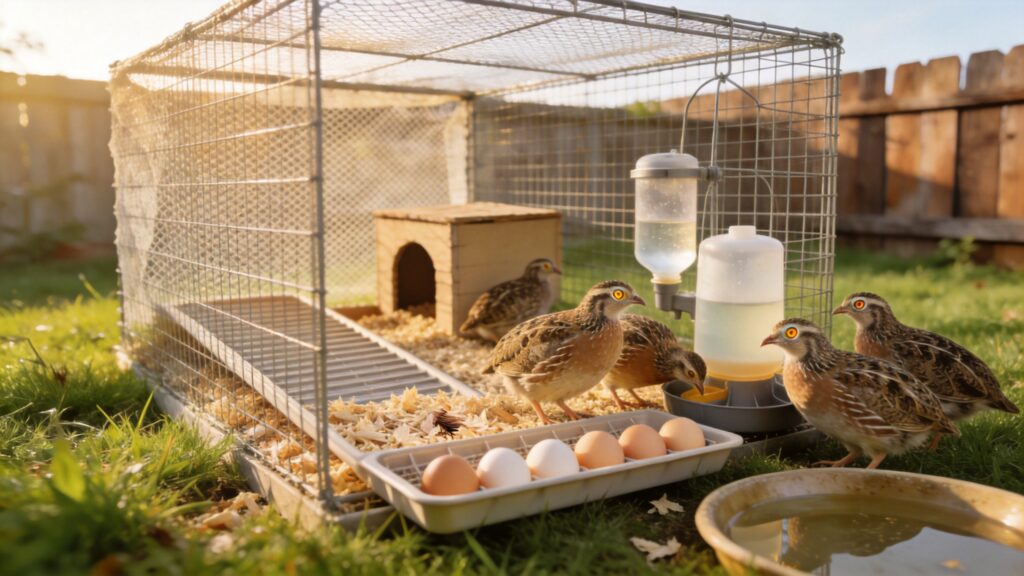
Use a wire cage with hardware cloth (½” x ½” openings for adults, ¼” for chicks). Wood cages are impossible to sanitize properly and attract mites. The floor should have a slight slope so eggs roll into a collection tray.
- Floor space: 1 square foot per adult Coturnix (minimum). For 10 birds, a cage 24”x30” works, but 30”x36” is far better.
- Height: 8–12 inches is plenty—quail rarely jump, but a low ceiling prevents head injuries if they flush.
- Roof: Solid or wire? A solid roof reduces drafts, but wire allows ventilation. Many breeders use wire with a partial solid cover for shade.
Bedding and Substrate
Use only pine shavings (kiln‑dried) or sand in the brooder. Never use cedar—the oils cause respiratory damage. For adult cages, many keepers skip bedding entirely and use wire floors with a tray underneath for droppings. That’s the easiest to clean.
| Material | Pros | Cons |
|---|---|---|
| Pine shavings | Absorbent, soft, cheap | Can harbor mold if wet; needs changing weekly |
| Sand (play sand) | Dust‐free, easy to sift droppings | Heavy, can become stinky if not sifted |
| Wire floor | Best hygiene, eggs stay clean | Can irritate feet; need a “rest” area with a mat |
Shelter and Protection
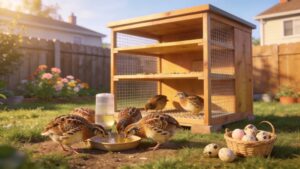
If your birds live outdoors, they need a secure structure. A predator‑proof aviary is worth its weight in gold. Use hardware cloth (not chicken wire) for walls and roof, bury the edges 12” into the ground to deter diggers, and add a lockable door. Inside, provide a “hide” —a small box or overturned plastic bin with an entrance hole—so quail can retreat if they feel threatened.
Ventilation is critical but avoid drafts at bird level. Place the cage in a spot that gets morning sun but afternoon shade. In winter, you can wrap part of the cage in clear plastic (leaving top vents open) to retain heat while preventing moisture buildup.
Daily Care: Feeding, Watering, and Health Checks
Once your housing is dialed in, the daily routine becomes second nature. Spend five minutes in the morning and five more at dusk to keep everything running smoothly.
Feeding Schedule
Quail are not like chickens—they have higher protein needs. Feed a game bird starter (28% protein) for the first 6 weeks, then switch to a game bird grower/finisher (20–24% protein) for layers. Offer feed in a gravity feeder with narrow grills to prevent waste.
- Amount: Each adult eats about 1 ounce (28g) of feed per day. For 10 birds, that’s roughly 1.75 pounds per week.
- Grit: Quail do not need grit if they eat commercial crumbles, but if you feed whole grains or greens, offer fine chick grit.
- Treats: Oatmeal, mealworms, chopped greens (kale, spinach) are fine in small amounts. Avoid avocado, chocolate, and salty snacks.
Watering System
Quail are messy drinkers and drown easily in open dishes. Use a chick waterer (1‑gallon plastic base with a lip) or a horizontal nipple system for adults. Change water daily and scrub the reservoir once a week with a mild bleach solution (1 tbsp per gallon).
“I lost two quail to a dirty waterer on a hot July day. They had coccidiosis from standing water. Now I use nipple drinkers and check them twice a day. It’s a five‑second job that saves lives.” — Jake P., Vermont quail breeder
Health Checks: What to Look For Every Day
Healthy quail are active, have bright eyes, clean vents, and smooth feathers. Do a quick visual sweep each morning:
- Eyes & nares
- Should be clear; discharge can indicate respiratory infection (mycoplasma or CRD). Isolate any bird with bubbly eyes.
- Feathers
- Fluffiness or droopiness signals illness. Missing feathers on the back may mean bullying—check for a “hen-pecked” bird.
- Droppings
- Normal quail droppings are a dark brown/white cap. Green, watery, or bloody droppings point to coccidiosis or intestinal issues.
- Breathing
- Open‑mouth breathing or tail‑bobbing means serious stress or infection. Move the bird to a quiet hospital cage.
Perform a full hands‑on check once a week: pick up each bird, check its crop (should feel full but not hard), feel the breast (keel bone should not be sharp), and inspect feet for sores. Keep a notebook or a simple spreadsheet to track egg production and any odd behavior.
Emergency Preparedness: Predators, Weather, and Injuries
Even with perfect daily care, emergencies happen. Being prepared separates a minor scare from a catastrophe.
Predator Proofing
Raccoons, rats, snakes, hawks, and even domestic dogs will kill quail given the chance. Two layers of defense work best:
- Primary cage: Hardware cloth with ½” openings. Check weekly for rust or holes. Secure all seams with zip ties or J‑clips.
- Secondary structure: A solid shed or a run with an additional layer of wire. Use motion‑activated lights or a radio near the coop at night to deter mammals.
Case study: A keeper in Florida lost 8 out of 12 quail to a rat snake in one night. The snake squeezed through a gap the size of a dime. After switching to ¼” hardware cloth and eliminating gaps around the door, they had zero incidents.
Extreme Weather
Quail tolerate cold better than heat, but both extremes require action.
| Condition | Risk | Solution |
|---|---|---|
| Heat wave (>95°F) | Heat stress, egg drop, death | Mist fan, frozen water bottles, shade cloth, shallow pans of cool water |
| Freeze (<20°F) | Frostbite, dehydration (ice) | Heated water base, extra bedding, windbreaks, small coop heater (ceramic, not bulb) |
| Prolonged rain | Damp bedding, respiratory disease | Raise cage off ground, add a taurpaulin roof, ensure ventilation |
Always have a backup water source (a gallon jug stored inside) and a temporary indoor brooder (a large plastic tub with a heat lamp) in case you need to evacuate birds from a hurricane or wildfire zone.
Injuries and First Aid
Common quail injuries include cuts from wire edges, bumblefoot (footpad infection), or a broken leg from a fright flush. Assemble a basic quail first aid kit:
- Vetericyn or saline wound spray
- Styptic powder (for bleeding nails)
- Non‑stick gauze and self‑adhering bandage
- Blunt‑tip scissors, tweezers
- Electrolyte solution (Sav‐A‐Chick)
For a bleeding wound: isolate the bird, clean with saline, apply styptic if needed, and keep it in a quiet hospital cage (low light, no drafts) for 48 hours. For a suspected leg fracture, gently splint it with a popsicle stick and vet wrap. Most quail heal quickly if given rest.
“My quail ‘Pebbles’ got her foot caught in a feeder grate and tore a toenail halfway off. I was terrified, but a quick call to my avian vet (and a bit of superglue from a YouTube tutorial) had her hopping around normally within three days. Always have superglue and cornstarch handy!” — Amanda R., Oregon hobbyist
Conclusion: Your Feathered Friends Are Worth the Effort
Quail are remarkably resilient and rewarding, but like any pet, they depend on you to provide a safe, clean, and consistent environment. By following this checklist—from careful sourcing and robust housing through daily health checks and emergency planning—you set yourself up for years of fresh eggs, sustainable meat, and the quiet joy of watching a healthy flock thrive. Start small, stay observant, and don’t be afraid to ask for help from the growing community of quail keepers across the U.S. Your birds will thank you with every egg and every cheerful chirp.