
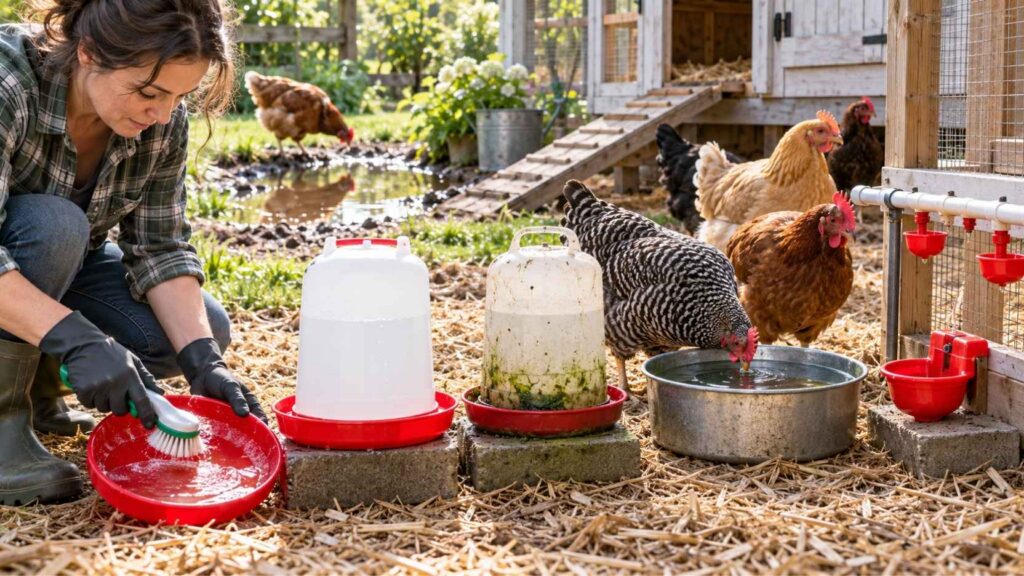
If you have ever watched chickens walk past a freshly filled waterer only to take enthusiastic sips from a muddy puddle, you may wonder why chicken waterer cleaning gets treated like such a serious chore. 🐔 Chickens are not reliable judges of water cleanliness, so voluntarily drinking from a puddle does not mean stagnant, manure-contaminated, algae-filled, or biofilm-coated water is something you should intentionally provide. Poultry guidance consistently emphasizes keeping fresh, clean water available at all times, because water intake is closely connected with feed consumption, growth, and egg production.
The useful answer to how often to clean a chicken waterer is therefore more nuanced than either “scrub everything every morning” or “chickens drink puddles, so it does not matter.” Your flock’s water should be checked every day, but what you do after that check depends on the waterer’s design, visible contamination, temperature, algae growth, and whether a slippery film is developing. 💧 In other words, daily attention is essential, while the difference between a simple refill, rinse, and full scrub should be based on what the container actually needs.
Why Chickens Drinking From Puddles Doesn’t Make Fresh Water Optional
A chicken drinking puddle water tells you something about chicken behavior, not about good water management. Birds exploring a yard may peck, scratch, and drink from many places that a keeper would never deliberately use as their permanent drinking source, and a brief encounter with muddy water is different from repeatedly drinking from a container where organic material is accumulating. 🌧️ Your managed waterer should remain the flock’s dependable source of clean, accessible water, even when the birds have other ideas.
The bigger concern is not that one speck of dirt instantly makes water dangerous; it is allowing contamination to remain long enough for microorganisms and organic material to build up inside a waterer. Poultry systems can develop biofilm, a sticky layer containing microorganisms that attaches to wet surfaces and can become increasingly difficult to remove once established. Mississippi State Extension describes biofilm as slime and notes that sediment, algae, slow-moving water, and nutrients from some water additives can encourage its development.
Check The Water Every Day—But That Doesn’t Mean Scrub Everything Every Day
Every morning, start with the simplest question: is enough water available for every bird? Chickens can drink considerably more during hot weather, and fountain-style drinkers can empty faster than beginners expect, which is why checking water quantity is just as important as checking cleanliness. ☀️ Utah State University Extension specifically recommends changing water frequently to help prevent bacterial growth, excessive warming in summer, and freezing during winter.
Next, look at the water itself and touch accessible interior surfaces when practical: manure, feed, bedding, feathers, visible slime, or rapidly developing algae all justify more than merely topping up the reservoir. Open waterers and fountain drinkers commonly need daily washing, and extension guidance for small flocks specifically recommends daily cleaning of waterers, so a condition-based approach should not become an excuse for leaving visibly dirty equipment untouched. 🧽 Closed systems can reduce litter contamination, but their less-visible internal surfaces make scheduled sanitation and inspection equally important.
Is Water Available?
Never let cleanliness distract from availability, because a spotless empty container is still a failed watering system. Check that the reservoir has sufficient capacity for the flock, make sure timid birds can reach drinking points, and watch for leaks or overturned bowls that can empty a supply unexpectedly. 💦 If your current waterer routinely runs dry before the next check, increase capacity or provide an additional watering point rather than simply refilling the same undersized unit more often.
Is It Visibly Contaminated With Manure Or Bedding?
A few floating bits of clean bedding may call for a quick rinse, but fecal contamination should trigger dumping and cleaning rather than topping off the existing water. Raising waterers onto an appropriate stable platform or adjusting their height can help reduce litter being kicked into them while also keeping nearby bedding drier. Mississippi State and Oklahoma State Extension both recommend positioning waterers in ways that reduce litter or foot contamination.
Does The Container Feel Slippery?
A slippery interior is one of the clearest signs that a waterer needs physical cleaning rather than another refill. Biofilm adheres to surfaces, which means replacing the water above it does not necessarily remove the layer attached underneath. 🦠 Use a dedicated brush or cleaning tool that can reach seams, channels, rims, valves, or other areas where slime tends to hide, following the equipment manufacturer’s cleaning recommendations.
Is Algae Beginning To Develop?
Algae in a chicken waterer commonly becomes more noticeable where water receives sunlight and remains warm, so early green growth is a cue to clean the equipment and reconsider its location. 🌱 Simply adding new water to an algae-coated container leaves the attached growth in place and allows the problem to return quickly. Shade can help slow algae development, but the waterer should still remain visible and accessible enough that you can inspect it easily.
Dump And Refill Vs Rinse Vs Scrub: Which One Does It Need?
Not every water check needs to become a major sanitation project, but the response should become more aggressive as contamination increases. A recently cleaned container holding otherwise clear water may only need fresh water, whereas loose debris calls for rinsing and attached slime, manure residue, algae, or stubborn deposits call for physical scrubbing and appropriate sanitation. 🧼 If a cracked, deeply scratched, rusty, leaking, or impossible-to-clean waterer continually traps buildup, replacement may be more practical than repeatedly fighting the same contamination.
Dump / Rinse / Scrub / Replace Decision Card
| Action | When It Makes Sense |
|---|---|
| Dump + Refill 💧 | Water has warmed, become stale, or needs routine refreshing while the container itself remains clean. |
| Rinse 🚿 | Loose feed, feathers, dust, or bedding is present but there is no attached slime or stubborn contamination. |
| Scrub 🧽 | Surfaces feel slippery, manure is present, algae is developing, residue is attached, or water additives have left buildup. |
| Replace 🔄 | The waterer is cracked, leaking, badly scratched, corroded, or has inaccessible areas that can no longer be reliably cleaned. |
Think of this card as a minimum decision system rather than permission to skip routine hygiene. Open poultry fountains are commonly recommended for daily washing, while more enclosed designs may shift some labor from visible bowl cleaning toward scheduled inspection and sanitation of hidden parts. This is also why comparing gravity waterers, nipples, and cups matters before buying a system: the easiest waterer to maintain is often the one whose cleaning requirements realistically fit your routine.
Why Waterer Design Changes Your Cleaning Routine
Open bowls are simple to inspect and scrub, but chickens can easily kick bedding, feed, dirt, and manure into them, especially when they sit directly on the ground. Gravity waterers protect the stored reservoir better, yet the drinking trough around the bottom remains exposed and can collect debris or develop slime. 🐓 Both designs reward frequent visual checks because contamination is easy to see and remove before it becomes established.
Nipple systems largely prevent chickens from stepping in their drinking water and can reduce visible contamination, but the tradeoff is that internal lines, regulators, and nipples are harder to inspect. Cup systems provide a smaller exposed drinking area than open bowls while still allowing material to collect inside individual cups, so they should be checked and cleaned as needed. Oklahoma State Extension notes that any poultry watering system should be constructed so it can be regularly cleaned and disinfected to help prevent biofilm accumulation.
Positioning The Waterer To Keep It Cleaner Longer
Good positioning can reduce how much cleaning you have to do without lowering your standards. Raise or suspend suitable waterers according to their design so birds can drink comfortably without constantly scratching litter into them, and keep the surrounding flooring or bedding as dry as reasonably possible. 🪵 A stable platform may be particularly useful with fountain waterers because it reduces litter contamination and helps prevent wet bedding around the drinking area.
For outdoor setups, look for a shaded location that remains easy to inspect, rather than placing a transparent or open water container where intense sunlight can heat it throughout the day. Avoid positioning the waterer directly beneath roosts, where droppings can fall into it, or beside feeders where chickens continually flick feed into the drinking area. Small placement improvements can turn a waterer that becomes filthy within hours into one that remains substantially easier to manage.
Hot Weather And Winter: When Your Routine Needs To Change
Hot weather demands extra attention because chickens generally consume more water as temperatures rise, while standing water can also warm rapidly. ☀️ Check smaller containers more frequently, provide sufficient capacity for the entire flock, keep water shaded where possible, and replace excessively warm water rather than assuming the morning refill will remain adequate all afternoon. Extension guidance notes that water consumption rises during hot weather and recommends more frequent replacement when water becomes excessively warm.
Winter creates the opposite problem: clean water is useless when it is frozen and inaccessible. ❄️ Check drinking points for ice, confirm heated equipment is functioning according to manufacturer instructions, and continue cleaning even when cold temperatures make algae less obvious. Seasonal changes may alter how often you refill, but they do not change the basic requirement that chickens consistently have usable, fresh water.
The 30-Second Daily Water Check
You do not need to turn every morning into a deep-cleaning event, but you should be able to answer four questions quickly: Do the chickens have enough water, is it visibly clean, are the surfaces free of slime, and is the system functioning correctly? 👀 Those few seconds will usually tell you whether today’s job is a refill, rinse, scrub, troubleshooting session, or replacement decision. The routine becomes especially valuable because it catches small problems—an empty reservoir, leaking cup, clogged nipple, manure in a trough, or beginning algae growth—before they become larger ones.
So, do you really need to scrub chicken waterers every single day? For open fountains and similarly exposed drinkers, daily cleaning is a well-established poultry-management recommendation, while enclosed systems require a routine matched to their design rather than pretending hidden surfaces never get dirty. 💧 The practical rule is simple: inspect daily, keep fresh water continuously available, clean exposed waterers routinely, and scrub immediately whenever contamination, slime, algae, or buildup tells you the waterer needs more than a refill.




