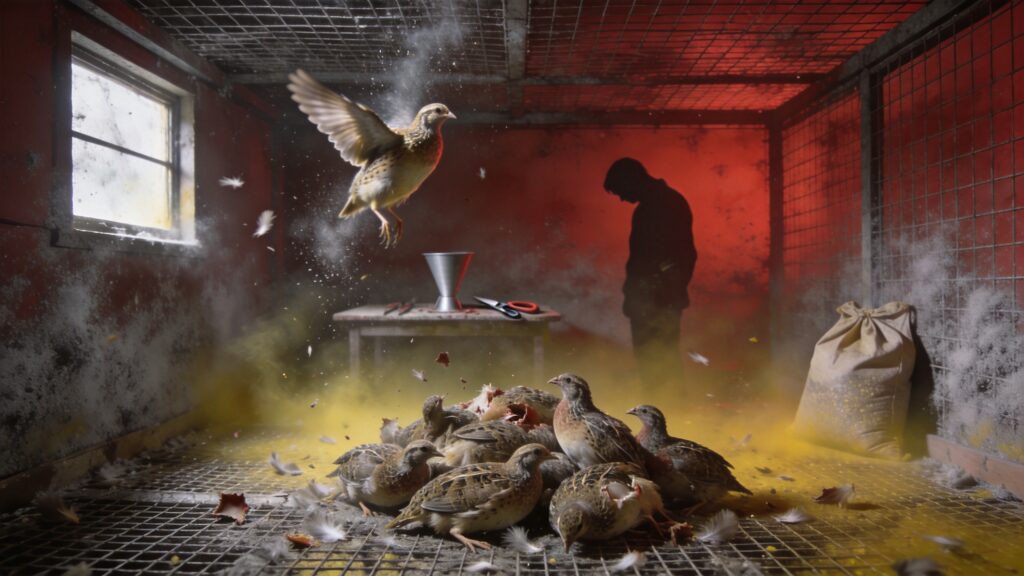
Raising quail might seem like a perfect backyard venture—compact, quiet, and productive. Yet beneath the surface of those speckled eggs and gentle coos lies a darker side that few talk about. If you’re considering quail keeping, you need to know the harsh realities: the breed’s bizarre self-destructive behavior, the overwhelming odor that can alienate neighbors, and the emotional weight of culling that catches even seasoned keepers off guard. This guide doesn’t sugarcoat—it equips you with hard-won lessons from those who’ve walked this path.
The Unsettling Reality of Quail Self-Destruction
Quail possess a peculiar, almost suicidal tendency that baffles even experienced poultry keepers. They panic easily, often launching themselves vertically into cage ceilings or wire mesh, breaking their necks or causing fatal head trauma. This isn’t a rare, isolated event—it’s a predictable behavioral crisis that can wipe out a flock overnight if not managed properly.
Why “Mass Stampede” Is Not an Exaggeration
A single sudden noise—a door slam, a barking dog, an overhead airplane—can trigger a chain reaction. One bird startles, others follow, and within seconds you have a pile of quail thrashing against each other and the cage walls. I once lost seven birds in two minutes because a delivery truck backfired outside my garage. The aftermath looked like a small-scale battlefield; feathers everywhere, three with snapped necks, four with internal hemorrhaging.
The root cause is evolutionary: quail are prey animals wired to freeze or flee. In captivity, their flight response has no safe outlet. They need constant visual and auditory calm—something many backyard setups fail to provide.
Practical Strategies to Reduce Self-Harm
- Dim lighting in the coop—use red bulbs that calm birds and reduce startle reflexes.
- Solid-sided cages—avoid wire mesh on all sides; provide visual barriers so birds can’t see other flocks or moving shapes.
- Gradual introduction to noise—play soft radio or ambient sounds from day one so sudden noises become less shocking.
- Low population density—overcrowding amplifies stress. Allow at least 1 square foot per adult quail, preferably more.
“I thought quail were ‘easier’ than chickens. Then I discovered they can literally scare themselves to death. I went from 50 birds to 32 in one week because of a thunderstorm. Now I keep them in a dark garage with white noise. It’s not pretty, but it works.” —Mark T., Texas backyard quail keeper since 2021
The Hidden Toll: Odor, Dust, and Endless Cleaning
Quail produce significantly more ammonia than chickens per pound of body weight, and their droppings are small but copious. Within 48 hours of neglect, a standard quail cage becomes a health hazard—for both birds and humans. The smell invades your house, clings to clothing, and can trigger respiratory issues in children and pets.
The Dust Factor Most Guides Ignore
Unlike chickens, quail produce fine, powdery dust from their feathers and droppings. This dust coats everything within a 20-foot radius: walls, windows, your car if the coop is near the driveway. I cleaned my garage coop weekly and still had a layer of grayish film on every surface. If you have allergies or asthma, think twice before keeping more than a handful of quail indoors.
Cleaning Cycle That Actually Works
- Daily: Spot-clean droppings under roosts and around feeders. Remove wet bedding immediately. Use a small shop-vac with HEPA filter.
- Twice weekly: Replace all bedding (pine shavings or sand). Scrub waterers with diluted vinegar to prevent biofilm.
- Monthly: Full cage disassembly and deep clean with poultry-safe disinfectant (avoid bleach—it reacts with ammonia).
- Seasonally: Power-wash walls, change ventilation filters, and treat surrounding soil with lime to neutralize odors.
Pro tip: Use a manure management system with a deep litter method in a well-ventilated space. This reduces the frequency of full cleaning but requires strict moisture control—wet litter breeds ammonia faster.
| System | Odor Level | Cleaning Frequency | Dust Control | Best For |
|---|---|---|---|---|
| Wire-bottom cages over trays | Moderate–High | Every 2–3 days (tray scraping) | Poor (dust falls through) | Small flocks in garages/sheds |
| Deep litter on solid floor | Low (first 2 weeks) → High (if unchecked) | Weekly turning, fully clean every 6–8 weeks | Moderate (litter traps dust) | Large outdoor aviaries |
| Rabbit-style cages with droppings board | Low–Moderate (if board sloped) | Weekly board scraping | Fair | Hobbyists with limited space |
| Automatic manure belt system | Low | Monthly belt scraping | Good (enclosed) | Commercial breeders (expensive) |
The Emotional Gut Punch of Culling
Most quail keepers start with eggs or chicks, reveling in the fast growth and early laying. Then reality hits: quail reach slaughter weight at just 6–8 weeks, and if you’re raising for meat, culling is inevitable. Even if you keep them for eggs, you’ll face the need to remove aggressive males (they relentlessly mate females to death) or sick birds. The act of killing—even a small bird—leaves a mark.
Why It’s Harder Than You Expect
Quail are personable in their own way. They recognize your voice, come running when you open the feed bag, and display curious behaviors that make them seem closer to pets than livestock. I’ve watched experienced chicken farmers break down in tears after culling their first batch of quail. The small size doesn’t soften the blow—it amplifies the feeling of vulnerability.
Furthermore, traditional methods of culling (cervical dislocation or decapitation with shears) require precision and nerve. A botched attempt causes prolonged suffering that haunts you. Many hobbyists abandon their quail project after the first culling session, leaving birds neglected or rehoming them to uncertain fates.
How to Prepare Yourself and Do It Humanely
- Train with a mentor—watch an experienced keeper perform cervical dislocation at least three times before attempting it yourself.
- Use a killing cone—it immobilizes the bird and allows a clean, swift method. For quail, modified small funnels work well.
- Schedule culling days mentally—prepare a ritual: play quiet music, say a brief thank you to the bird, and process meat immediately so you focus on the product, not the loss.
- Separate meat birds from layers—designate one batch for culling and never name them. Keep a separate “pet flock” if you need an emotional buffer.
- Consider alternatives—if you cannot handle culling, purchase day-old chicks from a hatchery and sell them as started pullets, or focus entirely on egg production and rehome excess males.
“The first time I culled a quail, I cried for an hour. Then I ate it for dinner. That dissonance didn’t go away, but it became something I could hold. You don’t get desensitized—you just learn to do it with respect and move forward.” —Sarah L., Vermont homesteader and author of Feathers & Grit
Can the Dark Side Be Tamed? A Balanced View
None of these challenges are deal-breakers—if you go in with your eyes wide open. Quail offer unmatched efficiency: they mature in 6 weeks, lay eggs daily within 6–8 weeks, and require a fraction of the space chickens demand. But the suicidal stupidity, the relentless cleaning, and the emotional toll of culling are non-negotiable trade-offs. You cannot fix them entirely; you can only manage them.
Before buying your first quail, visit a working farm that culls regularly. Spend a day cleaning cages—feel the ammonia burn in your eyes. Watch a culling demonstration and ask yourself honestly: Can I do this every month for years? If the answer wavers, start with a tiny flock of 5–6 birds and scale only after you’ve proven you can handle the dark side. The quail won’t judge you. But they will reveal your limits—fast.
Final thought: The people who thrive with quail aren’t those who deny the hardships. They’re the ones who accept the smell, the death, and the chaos as part of a closed-loop system they’ve chosen to steward. If that resonates, welcome to the club. If it chills you, there’s no shame in sticking to chickens. After all, honest self-awareness is the first step to avoiding a very messy, smelly, heartbreaking mistake.