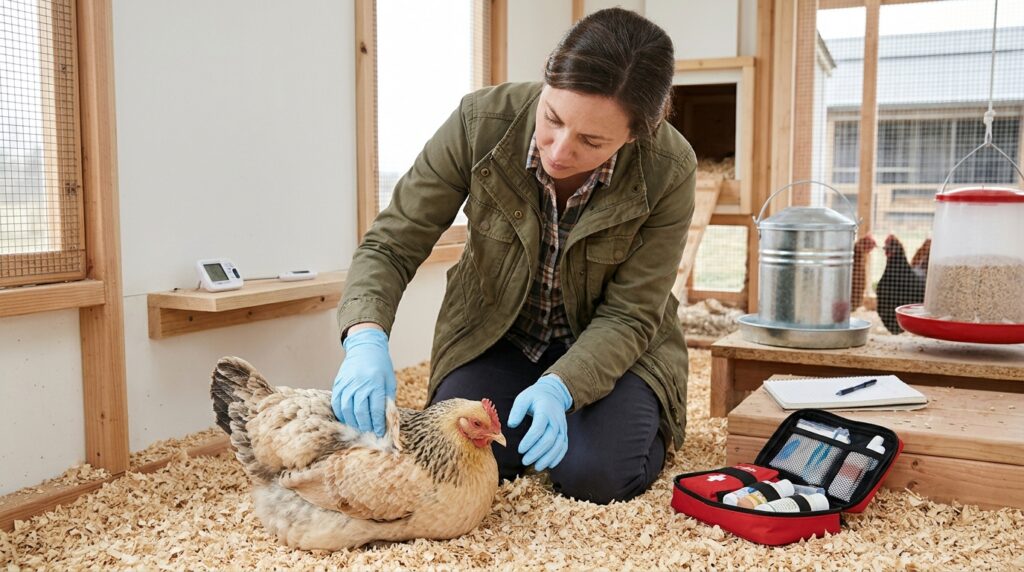
Introduction
You walk into the chicken coop expecting your usual morning routine. Then you notice something unusual. One hen is sitting alone, her feathers are puffed up, and she isn’t rushing toward the feeder like the others.
Is she simply resting, or is something wrong?
Chickens can hide signs of illness, which means even small behavioral changes deserve attention. A bird that stops eating, drinks less, isolates herself, or becomes unusually inactive may be showing early signs of a health problem.
The challenge for backyard chicken owners is knowing what to check first, what can wait, and when to contact a veterinarian.
That’s where a simple triage routine helps.
This 10-minute chicken health checklist is designed to help you observe a sick bird, identify warning signs, reduce immediate risks, and collect useful information before seeking veterinary advice.
It is not a diagnosis or a replacement for veterinary care. Think of it as your first-response guide when something doesn’t look right. 🐔
🚨 Before You Start: Know When It’s an Emergency
Some symptoms should never wait for a 10-minute checklist to finish.
Contact a poultry or avian veterinarian immediately if your chicken has:
- Severe difficulty breathing or gasping.
- Collapse, inability to stand, or extreme weakness.
- Heavy bleeding or a serious injury.
- Seizures, severe tremors, or sudden loss of coordination.
- Suspected poisoning.
- A swollen abdomen accompanied by distress or difficulty breathing.
- Severe straining with suspected egg binding.
- Rapidly worsening symptoms.
Important: If several birds become sick or die suddenly, contact a veterinarian or the appropriate animal health authority promptly. Sudden flock illness can indicate a serious contagious disease, including avian influenza.
If avian influenza is suspected, avoid handling or moving birds unnecessarily, use appropriate protective precautions, and follow local animal health reporting instructions.
Do not wait to complete the checklist before seeking help.
⏱️ The 10-Minute Chicken Triage Checklist
<text color=”secondary” size=”xs”>The times below are practical observation guides, not medically validated diagnostic intervals. If your chicken is in distress, stop and seek veterinary assistance.</text>
Minute 1–2: Observe Before Touching the Chicken
<AsyncImage query=”backyard hen sitting alone fluffed feathers in clean chicken coop natural daylight” aspectRatio=”16:9″ width=”100%”/>
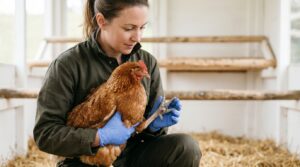
Start by watching the bird quietly.
Avoid immediately chasing or picking her up. Stress can make an already weak chicken feel worse and may interfere with your observations.
Look for changes in normal behavior:
- Is she standing and walking normally?
- Is she sitting alone while the others are active?
- Are her feathers unusually puffed up?
- Is her head tucked close to her body?
- Are her eyes open and alert?
- Does she respond when approached?
- Is she interested in food or water?
Why this matters:
A chicken that is unusually quiet, isolated, or fluffed up may be unwell. However, these signs are not specific to one disease. Cold temperatures, stress, pain, parasites, and several illnesses can produce similar behavior.
Pay attention to what is unusual for that particular bird.
Minute 3: Check Breathing
<AsyncImage query=”healthy backyard hen head close up beak nostrils eyes chicken portrait” aspectRatio=”16:9″ width=”100%”/>
Watch your chicken’s breathing without restraining her.
Look for:
- Open-mouth breathing when she is not overheated.
- Noticeable tail bobbing with each breath.
- Wheezing, rattling, or clicking sounds.
- Repeated sneezing or coughing.
- Nasal discharge.
- Swelling around the eyes or face.
- Difficulty breathing while resting.
Panting can occur in hot weather, but persistent open-mouth breathing, especially with weakness or respiratory distress, requires prompt veterinary attention.
Do not force the beak open or attempt to administer liquids to a chicken that is struggling to breathe.
Respiratory signs can have infectious and noninfectious causes. A veterinarian is needed to determine the underlying problem.
Minute 4: Look at the Eyes, Comb, and Face
<AsyncImage query=”close up healthy red chicken comb wattles eyes backyard hen” aspectRatio=”16:9″ width=”100%”/>
A chicken’s head can provide useful clues about its general condition.
Check:
Eyes: Are they clear and open? Look for discharge, swelling, cloudiness, or unusual closing.
Comb and wattles: Are they their usual color and appearance? Unusual paleness, dark discoloration, or swelling deserves attention.
Face: Look for puffiness, crusting, injuries, or discharge around the nostrils.
A pale comb may occur with anemia, blood loss, or other health problems, but comb color alone cannot identify a specific condition.
Likewise, a dark or purplish comb can be associated with circulation or oxygenation problems and should be taken seriously, especially when breathing is abnormal.
Minute 5: Check Eating and Drinking
<AsyncImage query=”backyard chickens eating feed from clean poultry feeder drinking waterer chicken coop” aspectRatio=”16:9″ width=”100%”/>
A sudden change in appetite is one of the most useful signs to notice.
Ask yourself:
- Has she eaten normally today?
- Is she approaching the feeder but not eating?
- Is she drinking more or less than usual?
- Can she swallow normally?
- Is she being pushed away by other chickens?
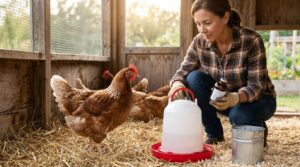
Check that the feeder and waterer are clean, accessible, and functioning properly.
A sick bird may avoid food and water because of pain, weakness, digestive problems, infection, or other conditions.
You can offer fresh water in an accessible container, but never force water into the beak. Inhaling liquid into the respiratory tract can be dangerous.
If the chicken cannot swallow, is severely weak, or refuses food and water, contact a veterinarian promptly.
Minute 6: Examine the Droppings
<AsyncImage query=”normal chicken droppings on clean poultry coop bedding close up educational veterinary reference” aspectRatio=”16:9″ width=”100%”/>
Chicken droppings naturally vary in color and consistency depending on diet, hydration, and normal digestive processes.
Look for:
- Very watery droppings.
- Persistent unusual green or yellow droppings.
- Blood or mucus.
- Black, tar-like droppings.
- An unusually large change in droppings frequency.
- Signs of straining.
Remember that chickens periodically pass cecal droppings, which are often softer, darker, and stronger-smelling than ordinary droppings. This can be normal.
However, bloody droppings, especially in young chickens, can indicate coccidiosis or another serious intestinal problem.
If you notice blood, marked diarrhea, or repeated abnormal droppings, contact a veterinarian. A fecal examination may be necessary.
Do not automatically treat every unusual dropping with antibiotics or dewormers.
Minute 7: Check Posture, Legs, and Feet
<AsyncImage query=”backyard chicken standing showing legs feet toes and posture on clean ground” aspectRatio=”16:9″ width=”100%”/>
Observe how the chicken stands and moves.
Look for:
- Limping or favoring one leg.
- Swollen joints.
- Unusual foot swelling.
- Wounds or scabs on the soles.
- Curled toes or abnormal leg positioning.
- Difficulty standing.
- Tremors or poor coordination.
One condition worth recognizing is bumblefoot, a foot infection commonly associated with a damaged or inflamed footpad.
A swollen footpad, scab, or painful swelling may be a warning sign.
Do not cut into the foot, squeeze swelling, or attempt invasive treatment at home. A veterinarian can assess the severity and recommend appropriate care.
Sudden paralysis, severe weakness, or loss of coordination needs urgent veterinary attention.
Minute 8: Check the Vent and Abdomen
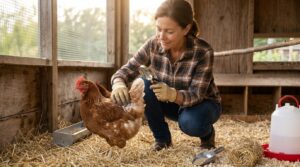
Without pressing or squeezing the chicken, observe the area beneath her tail and the general shape of her abdomen.
Look for:
- Droppings stuck around the vent.
- Swelling or unusual redness.
- Repeated straining.
- A visibly enlarged or distended abdomen.
- Signs of discomfort when moving or standing.
A dirty vent can have several causes, including diarrhea and digestive problems.
In laying hens, repeated straining, weakness, a swollen abdomen, or an unusual penguin-like posture may raise concern about reproductive problems, including egg binding.
Important: Never attempt to pull out an egg, insert objects into the vent, or squeeze the abdomen. Suspected egg binding needs prompt veterinary assessment.
Minute 9: Check the Environment and Other Chickens
Sometimes the problem isn’t limited to one bird.
Look around the coop for possible environmental issues:
- Is the waterer empty or contaminated?
- Is the feed moldy or spoiled?
- Is the coop excessively hot or poorly ventilated?
- Is the bedding wet?
- Are there signs of rodents or parasites?
- Have other chickens started acting unusually?
Also check whether egg production has suddenly decreased or eggs have become unusually soft-shelled or misshapen.
Changes affecting multiple birds are especially important because they may indicate an infectious disease or an environmental problem.
Sudden illness or unexplained deaths should be reported promptly to the appropriate veterinary or animal health authority. <Cite refs={[“turn481657search0″,”turn481657search2″,”turn481657search9”]}/>
Minute 10: Record Your Findings and Take Action
You now have a basic picture of what is happening.
Write down your observations before contacting a veterinarian.
A useful record includes:
- Chicken identification or description.
- Age and breed, if known.
- When symptoms first appeared.
- Whether she is eating and drinking.
- Changes in droppings.
- Breathing abnormalities.
- Changes in walking or posture.
- Egg production changes.
- Whether other birds are affected.
- Recent feed, water, or environmental changes.
Photographs or short videos can also help a veterinarian understand symptoms, provided taking them does not delay urgent care.
Don’t guess the disease based on one symptom. Several poultry conditions produce similar warning signs, and accurate diagnosis may require a physical examination, laboratory testing, or a fecal sample.
🏥 What to Do After the 10-Minute Check
Once you have completed your observations, follow these practical steps.
1. Separate a Sick Bird When Appropriate
If a single bird appears ill and a veterinarian advises isolation, use a clean, secure, quiet area away from the healthy flock.
Provide appropriate warmth, ventilation, food, and easily accessible water.
Use separate feeders, drinkers, footwear, and cleaning equipment.
However, if several birds are suddenly sick or you suspect avian influenza or another reportable disease, contact animal health authorities before moving birds. Follow their instructions to avoid spreading infection.
2. Keep the Rest of the Flock Under Observation
Check the other chickens for changes in:
- Appetite and drinking.
- Activity levels.
- Breathing.
- Droppings.
- Egg production.
- Walking and coordination.
A health problem that initially appears to affect one chicken may eventually involve other birds.
3. Avoid Random Medication
One of the most common mistakes among inexperienced poultry owners is giving medication before knowing what is wrong.
Avoid automatically administering:
- Antibiotics.
- Dewormers.
- Coccidiosis treatments.
- Supplements at excessive doses.
- Human medications.
Different illnesses require different treatments. Antibiotics, for example, do not treat viral infections.
Unnecessary medication can delay appropriate treatment, cause adverse effects, and create food-safety concerns for laying hens.
Ask a poultry veterinarian before starting treatment.
4. Protect Yourself While Handling Sick Chickens
Sick poultry can carry germs that may affect humans.
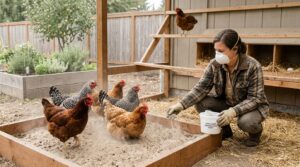
Wear disposable or washable gloves when appropriate, avoid touching your face, and wash your hands thoroughly after handling birds, droppings, litter, or equipment.
Keep children and pets away from sick or dead birds.
If avian influenza is suspected, follow official protective-equipment and reporting guidance.
Final Thoughts
A sick chicken doesn’t always show obvious symptoms. Sometimes, the first warning is simply a hen that stops eating, sits alone, or behaves differently from the rest of the flock.
That’s why regular observation matters.
The 10-minute triage checklist gives backyard chicken owners a practical starting point: observe behavior, check breathing, examine visible signs, monitor eating and drinking, inspect droppings, and record important changes.
But remember that observation is not diagnosis. When symptoms are severe, persistent, or affecting multiple birds, veterinary guidance is essential.
A little preparation can make stressful situations easier to manage. Keep a basic poultry first-aid area, know which veterinarian handles chickens, and maintain a simple health record for every bird.
Your chickens depend on you to notice when something isn’t right. Sometimes, the most important part of backyard chicken care is knowing what to look for and when to ask for help. 🐔❤️