Your pullet’s comb has turned bright red, her wattles look bigger, and she suddenly seems interested in the nesting boxes—but the egg basket is still empty. 🐔 It is tempting to treat these changes as a countdown, especially when you have been watching your young chickens grow for months. The good news is that several visible and behavioral changes can signal approaching maturity, even though none guarantees an egg tomorrow.
Learning the signs a chicken is about to lay eggs helps you prepare a comfortable nest without rushing or worrying unnecessarily. A pullet may show all five signs, only a couple, or barely any noticeable change before her first egg appears. 🥚 The most reliable approach is to compare her behavior with her own earlier habits and look for a pattern rather than one dramatic clue.
What Changes Before a Chicken Starts Laying?
A pullet is a young female chicken, and her first egg marks a major change as she reaches reproductive maturity. As her body prepares for laying, hormones influence the reproductive tract, the appearance of her comb and wattles, and sometimes how she responds to other birds or people. These changes unfold gradually, so a healthy bird may look mature for a while before she actually lays.
Many egg-laying breeds begin around 18 to 24 weeks, but breed, individual development, season, and daylight can shift the schedule considerably. Slower-maturing breeds may begin later, and birds reaching maturity during short winter days may not follow the timeline you expected. 📅 Think of age as background information, not a deadline that every chicken must meet.
Sign 1: Her Comb Becomes Larger and Redder
One of the easiest changes to spot is a comb that grows fuller and changes from pale pink to a more noticeable red. This commonly accompanies sexual maturation, making it a useful clue when you are checking the same pullet over several weeks. ❤️ Comparing recent photographs with older ones is often more informative than comparing two chickens with different genetics.
Comb shape and size depend heavily on breed, so a small-combed hen may never resemble a large-combed laying hybrid. Heat, excitement, and individual variation can also affect how red a comb appears on a particular day. A red comb means “watch for other signs,” not “expect an egg within 24 hours.”
Sign 2: Her Wattles Become More Noticeable
Wattles are the soft, fleshy structures beneath a chicken’s beak, and they often become larger and redder alongside the comb. 🔴 On some pullets the change is obvious, while on others it is subtle enough that you notice it only in side-by-side photographs. A fuller facial appearance may suggest approaching maturity, particularly when other changes are happening too.
Avoid judging readiness by wattle size alone because some breeds naturally have modest wattles and different development patterns. Check both the comb and wattles over time, then note whether the bird is also investigating nests or adopting a new crouched posture. 📸 Two or three clues together are more meaningful than one facial change.
Sign 3: Your Pullet Begins Squatting
A maturing pullet may suddenly lower her body when you approach, bend her legs, and hold her wings slightly outward. This reproductive squat is associated with mating behavior and may appear even when no rooster lives with the flock. 🐓 Owners often notice it because a bird that once dodged their hands now crouches and holds still.
Not every pullet squats for a person, and one crouch is not proof that egg laying will start immediately. Fear, submission, or an attempt to avoid handling can look superficially similar, so consider the setting and the bird’s normal demeanor. Never chase, press down on, or repeatedly frighten a chicken simply to test for the behavior.
Sign 4: She Starts Exploring Nesting Boxes
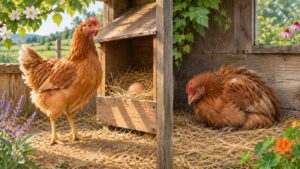
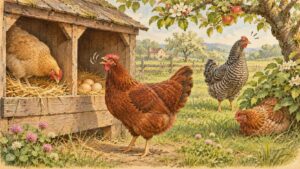
A pullet that previously ignored the nesting boxes may begin stepping inside, scratching at bedding, and testing different corners. 🪺 These short visits can be part of normal nest-searching behavior, especially when she leaves again to eat, forage, or join her flock. A quiet, clean, accessible nesting area gives her somewhere appropriate to investigate.
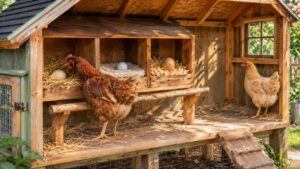
Set out nesting boxes before the first eggs arrive rather than waiting until you discover one behind the coop. Keep bedding dry, make entry easy, and avoid disturbing a bird that is calmly assessing a potential laying spot. A wooden dummy egg can help direct attention toward a nest, but it cannot force maturity or guarantee that every first egg lands there.
Sign 5: Her Calls and Daily Routine Change
Some pullets become more vocal or restless as they start exploring nest sites and adjusting to reproductive behavior. 🎵 You might hear new clucks, notice repeated trips toward quiet corners, or see a bird briefly separate from the group before rejoining it. These changes are worth observing when they occur alongside reddening facial features and growing nest interest.
However, the familiar egg song is often heard around or after laying, so it should not be treated as a reliable advance announcement. Many healthy pullets remain comparatively quiet, while noisy birds may simply be reacting to flock activity or their surroundings. Record any new behavior, but do not mistake ordinary variation in personality for a precise laying prediction.
How Soon After These Signs Will She Lay?
It is possible to notice redder wattles and a developed comb weeks before the first egg, while nest inspection may become more obvious closer to laying. Neither change works like a clock, and a pullet can squat repeatedly without delivering an egg on the schedule you have imagined. ⏳ Her breed, maturity, nutrition, daylight exposure, and general health all matter more than a prediction based on one photograph.
First eggs may also be smaller than the eggs a mature hen eventually produces, and an early laying pattern can be irregular. Do not assume that one egg means every pullet in the same hatch must start immediately, since flockmates often mature at different rates. 🥚 Watch the individual bird and the trend over several days or weeks, not a promised number of hours.
What to Prepare While You Wait
Offer a suitable complete feed for the flock’s life stage and make clean water consistently available, because a pullet needs balanced nutrition as she approaches production. Feeding arrangements around the transition to layer ration depend on the birds’ ages and whether the flock contains younger non-layers, so follow appropriate feed guidance rather than starting high-calcium layer feed very early. 🌾 For laying birds, a correctly formulated ration supports the nutrients needed for egg production and shell formation.
Give pullets access to secure, comfortable nests before laying starts, and collect eggs routinely once production begins. If the young birds have not yet learned where to lay, check sheltered corners of the coop and run before concluding that no eggs have appeared. A simple daily observation note can make the waiting period easier without turning every comb change into an emergency.
When to Worry About Unusual Behavior
Normal nest-seeking usually involves an alert chicken that can leave the box, walk comfortably, eat, and rejoin the flock. In contrast, repeated straining without producing an egg, pronounced tail pumping, unusual posture, swelling, weakness, or lethargy should never be dismissed as an ordinary first-egg sign. ⚠️ These symptoms can occur with serious reproductive problems, including egg binding, and warrant prompt veterinary assessment.
Also pay attention if a pullet stops eating, struggles to breathe, or remains hunched and inactive rather than simply checking nests. Do not squeeze her abdomen or try to force an egg out, since handling can cause injury and the problem may require veterinary examination. A red comb without eggs is generally a reason to observe; distress without eggs is a reason to act.
Five-Picture Pullet Readiness Visual Checklist
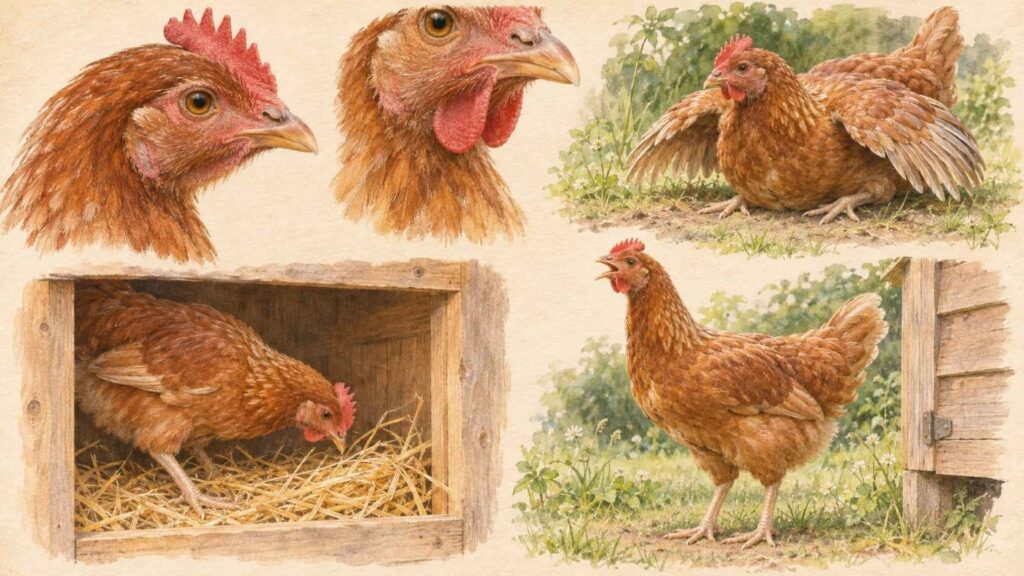
Use this checklist as a small visual field guide: each picture should show a clear behavior or body feature rather than promise an exact date. 📷 Take your own reference photographs from similar angles every week so you can see changes in a specific bird over time. The goal is to recognize a cluster of signs, not to classify a chicken as late because she skipped one.
| Picture | What to Show | What to Notice |
|---|---|---|
| 1. Comb | Side profile with comb fully visible | Fuller shape and redder color than earlier weeks |
| 2. Wattles | Close view below the beak | More noticeable size or color |
| 3. Squat | Calm pullet crouching voluntarily | Lowered body and slightly outward wings |
| 4. Nest search | Pullet examining bedding in a nest | Entering, scratching, or testing the space |
| 5. Vocal changes | Alert pullet near coop or nest | New calls or brief restless searching |
No single picture confirms that an egg is already forming or will arrive by morning. The checklist works best when paired with age, breed, seasonal conditions, and the chicken’s normal behavior. 🐔 Red combs are clues, not countdowns, and patient observation is more useful than guessing a first-egg date.