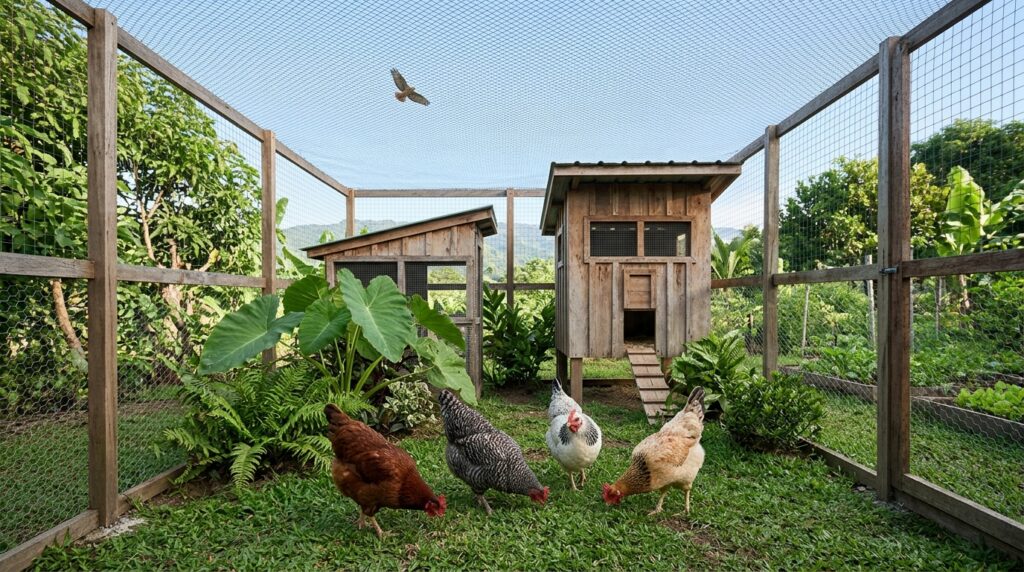
Watching your chickens scratch in the yard is one of the joys of keeping a backyard flock. But an open yard can also expose them to aerial predators, including hawks.
Hawk attacks can happen quickly, particularly when chickens are in an exposed area without nearby shelter. Young birds, bantams, and smaller chickens may be especially vulnerable, although larger birds can also be injured or killed.
The good news is that you can reduce daytime risk through thoughtful run design, overhead protection, and simple changes to your flock’s routine. You do not need an enormous property or an expensive setup to begin improving safety.
The most important principle is simple: make it harder for a hawk to reach your chickens and give your flock a protected place to retreat.
🛡️ 1. Cover the Chicken Run From Above
A roof or secure overhead barrier is one of the most effective ways to reduce the risk of hawk attacks.
Hawks hunt from the air, and a run that is completely open at the top gives them an opportunity to swoop down. Covering the run physically prevents direct access when the covering is properly installed and maintained.
Possible options include:
- Poultry netting: A lightweight option for suitable small runs, provided it is securely supported and appropriate for the expected conditions.
- Aviary netting: Designed for enclosing birds and may work well over larger spaces when properly installed.
- Welded-wire roofing: A more durable option when the frame can safely support the material and the openings are appropriate for the predators you need to exclude.
- A solid roof section: Provides overhead protection and shade, although ventilation and drainage must be considered.
Choose materials that can withstand local weather, including wind, rain, and strong sunlight. Keep the covering taut enough to prevent sagging, inspect fasteners regularly, and repair holes immediately.
A loose or damaged net can create openings for predators and may entangle birds. Avoid improvised overhead lines or netting that could injure chickens or wildlife.
For a small backyard flock, covering the main run is often a more dependable investment than repeatedly buying scare devices. <Cite refs={[“turn667221search1″,”turn667221search5″,”turn667221search11”]}/>
🌿 2. Create Low-Cost Hiding Places
Chickens need places where they can quickly move out of an exposed area.
Add safe, stable shelters inside the run, such as:
- A sturdy wooden shelter with enough space for birds to gather
- A covered section beneath a raised platform
- Low, broad structures that provide shade and concealment
- Suitable shrubs or leafy vegetation that offer cover without creating dangerous gaps
Arrange these shelters so chickens can reach them quickly from different parts of the run. Avoid creating narrow dead ends where birds might become trapped or crowded.
Natural vegetation can help, but it should not replace a secure overhead barrier where hawks are a persistent threat.
Check shelters for sharp edges, unstable boards, exposed nails, and spaces where a chicken could become stuck. Keep the area clean and dry to reduce sanitation problems.
Budget tip: A sturdy, reused wooden structure may be useful if it is safe, weather-resistant, and easy to clean. You do not need decorative landscaping to provide practical cover.
🏡 3. Limit Unprotected Free-Range Time
Free-ranging gives chickens more room to forage and explore, but it also increases exposure to predators.
If hawks have been seen hunting in your yard or you have already experienced an attack, temporarily keeping your flock inside a covered run is a sensible precaution.
You can still provide enrichment by offering:
- Leafy greens in a safe hanging feeder
- Scratch areas with clean, loose material
- Dust-bathing areas
- Perches and stable platforms
- Scattered feed in appropriate locations to encourage natural foraging
If you continue allowing supervised free-ranging, stay close enough to respond quickly and make sure the birds have accessible shelter. Supervision can help, but it does not guarantee protection.
Consider your own schedule, too. If you work away from home, a secure covered run is generally more dependable than a plan that requires someone to watch the flock all day.
👀 4. Pay Attention to Hawk Activity
Learning your yard’s risk patterns can help you decide when additional precautions are needed.
Watch for:
- Hawks repeatedly perching near the chicken area
- Birds suddenly becoming alert, crouching, or rushing for cover
- Repeated sightings of a hunting raptor over the yard
- Missing small birds or unexplained injuries
- Freshly plucked feathers or other possible signs of predation
These clues are not conclusive on their own. For example, feathers may have several causes, and a missing chicken could have been taken by another predator.
If you see a hawk actively hunting your flock, calmly move the chickens into their secure enclosure if you can do so safely. Avoid chasing or cornering the wild bird.
Also inspect nearby structures for obvious perching locations. Where practical, position the chicken run away from isolated perches that overlook the flock. Do not cut down trees or disturb wildlife nests without considering local regulations and ecological impacts. <Cite refs={[“turn667221search2″,”turn667221search7”]}/>
🎭 5. Do Hawk Decoys and Reflective Tape Work?
Plastic owls, reflective tape, shiny objects, and other visual deterrents are popular among backyard chicken keepers. However, they should not be treated as reliable protection on their own.
A hawk may become accustomed to a stationary object, and a decoy does not physically prevent an attack.
If you try a visual deterrent, use it only as a secondary measure alongside a secure enclosure. Move or change the device periodically, and check that it cannot injure chickens or entangle wildlife.
Likewise, a rooster may alert the flock to danger, but it cannot guarantee that a hawk will stay away. Chickens may react differently depending on their age, temperament, and surroundings.
For ongoing risk, prioritize physical barriers and accessible shelter over relying on any single deterrent. <Cite refs={[“turn667221search7″,”turn667221search8”]}/>
🔧 6. Inspect the Run Before Every Daytime Release
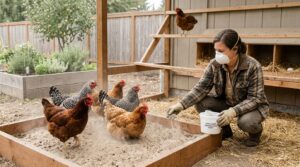
A run that was secure last week may develop a problem after a storm, a fallen branch, or ordinary wear.
Make a quick inspection part of your daily routine.
- Check the roof and netting for holes, sagging, or loose fasteners.
- Inspect the frame for damaged or unstable sections.
- Make sure gates close properly.
- Remove fallen branches or debris that could damage the covering.
- Check that shelter areas remain accessible and stable.
- Confirm that water, shade, and ventilation are adequate.
Remember that hawk protection is only one part of predator prevention. A run also needs secure sides, gates, and lower barriers to address threats from dogs, foxes, raccoons, and other local animals.
Chicken wire is useful for containing chickens, but it may not provide adequate protection against determined predators. Choose stronger materials where needed, based on the threats in your area.
🩹 7. What to Do After a Hawk Attack
If a chicken has been attacked, first move the rest of the flock into a secure enclosure.
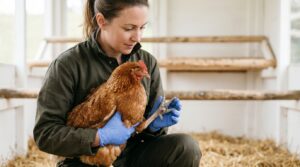
Then assess the injured bird carefully and minimize handling and stress. Even wounds that appear small can be serious because talons may cause punctures or deeper tissue damage.
Contact a veterinarian promptly if you notice puncture wounds, bleeding, difficulty breathing, inability to stand, eye injuries, severe weakness, or other significant trauma. Keep the injured chicken in a quiet, safe place while following veterinary advice.
Do not assume a bird is unharmed simply because it can walk. Feathers may conceal injuries, and a chicken may hide signs of pain.
After addressing the immediate injury, review how the attack may have happened. Look for gaps in the roof, damaged netting, or unprotected areas where chickens were exposed. Strengthening the enclosure is more useful than relying on the same setup and hoping the hawk does not return.
⚖️ 8. Protect Your Chickens Without Harming Hawks
Hawks are wild predators, and their legal protection varies by species and location. In the United States, many hawks are protected under federal wildlife law, so killing, capturing, or disturbing them may be unlawful without specific authorization.
Rules differ across countries and regions. Before attempting to handle, trap, relocate, or otherwise interfere with a raptor, check with the appropriate local wildlife authority.
In most backyard situations, exclusion is the practical first choice: secure the run, add overhead cover, and reduce the time chickens spend in exposed areas.
You can protect your flock while allowing wild birds to continue their natural role in the ecosystem.
✅ A Simple Hawk-Protection Plan
If you are unsure where to start, use this priority order:
- Today: Check the run for gaps and bring chickens into a protected area if hawks are actively hunting nearby.
- This week: Repair damaged barriers and add safe hiding structures.
- Next: Install a secure overhead covering if the run is open.
- Ongoing: Inspect the enclosure regularly and reassess risk after any attack or repeated hawk sightings.
You can adapt this plan to a small urban yard, a suburban garden, or a larger backyard flock. The right solution depends on your available space, budget, local weather, and the predators in your area.
Final Thoughts 💚
Hawk attacks are frightening, especially when you are trying to give your chickens a healthy, enriching outdoor life. But keeping chickens safe does not have to mean eliminating every opportunity to forage or explore.
Start with the strongest protection you can provide: a well-maintained covered run. Add low shelters, watch for changes in predator activity, and limit unprotected free-ranging when risk increases.
Decoys and visual deterrents may have a supporting role, but they should never replace secure barriers.
A safer chicken yard is built around prevention, not luck. With regular inspections and a few thoughtful improvements, you can reduce daytime risk while giving your flock room to enjoy a more secure outdoor environment. 🐔🌿