
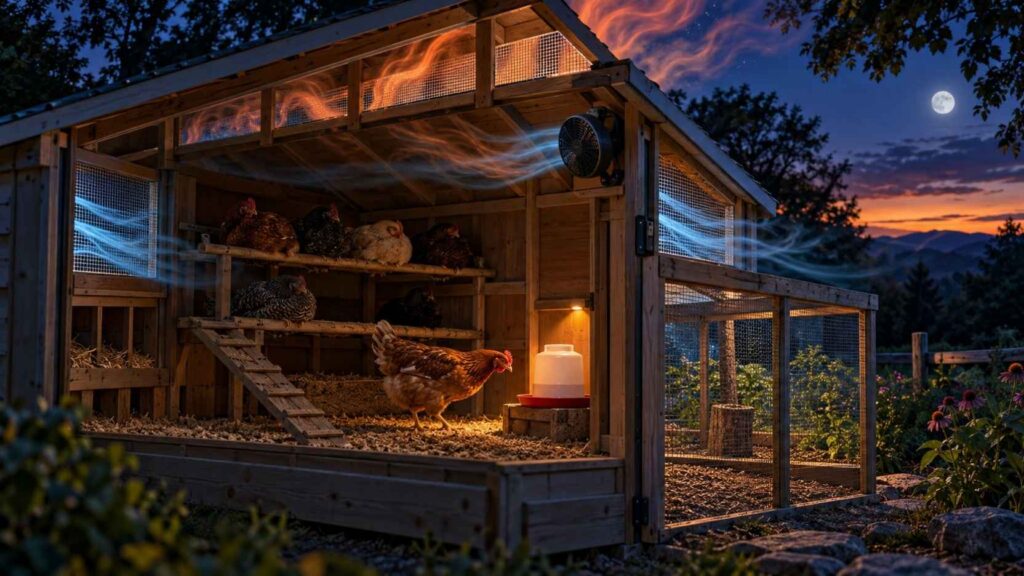
When a summer heatwave keeps the coop hot long after sunset, it is reasonable to wonder, should chickens have a light on at night so they can find water? 🐔 Chickens normally settle onto their roosts around dusk and remain relatively inactive until morning, but extreme heat can make birds restless and increase the importance of dependable water access. The goal is not to keep them awake for extra drinking time; it is to make sure the flock can stay cool, hydrated, and comfortable without unnecessarily disrupting its normal dark period.
A light can occasionally be part of an emergency heat-management setup, especially when birds are already moving around after dark and clearly need to navigate the coop. However, bright all-night lighting should not become the default solution, because chickens use the natural light-dark cycle to regulate sleep, activity, and other biological rhythms. 🌙 In most situations, improving ventilation, reducing accumulated heat, and making water easier to reach will accomplish more than simply leaving a bulb switched on.
Can Chickens See Well Enough To Drink Water At Night?
Chickens have excellent daytime vision, but their eyes are not designed for seeing particularly well in darkness. As evening light disappears, they usually move toward their roost before visibility becomes poor, which is one reason you may notice the entire flock settling down at roughly the same time. 👀 Once the coop is completely dark, a chicken may be reluctant to climb down and navigate obstacles simply to visit a waterer.
That does not mean chickens become completely incapable the moment the sun sets, because twilight, moonlight, or small amounts of ambient light may allow some movement. Still, the fact that chickens can’t see in dark conditions as effectively as they can during daylight helps explain why nighttime drinking is normally limited. If a bird is already comfortably roosting, it will usually stay there rather than wander through a dark coop searching for water.
Do Chickens Normally Need Drinking Water During Sleeping Hours?
Healthy chickens normally perform most of their eating and drinking during daylight hours, then spend the night resting on the roost. 💧 That makes strong daytime hydration especially important during hot weather, because birds should have constant access to clean water throughout the hours when they are naturally active. A flock that has been drinking adequately all day does not normally require scheduled nighttime drinking sessions.
Even so, keeping water accessible overnight can still be useful during unusually hot conditions, especially if temperatures remain high and birds become active before sunrise. The distinction is between making water available and forcing chickens to stay awake to use it. Water can remain within safe reach without illuminating the entire coop like daytime, allowing birds that genuinely move around to drink while others continue sleeping.
Should You Turn On A Coop Light During A Heatwave?
A temporary chicken coop night light can sometimes help during an exceptional heat event if birds are getting off the roost, panting, moving around, or attempting to reach water after dark. ☀️ Limited illumination may make obstacles, ramps, and water stations easier to locate when the birds would otherwise be navigating near-total darkness. Treat this as an emergency management option rather than a standard summer routine.
Bright lighting throughout the night is generally undesirable because chickens naturally benefit from a predictable period of darkness and rest. Artificial lighting schedules are powerful enough to influence laying-hen activity and reproductive cycles, which demonstrates why lighting should be treated as a management variable rather than harmless decoration. If nighttime illumination is necessary, use only as much light as needed for safe navigation and only for as long as the unusual situation requires.
Is A Dim Night Light Better Than A Regular Bulb?
If some illumination is genuinely useful, a very dim, indirectly positioned light is usually more sensible than a bright overhead bulb. 💡 Place it so birds can distinguish the floor, ramp, and waterer without shining directly toward the roosts, and avoid suddenly changing the coop from darkness to intense light in the middle of the night. The objective is orientation, not creating an artificial daytime environment.
Electrical safety matters even more when fans, waterers, extension cords, and lighting are sharing the same small structure. Use equipment suitable for the environment, keep connections protected from water and curious birds, secure cords so they cannot be pecked or tripped over, and never position electrical equipment where a leaking waterer can soak it. ⚠️ Most importantly, remember that a dim light does not cool a chicken, so it should never replace airflow, shade, accessible drinking water, and other heat-management measures.
Where Should You Put The Waterer During Extremely Hot Nights?
During extreme heat, position water where chickens can reach it without crossing difficult obstacles or squeezing through crowded areas. A stable, spill-resistant waterer near an accessible portion of the coop or secure run can reduce the distance birds must travel if they become thirsty after roosting. 🪣 If your normal water station is far from the sleeping area, temporarily adding another drinking point can be more useful than making the existing one brighter.
Placement requires balance because spilled water can create wet bedding, additional humidity, odors, and sanitation problems inside a coop. Avoid placing an open waterer directly under roosts where droppings can contaminate it, and make sure containers cannot easily tip when a bird lands nearby. If a predator-secure run remains accessible overnight, a protected water station there may help keep unnecessary moisture out of the sleeping area while still providing another option.
What Should You Prioritize Instead Of Leaving Lights On?
Ventilation should usually come before nighttime lighting when managing a hot coop. 🌬️ Warm air naturally collects inside enclosed structures, so adequate high-level ventilation helps accumulated heat and moisture escape while allowing fresher air to enter. Ventilation should provide airflow without creating unsafe openings that predators can exploit.
Water management deserves similar attention because chickens rely heavily on drinking during hot weather. Keep clean water continuously available, check containers more frequently than usual, provide enough drinking space for the entire flock, and consider additional stations if dominant birds can block access. 💦 Water does not need to be icy, but avoiding containers that sit heating in direct afternoon sun can make drinking more appealing.
Reducing daytime heat accumulation can also make nighttime conditions dramatically easier to manage. Shade the coop and run where practical, improve roof ventilation, avoid unnecessary crowding, and make sure airflow is not blocked by solid walls, stored equipment, or excessive bedding piled around vents. 🌳 A coop that absorbs less heat during the afternoon has less stored heat to release after sunset, reducing the likelihood that chickens will remain uncomfortable late into the night.
Nighttime Coop Lighting And Water-Placement Decision Flowchart
| What You Observe | Best First Response |
|---|---|
| Birds are sleeping normally and temperatures are comfortable | Leave the coop dark and maintain normal water access. |
| Night remains hot, but birds stay settled | Improve ventilation and ensure water is ready for early morning rather than automatically adding light. |
| Birds are awake and moving during extreme heat | Make water easier to reach and consider very dim temporary lighting if darkness prevents safe navigation. |
| Water is inside and repeatedly spilling | Use a more stable drinker, reposition it, or add a secure water station outside the sleeping area. |
| Birds are panting heavily despite nighttime cooling efforts | Focus immediately on reducing heat exposure, ventilation, water access, and close observation rather than relying on lighting. |
| You are leaving a bright bulb on every night | Reassess the routine and restore a normal dark period unless there is a specific short-term reason for illumination. |
The flowchart is meant to prevent a common beginner mistake: solving a temperature problem with a lighting solution. 🌡️ If the coop remains dangerously warm, keeping chickens awake longer does not remove the heat that is stressing them. Lighting is useful only when poor visibility is the specific obstacle preventing an already-awake chicken from safely reaching water.
What About Chickens Drinking Water At Night?
You may occasionally see chickens drinking water at night, especially during extreme temperatures, after being disturbed, or when they remain active later than usual. That behavior is not automatically concerning, nor does it mean every flock requires an illuminated nighttime drinking schedule. 🐓 What matters is whether clean water is available when needed and whether the birds’ overall behavior suggests they are coping comfortably with the temperature.
Pay more attention to the flock’s daytime drinking opportunities, ventilation, shade, posture, activity, and general condition than to whether every hen takes a drink at midnight. Heat stress can become serious, so persistent heavy panting, severe lethargy, loss of coordination, collapse, or birds that appear unable to recover from the heat deserve prompt attention and, when appropriate, veterinary guidance. A night light should never give a keeper false confidence that the underlying heat problem has been solved.
So, Should Chickens Have A Light On At Night?
Under normal conditions, chickens do not need a light left on throughout the night, and providing a natural dark resting period is the better routine. 🌙 During an unusually hot night, a small amount of temporary illumination can be reasonable if chickens are actively moving and poor visibility is genuinely stopping them from reaching water. The important distinction is between a short-term accommodation during extreme weather and permanently illuminating the coop every night.
For most backyard flocks, prioritize excellent daytime hydration, clean water, shade, ventilation, sufficient drinking stations, and a coop that can release accumulated heat after sunset. If you do use a light, keep it dim, indirect, electrically safe, and temporary while continuing to address the actual temperature problem. 🐔 Think of nighttime lighting as a navigation tool of last resort—not a cooling system and not a substitute for good summer coop management.




