Introduction
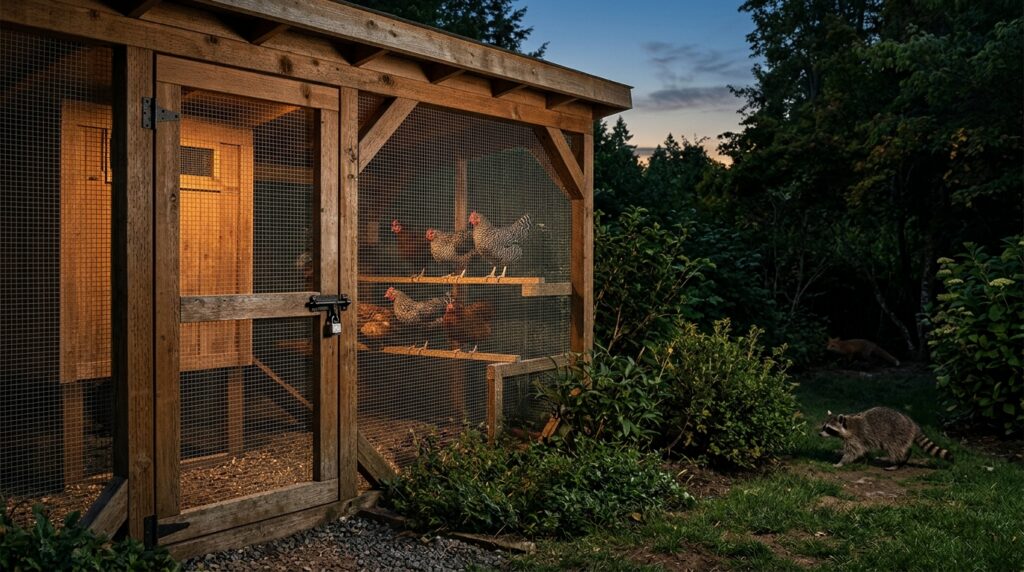
A quiet chicken coop at sunset can give you peace of mind, but nighttime is when many backyard flocks face serious risks. Raccoons can manipulate simple latches, foxes can dig beneath fences, and other predators may squeeze through openings that look too small to matter.
The good news? You do not need an expensive commercial coop to improve your flock’s safety. A few well-planned upgrades, regular inspections, and a consistent nighttime routine can make a meaningful difference.
This guide explains how to protect your chickens using practical, budget-conscious methods that work together.
🦝 1. Understand Which Predators May Visit Your Coop
Different predators attack in different ways. Knowing the possibilities helps you identify weak spots.
- Raccoons: Can climb, reach through wide mesh, and manipulate some simple latches.
- Foxes and coyotes: May dig beneath fencing, climb or jump barriers, and carry chickens away.
- Weasels and similar small predators: Can enter through surprisingly small gaps.
- Opossums and skunks: May target eggs, chicks, or vulnerable birds.
- Owls: Can threaten chickens at night, especially where birds are accessible.
- Free-roaming dogs: May attack poultry if they reach the run or coop.
These are general patterns, not a guarantee that a particular animal caused an attack. Look for tracks, disturbed soil, damaged mesh, feathers, and entry points before deciding what to improve.
🔒 2. Lock Chickens Inside Every Night
This is one of the most important habits in predator prevention.
Train your chickens to return to the coop before dusk. A consistent evening routine makes this easier:
- Encourage the flock to enter the coop before darkness.
- Count the birds to check that everyone is present.
- Close the main door and secure every latch.
- Check pop doors, windows, clean-out panels, and other access points.
- Confirm that the structure is secure before leaving.
An automatic coop door can help if your schedule is unpredictable, but it should be installed correctly and checked regularly. Never assume it closed successfully without testing the system.
Remember: A door that is closed but not securely latched may still leave your chickens vulnerable.
🛠️ 3. Use Hardware Cloth Instead of Relying on Chicken Wire
Chicken wire is designed primarily to contain poultry. It is not a dependable barrier against determined predators, and its larger openings can allow animals to reach through and grab chickens.
For vulnerable openings, consider galvanized welded-wire hardware cloth with openings around 1/2 inch. Use suitable mesh over ventilation openings, windows, and other access points, and fasten it securely to a sound frame.
Pay particular attention to:
- Gaps around doors and hinges
- Ventilation openings
- The edges where walls meet the floor
- Loose or rusted wire
- Openings created by damaged boards
Choose mesh and fasteners appropriate for the predators in your area. Even strong wire will not help much if it is attached to weak wood or leaves gaps at the edges.
🦊 4. Stop Predators From Digging Under the Run
Foxes, coyotes, and other ground predators may attempt to tunnel beneath an enclosure.
Two common options are:
- Buried wire barrier: Extend suitable welded wire downward along the perimeter.
- Outward-facing wire apron: Secure wire flat against the ground and extend it outward from the fence, then cover it with soil or another suitable surface.
A buried barrier around 12 inches deep is a commonly recommended starting point, but the best design depends on the soil, enclosure, and local predators. An outward apron may be easier to install when digging a trench is impractical.
Inspect the perimeter regularly for fresh digging, loose wire, and gaps near gates. Repair damage promptly.
🦝 5. Install Latches Raccoons Cannot Easily Open
A simple hook or sliding bolt may not be enough for a clever, dexterous animal.
Use sturdy latches that require more than one deliberate movement to open. A properly fitted latch secured with a suitable carabiner can provide an additional layer of protection.
Check every access point, including:
- Main doors
- Nest-box lids
- Feed-storage compartments
- Clean-out doors
- Small access panels
Test the latches yourself after installation. Make sure they cannot be pushed aside easily and that the surrounding wood or frame is strong enough to resist pulling.
🌙 6. Cover the Run and Reduce Attractive Food Sources
A secure nighttime coop is essential, but a protected run adds another layer of safety. Where practical, use a strong overhead cover to reduce access by climbing and aerial predators. Lightweight netting may help with some bird threats, but it is not equivalent to a strong roof or welded-wire enclosure.
Also make the area less attractive to wildlife:
- Clean up spilled feed before nightfall.
- Store feed in sturdy, tightly closed containers.
- Secure garbage and avoid leaving food scraps outside.
- Keep tall weeds, brush, and debris from creating hiding places beside the coop.
- Inspect the area for holes and signs of animal activity.
Motion-activated lights or alarms may be useful as supplementary deterrents, but animals can become accustomed to them. Do not use them as a substitute for secure housing.
💰 7. Prioritize Upgrades If Your Budget Is Limited
You do not have to rebuild the entire coop at once. Start with the most important weaknesses.
Priority 1: Tonight
- Lock all chickens inside a secure coop.
- Repair obvious holes and loose doors.
- Secure every latch.
- Remove spilled feed and scraps.
Priority 2: As soon as practical
- Reinforce vulnerable openings with suitable hardware cloth.
- Strengthen weak door frames and fastenings.
- Add a dig barrier where the perimeter is vulnerable.
Priority 3: Long-term improvements
- Cover the run with an appropriate predator-resistant structure.
- Improve drainage and maintain the perimeter.
- Consider an additional electric fence where suitable and legally permitted, installed according to the manufacturer’s safety instructions.
Focus first on the actual points where an animal could enter. A small, secure enclosure is often a better starting point than a large run with several weaknesses.
✅ 8. Use a Simple Nightly Security Checklist
Before you go inside for the evening, check:
- Every chicken is accounted for.
- The coop door is fully closed and latched.
- Windows and ventilation openings are protected.
- No holes or damaged mesh are visible.
- The run perimeter has no obvious digging or loose sections.
- Feed spills and food scraps have been removed.
- Any automatic door or alarm appears to be working correctly.
If you discover an attack, secure the surviving birds immediately and inspect the entire enclosure before the next night. Look for evidence of how the predator entered instead of simply repairing the most obvious damage.
Avoid attempting to handle or trap wildlife without understanding local laws and safety requirements. Contact local wildlife authorities or a qualified professional if a persistent predator problem requires further intervention.
Final Thoughts
Protecting chickens at night is not about finding one perfect product. It is about combining secure housing, strong mesh, dependable latches, dig-resistant boundaries, and consistent daily habits.
Start with the basics: bring your flock inside before dark, close and secure every entrance, and inspect the coop for weaknesses. Then improve the structure where necessary.
A little prevention each evening can help you avoid the distress of discovering a predator attack the next morning. Your chickens deserve a safe place to roost, and a practical security routine makes that goal much more achievable.