When I first decided to keep quail, I thought it would be a small, manageable addition to my suburban backyard. I had no idea that these tiny, feathered creatures would teach me so much about patience, failure, and the quiet joy of fresh eggs. Over the course of a year, I moved from nervous first-time chick owner to a confident keeper who knows the exact sound of a happy quail. Here is my story.
Getting Started: Choosing Breeds and Sourcing Chicks
My journey began with a Google search that quickly spiraled into a full research project. For an American backyard, the Coturnix quail (also called Japanese quail) is by far the most practical choice. Unlike Bobwhite quail, which are flighty and prefer large pens, Coturnix are docile, mature in just six weeks, and lay eggs by week eight. Bobwhites might appeal to hunters or those with acreage, but for someone in a city lot, Coturnix won hands down.
Sourcing chicks was my first hurdle. I wanted to avoid the high mortality of mail‑order day‑olds, so I drove two hours to a local breeder who specialized in “Jumbo Brown” Coturnix. She gave me twelve day‑old chicks, a mix of males and females, and a stern warning: “Quail are fragile. Keep them warm, dry, and clean.”
Setting Up the Brooder: What I Wish I Knew
My brooder was a simple plastic storage tub with a wire mesh lid. I used a 250‑watt heat lamp and a thermometer, aiming for 95°F the first week, then dropping 5°F each week. But the real lesson came after a near‑disaster: I placed the lamp too close, and the chicks piled into a corner to escape the heat. Two died from overheating before I realized. After that, I created a temperature gradient—one side hot, one cool—so they could choose. Here’s a checklist I now give every new quail keeper:
- Heat lamp with adjustable height – Test the temperature at chick level before they arrive.
- Sturdy waterer with marbles or pebbles – Quail drown easily; the marbles prevent them from climbing in.
- High‑protein starter feed (28–30% protein) – Game bird starter is ideal.
- Pine shavings, not cedar – Cedar fumes can kill chicks.
- Red heat bulb – Red light reduces pecking and keeps them calm.
The First Weeks: Sleepless Nights and Tiny Fluffballs
The first two weeks were a blur of feedings, poop cleaning, and worry. Quail chicks grow incredibly fast—they double in size every few days. I remember checking them every hour, terrified they’d suffocate under the heat lamp or somehow escape through a gap. One night at 2 AM, I heard frantic cheeping and found a chick stuck upside down in the bedding. That’s when I learned to use non‑slip shelf liner instead of newspaper, which is too slick for their tiny legs.
A bigger challenge was feather picking. By week three, a few chicks started pecking each other’s feathers, especially near the vent. I tried lowering the heat (too hot causes stress), adding more hiding places (cardboard boxes), and even a pinch of electrolytes in the water. The turning point was giving them a dust bath—a shallow dish of dried sand mixed with wood ash. They dove into it, and the pecking stopped overnight. Sometimes the simplest solutions are the most powerful.
Challenges and Surprises: Health, Weather, and Behavior
Just when I thought things were smooth, reality hit. In week six, a hen started drooping her wings and closing her eyes. I isolated her, but within 24 hours she was dead. The local vet suspected coccidiosis, a protozoan infection that hits young birds especially hard. I immediately cleaned the entire coop, switched to medicated feed for two weeks, and added apple cider vinegar to the water (a natural immune booster). No more losses after that, but I learned to quarantine any new bird for at least 10 days—a rule I now never break.
“I learned that quail are masters of hiding illness — by the time you notice, it’s often too late. That’s why daily observation is not optional; it’s the difference between a sick bird and a dead one.”
Weather: The Silent Enemy
Summer in my region brought 100°F heatwaves. My outdoor pen had shade cloth, but the quail still panted heavily. I froze water bottles and placed them in the pen—the birds would press their bodies against the cold plastic. For winter, I learned to insulate the coop with foam board and put a small heater in the waterer to keep it from freezing. One night the temperature dropped to 10°F, and I lost a rooster to frostbite on his comb. Since then, I use a thermostat‑controlled heater set to 40°F minimum.
Behavior was the biggest surprise. Quail have distinct personalities: one hen, “Poppy,” would chirp every time I opened the coop door and come running for mealworms. Another would dive into the corner if I moved too fast. I also discovered that roosters are surprisingly gentle—they call the hens to feed first and never fight seriously if the ratio is right (one male per three females).
Common Health Issues and Quick Fixes
| Issue | Symptoms | Immediate Action |
|---|---|---|
| Egg Binding | Hen sitting in nest, straining, tail bobbing | Warm bath, apply KY jelly to vent, gentle massage. If no egg in 1 hour, vet. |
| Bumblefoot | Swollen foot, limping, black scab | Soak in Epsom salts, remove scab, apply antibiotic ointment, wrap. |
| Respiratory Infection | Sneezing, rattling breath, nasal discharge | Isolate, warm area, add VetRx to water. If no improvement in 2 days, antibiotics from vet. |
The Reward of Fresh Eggs: Daily Harvest
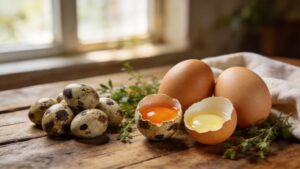
Exactly eight weeks and three days after the chicks arrived, I found my first egg—a tiny, speckled brown oval no bigger than a quarter. I felt like a kid on Christmas morning. From that day on, my eleven hens (I had culled two roosters for behavior reasons) produced an average of eight eggs per day. Coturnix quail lay almost daily, even in winter with just 12 hours of light.
Quail eggs are more nutrient‑dense than chicken eggs: higher in protein, iron, and B vitamins, and lower in cholesterol (yes, really). I scrambled them for breakfast, boiled them for salads, and even pickled a jar that disappeared at a barbecue. My secret for perfect hard‑boiled quail eggs: bring water to a boil, gently drop eggs in, boil exactly 2.5 minutes, then ice bath. The shells slip off easily if you roll them gently.
To keep production high, I learned two key practices:
- Calcium supplementation – Crushed oyster shells free‑choice. Without it, eggs become thin‑shelled or hens lay poorly.
- Light management – 14–16 hours of light per day. I use a simple timer with an LED bulb. No light, no eggs in winter.
Quiet Companionship: The Unexpected Joy
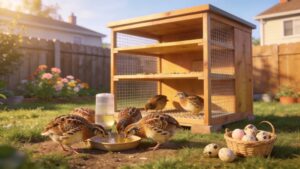
I had expected a utilitarian flock—eggs for my kitchen. What I didn’t expect was how deeply I’d bond with these small birds. Every evening, I sit by the pen with a cup of coffee and watch them dust‑bathe, chase insects, and burble softly to each other. The sound is a gentle, percussive hum that melts away stress. One of my hens, “Dot,” learned to fly to my shoulder when I knelt inside the pen. She stayed there, preening my hair, for five minutes at a time.
This quiet companionship taught me patience in a way nothing else has. Quail don’t respond to commands like dogs; they respond to trust built over weeks. I learned that sitting still and talking in a low voice earns more than any treat. It’s a meditative practice, a break from screens and urgency. For an American audience always chasing productivity, raising quail is a reminder that slow, small moments matter.
Lessons Learned: A Year’s Reflection
If I could go back and give advice to my rookie self, I would say: start with fewer birds, invest in a quality brooder, and expect failure. My year had its share—deaths from heat stress, a breakout of mites, even an escape that ended with a hawk getting one hen. But each failure taught me something I can’t get from a book. For anyone considering quail keeping, here are my top five tips:
- Never buy “unsexed” chicks if you want eggs – A 50:50 male‑female ratio means you’ll have to cull extra males. Buy sexed females if possible, or accept that you’ll need a plan for surplus roosters.
- Prepare for odor control – Quail poop is high in ammonia. Use a deep litter method (pine shavings + zeolite) and clean the coop fully every month.
- Have a predator‑proof plan – Raccoons will rip through wire; use ½‑inch hardware cloth. A roof is mandatory (owls and hawks are fast).
- Record everything – I keep a simple notebook: date each egg laid, weight, health issues. Patterns emerge that save lives.
- Build a community – Join online quail forums. Other keepers have saved my flock more than once with advice I’d never find in a manual.
As the year closes, I look out at my pen. The hens are fluffed up, tucking their heads under wings for the night. In the fridge, two dozen speckled eggs wait for tomorrow’s breakfast. The journey from a tiny chick to a productive layer wasn’t straightforward—it was messy, emotional, and occasionally heartbreaking. But holding that first egg made every late night, every wasted cleaning hour, and every dead bird worth it. Next year, I’ll add a second pen with two more breeds. The learning never stops.