
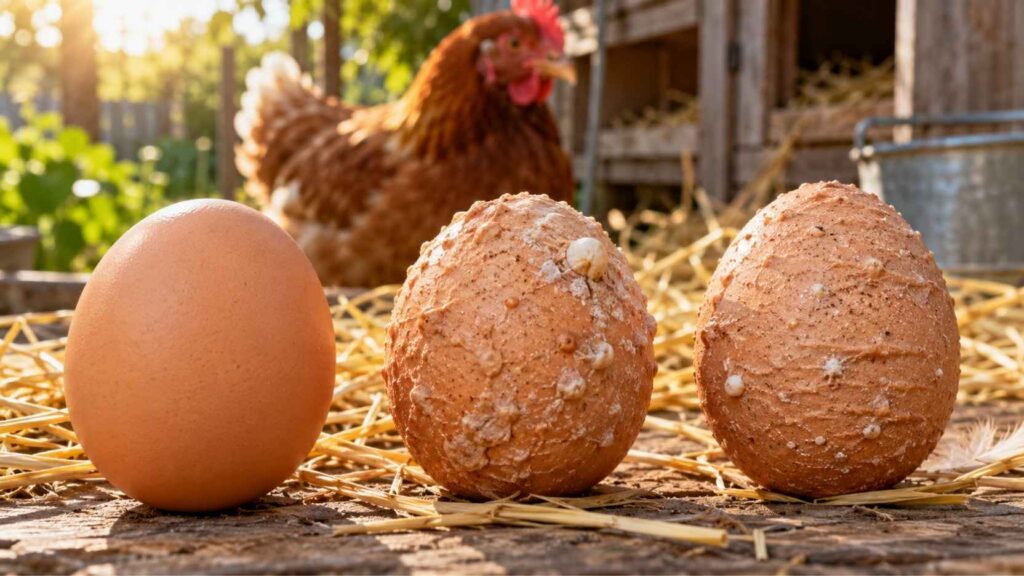
Finding a bumpy chicken egg in the nest box can be unsettling, especially when yesterday’s eggs looked perfectly smooth. 🥚 Raised hard dots, rough patches, or sandpapery areas are often casually called calcium deposits, but that description does not automatically tell you why they formed. The most useful first question is not “What disease is this?” but “Is this a one-off shell oddity or part of a pattern?”
A hen builds the shell during the final portion of egg formation, and small disruptions in timing or mineralization can change the shell’s surface. Some rough or “pimpled” eggs appear after an egg remains in the shell gland longer than usual, while many abnormal shells have no single identifiable cause. That is why a good backyard diagnosis starts with the egg, then quickly expands to the hen, her diet, her laying pattern, and what is happening in the flock.
You Found Bumps on an Egg—Check These Three Things First
Start by touching the bumps gently and deciding whether they are hard shell material or something soft stuck to the surface. Hard raised points, gritty patches, and rough areas are more consistent with an eggshell formation irregularity, while dried manure, nesting material, or other debris may simply be sitting on the shell. 🔍 Do not scrape aggressively, because the goal is to inspect the egg without creating a crack.
Next, check whether the shell underneath feels normally firm and whether this is the first unusual egg you have seen from that hen. A firm egg with a few hard bumps is a very different situation from an egg that is thin, cracked, soft, misshapen, or repeatedly abnormal. Keepers often get more useful information from the pattern over several laying days than from trying to diagnose a single strange egg by appearance alone.
What Are Calcium Deposits on Chicken Eggs?
The phrase “calcium deposits on eggs” usually refers to extra-looking shell material that creates raised specks, rough patches, chalky areas, or a sandpaper-like texture. 🪨 Eggshell is largely mineralized material, so an uneven shell can look as though extra calcium has been sprinkled or layered onto part of the egg. However, the visible bump is the finished shell defect, not a laboratory test showing what the hen ate or exactly what happened inside her reproductive tract.
Some eggs have a few isolated hard pimples, while others feel rough across a large part of the surface, and still others develop bands, ridges, wrinkles, or irregular shapes. Those differences matter because “bumpy egg” is a visual description covering several possible shell abnormalities rather than one precise diagnosis. If you photograph unusual eggs beside a normal egg from the same flock, you can build a simple record that makes repeated changes much easier to recognize.
Does a Bumpy Egg Mean Too Much Calcium?
It is tempting to see hard white bumps and conclude that the hen must be consuming excessive calcium, but that shortcut is too simple. Calcium nutrition matters enormously for shell formation, yet abnormal shells can also be associated with egg-retention timing, stress, reproductive-tract changes, age, illness, or factors that cannot be identified from the shell alone. ⚖️ A single rough chicken egg shell therefore is not a strong reason to start reducing the calcium in a properly formulated laying-hen diet.
Instead, review how calcium is being provided and whether the flock is actually eating a complete feed intended for laying hens. Avoid making dramatic feed changes based only on one bumpy shell, and be especially cautious about adding large unmeasured amounts of supplements directly to an already balanced ration. If you provide a separate calcium source such as oyster shell, use it as part of an overall appropriate feeding program rather than treating every shell imperfection as proof that the hen needs more or less calcium.
Look at the Hen, Not Just the Egg
The hen often tells you more than the shell does, so observe her appetite, posture, movement, alertness, and normal flock behavior. 🐔 A bright, active hen that is eating, drinking, moving normally, and laying on her usual schedule gives you a different level of concern than a bird that becomes withdrawn, fluffed up, weak, reluctant to move, or suddenly stops eating. A weird egg can be the only obvious thing you notice first, which is why a quick whole-bird check is worth doing.
Also look for changes beyond the individual hen, including a sudden drop in flock egg production or several birds beginning to lay abnormal shells. Respiratory signs, diarrhea, obvious lethargy, repeated soft or shell-less eggs, or a cluster of shell problems deserve more attention than a single hard-bumped egg from an otherwise normal flock. Some poultry diseases can affect shell quality, but shell appearance alone cannot identify the cause, so repeated defects plus illness signs are a reason to seek qualified veterinary or poultry-diagnostic guidance rather than guessing.
One Weird Egg vs Repeated Rough Eggs
One isolated bumpy egg from a healthy hen is usually a situation where observation provides more information than immediate intervention. Write down the date, note which hen laid it if you know, check the shell strength, and then watch the next several eggs rather than changing feed, supplements, lighting, or management all at once. 📝 If the following eggs return to normal, you have useful evidence that the defect may have been temporary.
Repeated rough eggs change the question from “What happened to this egg?” to “What is repeatedly affecting this hen or flock?” Review the age of the hen, feed consistency, access to water, environmental stressors, recent disturbances, laying frequency, and whether other shell defects are appearing at the same time. Keeping a simple photo and date log can reveal whether the issue is occasional, tied to one hen, or appearing across multiple layers.
When Should You Worry?
Concern should rise when bumpy or rough shells are accompanied by weaker shells, repeated soft or shell-less eggs, misshapen eggs, declining production, or several affected birds. 🚩 You should also pay closer attention if the hen appears sick, stops eating or drinking normally, isolates herself, shows respiratory problems, strains, or develops a major change in posture or activity. Those combinations provide much more meaningful information than the bumps alone and justify prompt advice from a poultry veterinarian, extension poultry specialist, or appropriate diagnostic service.
For the egg itself, a rough but intact shell is different from a shell that is cracked, leaking, or structurally weak. Surface texture alone does not tell you whether the contents are contaminated, but damaged shells reduce the physical barrier that normally protects the egg, so cracked or questionable eggs should be handled conservatively. 🥚 When in doubt about food safety, prioritize shell integrity, cleanliness, refrigeration practices, and appropriate food-safety guidance rather than judging an egg only by how smooth it looks.
Bumpy Egg Decision Card
| What You Find | Practical Next Step |
|---|---|
| One bumpy egg + healthy hen | Observe — record it, check shell strength, and watch the next few eggs. |
| Repeated rough or bumpy eggs | Investigate — review feed, calcium setup, water, stress, age, laying pattern, and which hens are affected. |
| Several hens producing defects | Look flock-wide — check management changes, feed consistency, environment, production changes, and other symptoms. |
| Bumps + thin, soft, cracked, or shell-less eggs | Escalate attention — repeated shell-quality problems deserve closer investigation. |
| Abnormal eggs + visibly unwell hen | Seek qualified help — illness signs plus egg changes should not be diagnosed from the shell alone. |
The easiest mistake is treating every strange shell as a nutrition emergency and changing several things at once. A better response is observe first, investigate repeated patterns, and escalate when shell defects occur alongside weakness, production changes, or illness signs. That approach protects you from both extremes: ignoring a meaningful pattern and overreacting to one harmless-looking odd egg.




