Standing in the feed aisle, you’re torn: chickens or ducks? Both promise fresh eggs, pest control, and charming personalities, but each comes with a unique set of demands that can make or break your homesteading experience. This guide will walk you through the messy, wet, and quirky realities of raising both, giving you a decision framework that matches your climate, space, and goals.
The Mess Factor: Dust Baths vs. Mud Pies
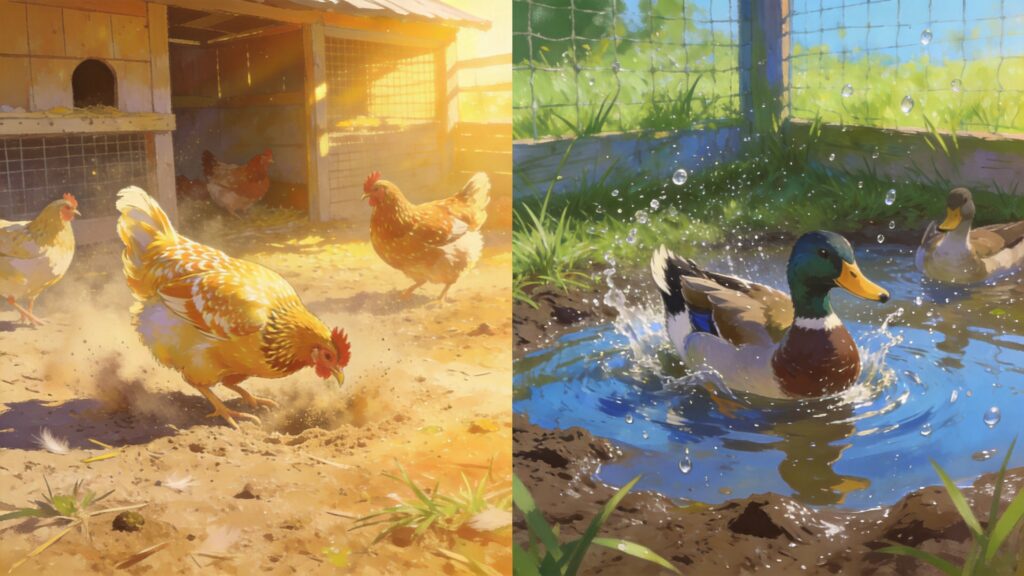
Let’s start with what newcomers often underestimate: mess. Chickens are surprisingly tidy in their own way, but they create dry, dusty chaos. They love dust baths, scratching through bedding, and kicking debris everywhere. A chicken coop will accumulate a fine layer of dust and feathers, and if you have a run, they’ll turn it into a barren moonscape within weeks. In contrast, ducks are wet mess specialists. They need a water source deep enough to submerge their bills and preen, and they will splash that water everywhere—turning bedding into slop, coop floors into mud, and everything in their path into a soggy disaster.
A friend in Vermont told me her duck coop looked like a swamp after every rain. “Chickens just need a dry spot and a dust bath,” she said, “but ducks? I’m basically running a water park.”
If you value a clean, dry coop and live in a dry climate, chickens are the lower-mess option. But if you’re already dealing with wet conditions (hello, Pacific Northwest), ducks’ mess becomes just another part of the landscape—and they actually thrive in it.
Water Needs: From Splashing to Swimming
Chickens are low-maintenance when it comes to water. A simple hanging waterer, refilled weekly, keeps a small flock happy. They’ll drink, maybe dip a foot, but that’s it. Ducks, however, are obsessed with water. They need a bucket or kiddie pool deep enough to dip their entire head (at least 4–6 inches) to clean their nostrils and eyes. Expect to change that water daily—sometimes twice—because it quickly turns into muddy soup. In winter, duck waterers freeze solid far faster than chicken ones, so you’ll need heated options or constant vigilance.
On the flip side, ducks are excellent for wet environments. Have a natural pond? Ducks will love it and help control algae and mosquitoes. Chickens can’t swim and will drown in even shallow water. If your homestead has a stream or marsh, ducks practically manage themselves.
- Chicken water needs:
- Simple waterer, refilled every 3–4 days. No pond or pool required. Works well in arid regions.
- Duck water needs:
- Deep pool or pond, daily refills in summer, heated water in winter. Requires drainage and frequent cleaning.
Personalities: The Clown vs. The Socialite
Chickens have a hierarchy-driven personality. Watch a flock for ten minutes and you’ll see pecking order dramas: dominant hens chase subordinates away from treats, roosters protect their hens, and everyone has a role. They’re curious but skittish—most won’t let you pet them unless raised by hand. Ducks, by contrast, are far more chill. They rarely fight, don’t establish a strict pecking order, and are generally friendly. Indian Runners, for example, will follow you around like puppies. Muscovy ducks are quieter and more independent.
For children or beginners who want pet-like interaction, ducks often win. They’re less flighty, rarely aggressive, and their quacks (or whistles from Muscovies) are endearing. However, ducks are noisier than you might expect, especially the females who quack loudly when excited. Chickens are quieter overall, but roosters crow—a dealbreaker in many suburban settings. Both need secure housing, but ducks are less likely to fly away if wings are clipped. Chickens can be escape artists, hopping over 4-foot fences with ease.
Which Fits Your Lifestyle?
- You want low-drama pets: Ducks are more relaxed and less prone to fighting.
- You enjoy watching social hierarchies: Chickens offer endless entertainment with their pecking order.
- You need quiet neighbors: Chickens (without roosters) are quieter than a flock of quacking ducks.
Egg Production: Daily Reliability vs. Seasonal Bounty
Let’s talk eggs. Chickens are year-round egg-laying machines under artificial light, but even without supplemental light, they’ll lay most of the year except during molt and darkest winter days. A good layer like a Leghorn can give you 300+ eggs annually. Duck eggs are larger, richer, and higher in protein and fat—perfect for baking and making fluffier scrambled eggs. However, ducks tend to be seasonal layers, especially in cold climates. Pekin ducks, for example, might lay only 150–200 eggs per year and stop entirely when temperatures drop below freezing. Some breeds like Khaki Campbells can lay nearly as well as chickens, but the trade-off is that duck eggs have a stronger, gamier flavor that some adore and others hate.
If consistent egg supply is your priority, chickens are the clear winner. But if you’re a baker or love rich, dense eggs, ducks offer a premium product. One more thing: duck eggs fetch double or triple the price at farmers markets due to demand from bakers and health-conscious customers, making them more marketable per egg.
| Species | Typical Annual Egg Count | Egg Size | Best for |
|---|---|---|---|
| Chicken (Leghorn) | 280–320 | Medium-Large | Daily eating, consistent supply |
| Chicken (Plymouth Rock) | 200–250 | Large | Good layers, dual-purpose |
| Duck (Khaki Campbell) | 250–300 | Extra Large | Rich baking, high fat |
| Duck (Pekin) | 150–200 | Very Large | Meat, seasonal eggs |
Taste: Chicken Meat vs. Duck Meat (and Eggs)
Chicken meat is mild, lean, and universally accepted—the white meat staple of American dinner tables. Duck meat is darker, richer, and fattier, with a flavor that’s often compared to beef or lamb. It can be tough if not cooked properly (breasts dry out quickly; legs need slow cooking). If you’re raising birds for personal consumption, chickens are easier to cook and please a wider audience. Ducks offer a gourmet experience but require more skill in the kitchen. For eggs, chicken eggs are familiar and neutral, while duck eggs have a creamier, denser yolk that some describe as “buttery.”
At a homestead, taste is highly subjective. But if you’re catering to foodie trends or selling to upscale restaurants, duck meat and eggs can be a niche goldmine. Just be prepared for a learning curve in both cooking and marketing.
Marketability: Selling Eggs and Meat
Chickens are easier to market because they’re mainstream. Pasture-raised chicken eggs sell for $5–$8 a dozen in rural areas, and meat birds (Cornish Cross) are ready in 8 weeks. The downside? The market is saturated. Ducks, on the other hand, are differentiators. Duck eggs can go for $8–$12 a dozen, and heritage duck meat (like Muscovy) commands $12–$18 per pound at farmers markets and ethnic grocery stores. However, duck meat is slower to grow (12–16 weeks for Pekin) and requires more feed. Also, many American consumers are less familiar with cooking duck, so you’ll need to educate your buyers with recipes and samples.
If you’re aiming for a small, loyal customer base and enjoy niche marketing, ducks may be more profitable per bird. If you want mass appeal and quick turnover, chickens are the safer bet.
Decision Framework: Climate, Space, and Goals
Now that you’ve seen the pros and cons, here’s a practical framework to make your choice. Consider three factors: your climate, your available space, and your primary goal.
- Climate: Ducks thrive in cold, wet climates (think Canada, New England, Pacific Northwest) because they have waterproof feathers and love water. Chickens prefer dry, temperate conditions; they’re prone to frostbite and respiratory issues in damp cold. In hot, arid climates (Texas, Arizona), chickens handle heat better with shade and ventilation, while ducks need constant swimming water to stay cool.
- Space: Chickens need a minimum of 4 sq ft per bird in a coop and 10 sq ft outdoors. Ducks need more indoor space (4–6 sq ft) because they spread out more, and they need a pond or pool (at least 10 gallons of water per 3 ducks). If you have a small urban lot, chickens are easier. If you have acreage with a natural water source, ducks can be easier because they require less frequent coop cleaning (their mess dries out quickly outdoors).
- Goals:
- Egg supply: Chickens for daily variety; ducks for rich baking and niche sales.
- Meat production: Chickens for quick, lean meat; ducks for fatty, flavorful meat (and consider Muscovy for less greasy taste).
- Pet/companion: Ducks are friendlier and more interactive, but chickens have more personality.
- Pest control: Both eat bugs, but ducks are superior at slug and snail control in gardens.
| Your Situation | Best Choice | Why |
|---|---|---|
| Wet, cold climate, small pond | Ducks | Thrive in moisture, love swimming, lower risk of frostbite |
| Dry, hot climate, limited water | Chickens | Need only a dripper, dust baths keep them clean |
| Small urban backyard, noise concerns | Chickens (hens only) | Quieter, smaller coop space needed, no pool required |
| Farmers market seller, premium eggs | Ducks | Higher margin, unique product, bakers love them |
| Family with kids wanting tame pets | Ducks | Calmer, more affectionate, less likely to peck |
Conclusion
The chicken-versus-duck debate isn’t about a winner—it’s about finding the right match for your homestead’s unique conditions. If you crave consistent eggs, minimal water mess, and a dry coop, start with chickens. If you’re ready for mud management, premium products, and a gentle companion that turns your wet yard into an asset, ducks might be your perfect partners. Either way, both will reward you with fresh food and endless entertainment.