When planning a backyard chicken coop, it is easy to focus on the walls, roof, nesting boxes, and roosting bars while treating the floor as an afterthought. But the floor is one of the most important parts of the entire structure.
A poorly designed chicken coop floor can create problems with moisture, odors, cleaning, rodents, and winter management. A well-designed floor, on the other hand, can make daily chicken keeping considerably easier.
The good news is that there is no single flooring system that every backyard flock needs. Dirt, wood, concrete, and deep litter can all work when they are used appropriately. The right choice depends on your climate, flock size, coop design, budget, drainage, and how much maintenance you want to do.
Why Chicken Coop Flooring Matters
Chickens spend a large portion of their time walking, scratching, resting, and sleeping inside or around the coop. Their floor becomes the place where manure, bedding, spilled water, feathers, and food debris accumulate.
That means flooring affects several aspects of chicken keeping at once.
A good floor should help you:
- Keep the coop dry
- Remove manure and dirty bedding
- Reduce persistent odors
- Prevent standing water
- Limit access for rodents and burrowing predators
- Maintain comfortable bedding
- Make seasonal cleaning easier
The floor does not work alone, however. Ventilation, roof design, drainage, waterer placement, and bedding all contribute to the condition of the coop.
The Most Important Factor: Moisture
If there is one flooring issue backyard chicken keepers should prioritize, it is moisture.
A damp chicken coop is harder to clean and can develop unpleasant odors. Wet bedding also breaks down differently from dry bedding and can become compacted.
Water can enter a coop in several ways:
- Rain blowing through openings
- Roof leaks
- Poor site drainage
- Spilled water
- Wet bedding
- Snow or melting ice
- Condensation
For this reason, the best flooring material cannot compensate for a coop that sits in a puddle or has a leaking roof.
Before building the floor, look at the ground around the proposed coop location. Avoid low spots where rainwater naturally collects. A slightly elevated, well-drained site can make every flooring option easier to manage.
Dirt Floors: Affordable but Dependent on Good Drainage
A dirt floor is one of the simplest approaches to chicken coop construction.
For some backyard and larger outdoor-style setups, the natural ground can work perfectly well. It eliminates the need for a concrete slab and does not have the rot concerns associated with untreated wood.
However, dirt requires good site selection.
If rainwater enters the coop, the floor can become muddy. Once the soil becomes saturated, removing moisture is much more difficult than simply replacing wet bedding.
Dirt floors can also create additional opportunities for burrowing rodents or other animals if the coop perimeter is not properly protected.
If you choose dirt, consider drainage first. You may need to improve the surrounding ground, create a slight slope away from the structure, or otherwise prevent water from collecting around the coop.
Wood Floors: A Practical DIY Option
Wood is a popular choice for small backyard chicken coops because it is relatively easy to build with common construction materials.
A raised wooden floor can separate chickens from wet ground and provide a defined surface underneath the bedding.
Wood can also make sense when you are building a lightweight coop that may eventually be moved.
The main weakness is moisture.
Repeated exposure to wet bedding, spilled water, or rain can eventually damage wood. Areas around doors, corners, and waterers deserve particular attention.
A wooden floor should therefore be designed to stay as dry as possible. Roof overhangs can help keep rain away from the walls and floor, while proper ventilation helps manage interior humidity.
Inspect the floor periodically for soft spots, cracks, or other deterioration.
Concrete Floors: Durable for Permanent Coops
Concrete is often chosen for permanent chicken housing because it provides a durable, solid surface.
Unlike wood, concrete does not rot. It can also be scraped and cleaned relatively easily.
Another potential advantage is that a properly constructed concrete floor provides fewer opportunities for animals to burrow directly through the floor.
However, concrete is more expensive and labor-intensive than a basic dirt or wood floor.
It is also a hard surface. Chickens should have appropriate bedding rather than spending their time standing directly on bare concrete.
For a permanent coop, concrete can be particularly practical when the owner wants a long-lasting structure and expects to keep chickens for many years.
Deep Litter: A Different Approach to Coop Flooring
The deep litter method is sometimes listed alongside dirt, wood, and concrete, but technically it is more of a bedding management system than a flooring material.
The basic idea is to maintain a deeper layer of dry bedding inside the coop rather than removing all of it every few days.
As chickens produce manure, it becomes mixed into the bedding. Additional dry material can be added as needed.
With proper management, the system can reduce the need for frequent complete cleanouts.
But deep litter should not mean ignoring the coop.
If the bedding becomes excessively wet, strongly odorous, compacted, or otherwise unpleasant, it needs attention.
The method works best when the underlying floor, ventilation, and bedding management are all appropriate.
How Flooring Affects Ammonia
Chicken manure contains nitrogen compounds, and poorly managed manure and wet bedding can contribute to unpleasant ammonia odors.
A strong ammonia smell is a useful warning that something in the coop management system needs attention.
The solution is not simply to choose concrete instead of wood or dirt.
You also need to consider:
- Ventilation
- Bedding depth
- Moisture control
- Manure accumulation
- Water spills
- Coop size
- Number of chickens
A dry floor combined with appropriate ventilation and regular maintenance is much more important than the flooring material alone.
Chicken Coop Flooring and Rats
Rodents are attracted to chicken feed, water, shelter, and nesting material.
Flooring can influence how easily rodents access the coop, but it is only one part of rodent prevention.
A dirt floor may allow burrowing if the perimeter is not protected. Wooden floors can develop gaps if they deteriorate. Concrete can create a more solid barrier, but rodents can still enter through doors, ventilation openings, wall gaps, or other weak points.
Good rodent management therefore includes both structural security and food management.
Store feed in secure containers and clean up significant spills. Do not assume that changing the floor alone will eliminate rats or mice.
What About Snakes?
Snakes may enter chicken areas when looking for eggs, chicks, rodents, or other food.
A floor can help, but openings elsewhere in the coop can provide an entry route.
Pay attention to gaps around:
- Doors
- Walls
- Corners
- Ventilation openings
- Nesting boxes
- Floor edges
A secure coop should be treated as a complete structure rather than a floor surrounded by unprotected openings.
Managing the Floor in Winter
Winter creates a different set of flooring challenges.
Cold weather often encourages chicken keepers to close the coop tightly, but reducing ventilation too much can allow moisture to accumulate.
The goal is to protect chickens from direct drafts while still allowing appropriate air exchange.
Dry bedding is especially important during winter. Wet bedding can make the coop feel colder and contribute to unpleasant odors.
Deep litter can be useful for some keepers during cold weather, but only when it remains dry and is properly maintained.
Do not assume that simply adding more bedding will solve a moisture problem. If the underlying cause is a leaking roof, spilled water, or inadequate ventilation, adding bedding only hides the problem temporarily.
Which Chicken Coop Floor Should You Choose?
Think about your situation rather than looking for a universal answer.
Choose dirt if you have a well-drained site and want a simple, low-cost floor while being prepared to manage moisture and pest access.
Choose wood if you are building a small or raised DIY coop and want a relatively simple construction method.
Choose concrete if you are building a permanent structure and prioritize durability and a solid, cleanable surface.
Consider deep litter if you want a bedding-management approach that can reduce frequent complete cleanouts and are willing to monitor moisture and litter condition.
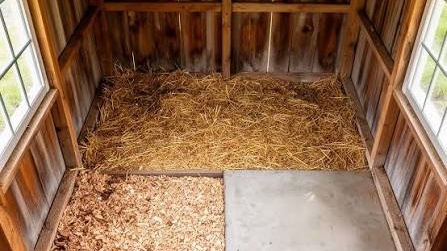
You can also combine approaches. For example, a permanent coop may use a solid underlying floor with a bedding system on top.
Chicken Coop Flooring Checklist
Before finalizing your design, ask:
- Is the coop located on well-drained ground?
- Can rainwater enter the structure?
- Where will spilled water go?
- Can the floor be cleaned easily?
- Is there enough ventilation?
- Will bedding stay dry?
- Could rodents burrow underneath?
- Are there gaps around the floor edges?
- How will you manage manure?
- Will the floor remain practical during winter?
- Can you inspect the floor for damage?
Answering these questions before construction is much easier than fixing flooring problems after the chickens move in.
Final Thoughts
The best chicken coop flooring is not necessarily the most expensive option. It is the flooring system that works with your climate, drainage, coop design, flock size, and maintenance routine.
Dirt can be simple and affordable, but drainage and predator control matter. Wood is convenient for many DIY coops but needs protection from moisture. Concrete provides durability for permanent structures, while deep litter offers a different approach to bedding and manure management.
Whatever you choose, start with one basic principle: keep the coop dry.
Good drainage, appropriate ventilation, clean bedding, secure construction, and sensible waterer placement will often have a bigger impact on the long-term condition of your chicken coop than the flooring material by itself.