Choosing the right chicken coop flooring is one of those decisions that seems simple until you start keeping chickens. The floor affects how easy the coop is to clean, how well it handles moisture, whether pests can get inside, and how comfortable the flock will be throughout the year.
There is no single chicken coop floor that works perfectly for every backyard flock. A small urban coop may benefit from a completely different floor than a large walk-in chicken house. Climate, drainage, budget, construction style, and how often you want to clean the coop all matter.
The four options most backyard chicken keepers consider are dirt, wood, concrete, and the deep litter method. Understanding the advantages and limitations of each can help you design a coop that is easier to maintain.
What Makes a Good Chicken Coop Floor?
Before comparing materials, it helps to understand what the floor actually needs to accomplish.
A good chicken coop floor should be:
- Resistant to excessive moisture
- Easy to maintain
- Comfortable for chickens
- Difficult for rodents and predators to penetrate
- Compatible with your bedding system
- Durable enough for your climate
- Designed with drainage in mind
Moisture deserves particular attention.
Wet bedding can become dirty and compacted, creating unpleasant odors and increasing the amount of cleaning required. Poor ventilation combined with moisture can also contribute to ammonia buildup.
For that reason, the location of the coop is almost as important as the flooring material. A beautiful floor will not solve a drainage problem if rainwater regularly flows into the chicken house.
Dirt Floors: Simple and Natural
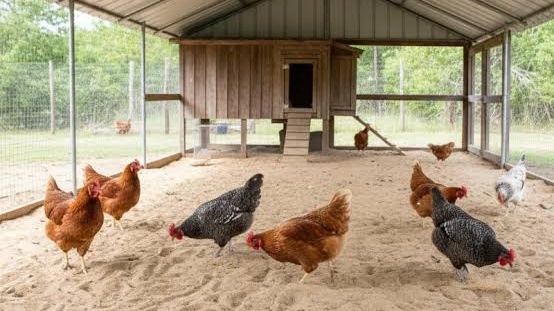
A dirt floor is one of the simplest options for a backyard chicken coop.
Essentially, the coop is built directly over compacted soil. Many keepers like this approach because it requires relatively little construction and provides a natural surface.
Advantages of Dirt Floors
The biggest advantage is cost.
If you already have suitable ground on your property, you do not need to purchase concrete or construct a raised wooden floor.
Dirt can also work well with deep bedding. Chickens can scratch and interact with the natural ground, and the floor does not have the same risk of rot as untreated wood.
Disadvantages of Dirt Floors
The biggest concern is moisture.
If the site does not drain well, rain or groundwater can turn the coop floor into mud. Once dirt becomes wet, cleaning becomes much more difficult.
Dirt floors can also provide opportunities for rodents and burrowing animals if the coop is not properly secured.
If you choose dirt, consider the surrounding drainage carefully. The coop should ideally be located on relatively high, well-drained ground rather than in a low area where water collects.
A predator-resistant perimeter can also be important.
Wood Floors: Practical for Small Backyard Coops
Wooden floors are popular in DIY chicken coops because they are relatively easy to construct.
A raised wooden floor can keep chickens away from wet ground and can work especially well for smaller backyard structures.
Advantages of Wood
Wood is relatively inexpensive and easy to cut and install.
A properly designed wooden floor can also make cleaning straightforward. Bedding can be removed periodically, and the floor itself can be inspected for damage.
For many first-time chicken keepers building a small coop, wood is an approachable option.
Disadvantages of Wood
Moisture is the major concern.
Wood can absorb water, especially if the surface is exposed to leaks, wet bedding, or condensation. Over time, persistent moisture can contribute to deterioration.
The design of the coop therefore matters.
A roof with adequate overhang, good ventilation, dry bedding, and protection from rain can extend the life of a wooden floor.
Some keepers also use a removable or replaceable surface layer to make cleaning easier.
Concrete Floors: Durable and Easy to Clean
Concrete is often considered for permanent chicken coops.
It costs more and requires more planning than simply using dirt or building a basic wooden floor, but it offers significant durability.
Advantages of Concrete
A properly installed concrete floor is durable and resistant to rot.
It can also be relatively easy to scrape and clean. Unlike dirt, concrete does not absorb moisture in the same way, and it does not provide the same type of underground access for burrowing pests.
For a permanent coop that you expect to use for many years, this durability can be valuable.
Concrete can also make it easier to maintain a consistent interior surface.
Disadvantages of Concrete
The biggest disadvantages are cost and installation.
Concrete is less forgiving if you change your mind about the coop location later. It also does not provide a soft surface by itself.
Chickens should have appropriate bedding or another comfortable surface rather than being expected to spend all their time directly on bare concrete.
In colder climates, concrete can also feel cold, making proper bedding especially important during winter.
Deep Litter: A Flooring System, Not Just a Material
The deep litter method is different from the other three options because it is primarily a bedding management system.
Instead of removing all bedding frequently, you gradually build a deeper layer of suitable dry litter. Manure and bedding accumulate together and are managed periodically.
Common bedding materials can include materials such as wood shavings.
Why Do Backyard Chicken Keepers Use Deep Litter?
The main attraction is reduced daily cleaning.
Instead of completely removing bedding every few days, you manage the litter layer by adding fresh material when necessary and occasionally turning or removing accumulated material according to your system.
When properly managed, the bedding remains relatively dry and can help make winter coop management more practical.
However, deep litter is not a system that can simply be ignored.
If the bedding becomes wet, compacted, or strongly odorous, the system needs attention.
Moisture Is More Important Than the Flooring Material
Whether you choose dirt, wood, concrete, or deep litter, moisture management should be a priority.
Common sources of moisture include:
- Rain entering through doors or windows
- Leaking roofs
- Spilled water
- Wet bedding
- Poor drainage
- Condensation
- Excessive humidity
A waterer inside the coop can be another major source of wet bedding.
If possible, position waterers so that spills do not constantly soak the main sleeping area.
Ventilation also matters. A coop needs fresh-air exchange to help remove moisture, but ventilation should be designed so that chickens are not exposed to strong drafts directly at their roosting level.
What About Rats and Snakes?
Flooring can influence pest control, but it is not the only factor.
Dirt floors may provide opportunities for burrowing rodents or other animals if the coop perimeter is not secure.
Wooden floors can also develop gaps or damaged sections over time.
Concrete provides a more solid barrier, but even concrete does not automatically make a coop pest-proof. Rodents can enter through doors, ventilation openings, gaps around walls, or other structural weaknesses.
Food storage is equally important.
Spilled feed can attract rats and mice regardless of whether your floor is dirt, wood, or concrete.
Keep feed containers secure and clean up significant spills promptly.
Which Flooring Is Best for Winter?
Winter flooring decisions depend heavily on climate.
In cold weather, the goal is not simply to create the warmest possible floor. Moisture control is also critical.
Wet bedding combined with cold temperatures can create an uncomfortable environment for chickens.
A dry bedding layer can provide insulation between the birds and the floor. Deep litter can be useful in some backyard setups when properly managed.
Concrete can also work during winter, but it should generally be covered with appropriate dry bedding rather than left bare.
For any flooring type, keep rain and melting snow from entering the coop and monitor condensation.
How Often Should You Clean the Coop Floor?
There is no universal cleaning schedule.
The right frequency depends on flock size, coop size, bedding depth, ventilation, weather, and the flooring system.
Instead of cleaning strictly according to the calendar, look at the condition of the coop.
Check for:
- Wet bedding
- Strong ammonia-like odors
- Excessive manure buildup
- Mold
- Pest activity
- Standing water
- Compacted litter
- Dirty nesting areas
A healthy-looking, dry coop generally requires less intervention than a poorly ventilated coop with persistent moisture.
Dirt vs. Wood vs. Concrete vs. Deep Litter
Here is a simple comparison:
| Flooring/System | Main Advantage | Main Challenge | Good Fit |
|---|---|---|---|
| Dirt | Low cost and natural | Drainage and pest control | Larger or simple setups |
| Wood | Easy DIY construction | Moisture and potential rot | Small backyard coops |
| Concrete | Durable and cleanable | Higher cost and hard surface | Permanent coops |
| Deep litter | Less frequent full cleaning | Requires proper management | Keepers who want a bedding system |
The best choice depends on your priorities rather than a universal ranking.
How to Choose Your Chicken Coop Floor
Before building, ask yourself five questions.
1. Is the site well drained?
If rainwater naturally collects there, fix the drainage problem before worrying about flooring.
2. How permanent is the coop?
A temporary or movable coop may make more sense with a simpler floor than a permanent structure.
3. How many chickens will you keep?
A small flock creates different cleaning demands from a large flock.
4. How much maintenance do you want?
If you prefer a system that reduces frequent full cleanouts, deep litter may be worth considering.
5. What is your climate like?
Hot, humid, rainy, snowy, and dry climates can create very different flooring challenges.
Final Thoughts
Choosing chicken coop flooring is really a decision about moisture, maintenance, durability, and flock management.
Dirt can be inexpensive and natural but requires careful attention to drainage and security. Wood is practical for many DIY backyard coops but needs protection from moisture. Concrete offers durability and a relatively easy-to-clean surface but costs more to install. Deep litter can reduce routine cleaning, but it only works when the litter remains properly managed.
Whatever flooring you choose, start with the location. A coop built on well-drained ground, protected from rain, supplied with adequate ventilation, and maintained with dry bedding will generally be easier to manage than one with persistent moisture problems.
The ideal chicken coop floor is not necessarily the most expensive or permanent option. It is the one that fits your flock size, climate, coop design, budget, and willingness to maintain it.