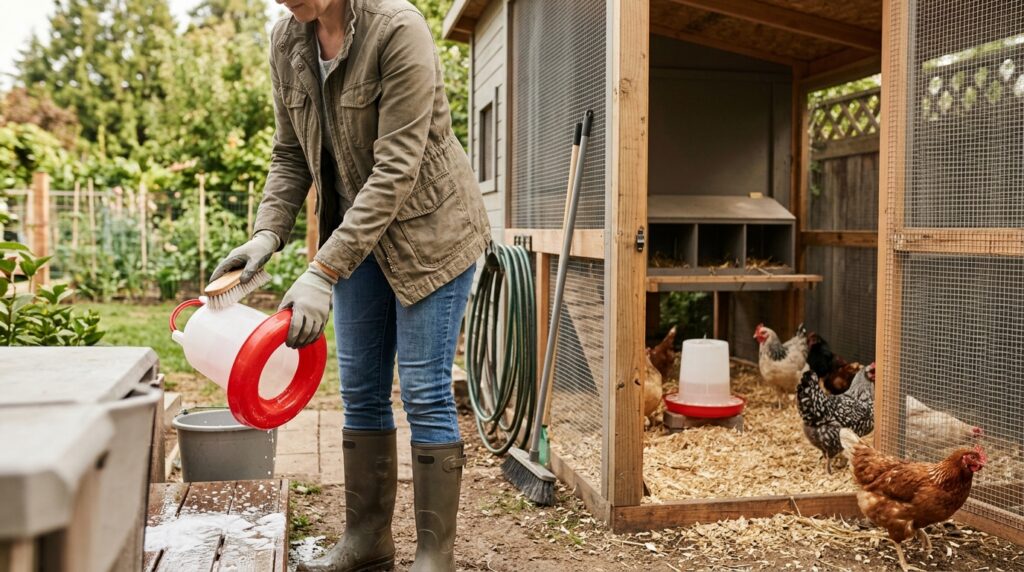
🐔 A cleaner coop is more than a nicer place for chickens to live. It is an important part of protecting your flock from disease.
You do not need an expensive poultry facility or hours of cleaning every day to practice good biosecurity. Even a small backyard flock benefits from consistent habits that reduce contact with germs, wild birds, rodents, contaminated equipment, and dirty water.
The secret is to make cleaning manageable. Instead of waiting until the coop smells bad or bedding becomes heavily soiled, follow a simple daily and weekly routine.
Here is a practical system for busy chicken keepers who want a cleaner coop, healthier birds, and less stressful poultry care.
🧼 What Is Backyard Chicken Biosecurity?
Biosecurity means taking practical steps to prevent diseases from entering your flock and spreading between birds.
Germs can travel through several routes, including:
- Wild birds and other animals.
- Rodents and insects.
- Visitors’ shoes and clothing.
- Shared feeders, waterers, and equipment.
- Contaminated feed, water, bedding, and manure.
- Newly introduced chickens.
Cleaning is only one part of biosecurity. Controlling visitors, protecting feed, separating new birds, and monitoring flock health are equally important.
The goal is not to create a perfectly sterile environment. It is to reduce avoidable risks through consistent habits.
1. Your Daily Chicken Coop Cleaning Routine
Daily maintenance should focus on removing fresh waste, keeping drinking water clean, and noticing problems early.
Remove Wet and Dirty Bedding
Check the areas beneath roosting bars, around waterers, and in corners where droppings collect.
Remove bedding that is:
- Wet from spilled water.
- Heavily contaminated with manure.
- Moldy or unusually smelly.
- Packed down and difficult to keep dry.
Replace removed material with clean, dry bedding suitable for poultry.
You do not necessarily need to replace every bit of bedding daily. The important thing is to prevent excessive moisture and manure buildup.
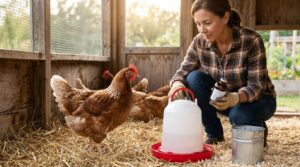
Refresh Drinking Water
Clean water is essential for chicken health.
Every day:
- Empty dirty water containers.
- Refill with fresh, safe drinking water.
- Remove visible debris and droppings.
- Check for leaks or overturned drinkers.
Scrub waterers whenever they develop slime, algae, or visible dirt. A container that looks clean from the outside may still have buildup inside.
Check Feeders
Remove spilled or contaminated feed, especially if it has become wet or mixed with droppings.
Keep feed in covered, rodent-resistant containers. Avoid leaving large amounts of spilled feed around the coop because it can attract rats, mice, and wild birds.
Check for mold, unusual smells, and signs of pests before offering feed.
Inspect the Chickens
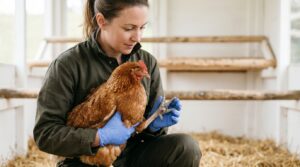
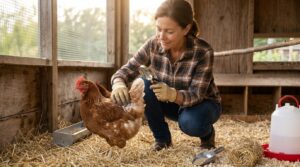
Cleaning time is also a good opportunity to observe your flock.
Look for:
- Chickens sitting alone or acting unusually quiet.
- Loss of appetite or reduced drinking.
- Sneezing, coughing, or breathing difficulties.
- Diarrhea or unusual droppings.
- Limping, injuries, or feather loss.
- Sudden changes in egg production.
If several chickens become sick or die unexpectedly, contact a veterinarian or local animal-health authority promptly. Do not treat a possible disease outbreak as an ordinary cleaning problem.
Keep Your Cleaning Equipment Separate
Use poultry-only brushes, scoops, buckets, and footwear.
Do not carry equipment from another poultry area into your coop without cleaning and disinfecting it appropriately.
Wash your hands with soap and water after handling chickens, eggs, droppings, or equipment.
2. Your Weekly Chicken Coop Cleaning Routine
Weekly cleaning should be more thorough than daily maintenance, but it does not always require removing every piece of bedding.
Choose a regular day when you have enough time to inspect the entire chicken area.
Clean the Roosting Bars
Roosting bars collect droppings overnight.
Scrape off accumulated manure and remove debris. If the bars are washable, scrub them with water and detergent when needed.
Allow washed surfaces to dry before chickens use them again.
Inspect Nesting Boxes
Remove broken eggs, dirty nesting material, feathers, and accumulated droppings.
Replace wet or heavily soiled nesting material with clean, dry material.
Check for mites or other pests, especially around joints, cracks, and sheltered corners.
Scrub Feeders and Waterers
At least weekly, give feeders and waterers a more thorough cleaning.
- Empty the containers.
- Remove stuck-on feed, dirt, and droppings.
- Scrub with water and detergent.
- Rinse thoroughly.
- Disinfect when appropriate, following the product label.
- Allow the equipment to dry before refilling.
Do not assume that spraying disinfectant over visible dirt will make equipment safe. Organic material can interfere with many disinfectants.
Check the Run and Coop Perimeter
Walk around the enclosure and look for:
- Standing water and muddy areas.
- Feed spills attracting rodents.
- Gaps in wire mesh or damaged screens.
- Signs of wild birds entering.
- Droppings from rodents or other animals.
- Damaged feeders, drinkers, and doors.
Remove accumulated waste and address problems before they become larger.
Review Your Biosecurity Supplies
Make sure you have:
- Dedicated poultry footwear.
- Disposable or washable gloves.
- A suitable brush and scraper.
- Detergent and an appropriate disinfectant.
- Clean replacement bedding.
- A covered feed-storage container.
Keeping these supplies together makes regular cleaning easier.
3. When Should You Deep-Clean the Entire Coop?
Daily and weekly maintenance cannot replace periodic thorough cleaning.
A full clean is particularly important when bedding becomes heavily soiled, pests are present, or a flock is being moved out before a new group arrives.
For a thorough cleaning:
Step 1: Move the chickens.
Place birds in a separate, secure area. A complete cleaning and disinfection should not be performed around live chickens.
Step 2: Remove old bedding and debris.
Take out manure, feathers, nesting material, and accumulated dirt.
Step 3: Dry-clean the surfaces.
Scrape, brush, and sweep away visible organic matter. Disinfectants may not work properly when applied over manure or caked-on dirt.
Step 4: Wash with detergent and water.
Scrub washable surfaces, working from top to bottom. Rinse thoroughly.
Step 5: Apply an appropriate disinfectant.
Choose a product labeled for the intended poultry-use surface and relevant disease organisms. Follow its dilution, application, safety, and contact-time instructions.
Step 6: Let everything dry completely.
Do not return chickens to wet, freshly disinfected surfaces. Follow the product label regarding rinsing and re-entry.
Step 7: Clean yourself and your equipment.
Clean reusable boots and tools, wash dedicated clothing, remove protective equipment safely, and wash your hands thoroughly.
Never mix cleaning chemicals, and never spray disinfectants directly onto chickens.
4. A Simple Daily and Weekly Cleaning Schedule
You can use this routine as a starting point and adjust it to your flock size, coop design, weather, and bedding system.
| Frequency | Cleaning task |
|---|---|
| Every day | Refresh drinking water |
| Every day | Remove wet or heavily soiled bedding |
| Every day | Check feed and remove contaminated leftovers |
| Every day | Observe chicken behavior and health |
| Every day | Remove obvious manure buildup |
| Weekly | Scrub feeders and waterers |
| Weekly | Clean roosting bars and nesting boxes |
| Weekly | Inspect the run, fencing, and coop perimeter |
| Weekly | Check for pests and signs of wild-bird access |
| Periodically | Perform a thorough coop cleaning and disinfection when needed |
Remember: There is no single cleaning frequency that fits every backyard flock. A small, dry, well-ventilated coop may need less intensive bedding replacement than a crowded or frequently wet enclosure.
5. Biosecurity Habits That Go Beyond Cleaning
A clean coop can still be vulnerable if disease-carrying animals, people, or equipment can enter.
Build these habits into your normal routine.
Wear dedicated footwear. Keep a pair of boots or shoes specifically for poultry chores. Clean them regularly and disinfect them when appropriate.
Limit visitors. Only allow necessary visitors into the poultry area. Ask anyone who enters to follow your hygiene rules.
Protect feed from wildlife. Store feed in sealed containers and prevent wild birds and rodents from reaching it.
Separate new chickens. Keep newly acquired birds separate from your established flock for an appropriate quarantine period. Ask a poultry veterinarian about the right period and monitoring procedures.
Keep wild birds away. Use suitable netting, covered feeders, and secure enclosures to reduce contact between wild birds and domestic poultry.
Avoid sharing equipment. If equipment must be shared, clean and disinfect it appropriately before it enters your flock area.
Keep a health record. Record unusual symptoms, deaths, new birds, vaccinations, and significant changes in feed or water.
6. Common Coop-Cleaning Mistakes to Avoid
Even well-intentioned chicken keepers can make mistakes that reduce the effectiveness of their cleaning routine.
- Disinfecting before cleaning: Dirt and manure can interfere with disinfectant performance. Remove organic material first.
- Using too much disinfectant: Stronger is not automatically better. Follow the manufacturer’s dilution instructions.
- Returning chickens too soon: Wet surfaces and chemical residues may create problems. Allow the coop to dry and follow re-entry directions.
- Ignoring waterers: Dirty drinking containers can become a source of contamination.
- Leaving spilled feed overnight: This can attract rodents and wild birds.
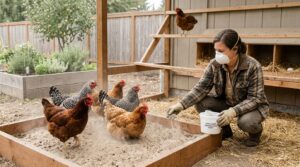
- Cleaning without gloves: Poultry droppings can carry germs that make people sick.
- Cleaning poultry equipment indoors: Clean coop equipment outside, away from kitchens and food-preparation areas.
- Assuming a clean coop guarantees healthy chickens: Biosecurity reduces risk but cannot prevent every disease.
Final Thoughts 🐔
Backyard chicken biosecurity does not have to become a complicated chore. A few consistent daily habits, a more thorough weekly check, and periodic deep cleaning can make flock care easier and help reduce opportunities for disease to spread.
Start with the basics: clean water, dry bedding, safe feed storage, dedicated footwear, and regular observation.
Most importantly, remember that cleaning is only one part of protecting your chickens. Controlling visitors, limiting wildlife contact, separating new birds, and responding quickly to unusual illness are just as important.
A healthy flock is not built through one big cleaning day. It is protected through small, repeatable habits that become part of everyday chicken keeping.