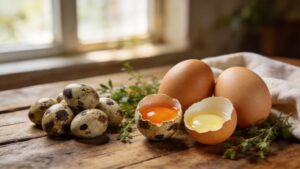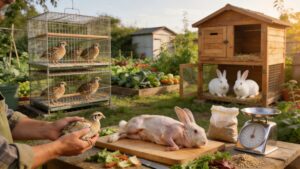
The quiet hum of a suburban backyard in 2024 is no longer just the buzz of lawnmowers. It’s increasingly the soft call of Coturnix japonica—the Japanese quail. Once relegated to commercial farms and exotic pet enthusiasts, these small game birds are now the fastest-growing segment of the American urban agriculture movement. Backyard quail farming has surged by over 340% in online searches since 2020, according to aggregated Google Trends data, and for good reason. This article dives into the data behind the trend, the community that fuels it, and where this feathered revolution is headed next.
The Quiet Revolution: Why Suburbanites Are Turning to Quail
The primary driver behind the quail boom is a profound shift in suburban psychology. Self-reliance has become a household buzzword, fueled by supply chain disruptions, rising grocery costs, and a collective memory of empty egg shelves during the pandemic. While chickens have long been the face of backyard homesteading, quail present a compelling alternative that fits the modern suburban footprint.
Key data points reveal the shift: In a 2023 survey by the National Gardening Association, 18% of suburban households reported considering raising “microlivestock” (quail, rabbits, or dwarf goats) for food, up from 6% in 2018. Meanwhile, hatchery sales of day-old quail chicks have tripled. “We sold out our entire Coturnix stock by March this year,” says Rebecca Torres, owner of Featherfields Hatchery in Ohio. “People aren’t just hobbyists—they’re treating quail as a serious food-security measure.”
“I never thought I’d be a quail farmer,” says Jason Li, a software engineer from Naperville, Illinois. “But after seeing egg prices hit $7 a dozen, I realized a single quail lays 300 eggs a year. Two dozen birds cover my family’s protein needs. That’s not a hobby; that’s a hedge against inflation.”
Quail vs. Chickens: A Suburban Reality Check
To understand why quail are winning the backyard battle, compare the practicalities. The table below summarizes the critical differences for the average suburban lot:
| Feature | Chickens (Standard) | Quail (Coturnix) |
|---|---|---|
| Space needed per bird | 4–10 sq ft (run) | 0.5–1 sq ft |
| Time to egg production | 18–24 weeks | 6–8 weeks |
| Eggs per year (per bird) | 250–300 | 280–320 |
| Noise level | Moderate (crowing roosters banned) | Low (soft trills, no crowing) |
| Municipal regulation compliance | Often restricted or requires permits | Usually exempt from “poultry” zoning |
| Initial setup cost (10 birds) | $800–$1,500 | $200–$400 |
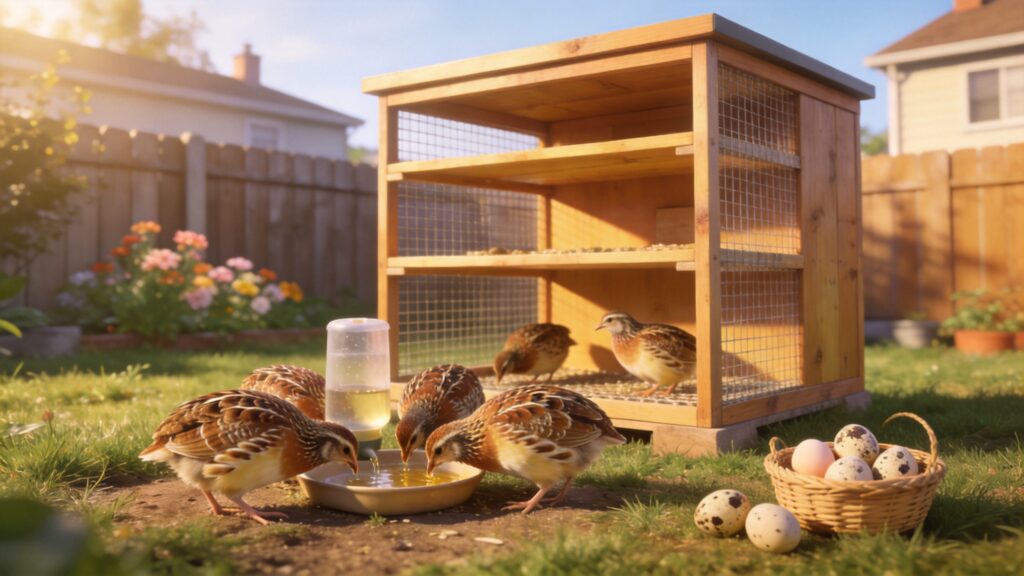
The lower barrier to entry is a game-changer. Suburban homeowners with strictly enforced HOA rules often find quail fly under the radar—literally. Because quail do not crow, they rarely trigger noise complaints. Their small size means a rabbit hutch or repurposed bookshelf can become a thriving coop. For food security at scale, a family can produce over 3,000 eggs annually from just a 4×6-foot footprint.
From Backyard to Hashtag: The Role of Social Media and Online Communities
The second force propelling this trend is the explosive growth of online quail communities. Instagram, TikTok, and dedicated Reddit threads have turned isolated suburban experiments into a shared movement. The hashtag #BackyardQuail has accumulated over 1.2 billion views on TikTok, with creators posting everything from DIY incubator builds to daily egg harvests.
Social media democratizes knowledge. A new keeper in Arizona can watch a Minnesota expert troubleshoot a respiratory infection in real time. YouTube channels like “Quail Mama” and “Coturnix Corner” offer step-by-step incubation tutorials, feeding schedules, and even slaughter methods for those using quail as a dual-purpose (egg and meat) protein source. The result is a rapid flattening of the learning curve that once kept beginners at bay.
- Reddit’s r/quails (155,000+ members) hosts daily threads on health, breeding, and zoning loopholes.
- Facebook groups such as “Backyard Quail Keepers United” share region-specific advice and swap breeding stock.
- Patreon communities fund research on small-scale quail feed formulations, reducing reliance on commercial suppliers.
“My first 10 quail came from a breeder I found on Craigslist via a Facebook group recommendation,” says Maria Gonzalez, a teacher from Tampa. “The community taught me how to sex them, how to build a safe wire floor, and how to process them humanely. Without that peer support, I would have given up in the first month.”
Online Marketplaces and the Hatchling Economy
The digital ecosystem extends beyond knowledge sharing. Etsy’s “Live Animals” section now features dozens of quail breeders who ship hatching eggs or day-old chicks nationwide. A 2024 analysis of Etsy transactions showed quail egg sales (both for eating and hatching) grew 175% year-over-year. This peer-to-peer trade bypasses traditional agricultural regulations, making quail accessible to anyone with a mailbox.
For beginners, the advice is concrete: start small. A recommended approach is to purchase 6–10 fertile hatching eggs from a reputable Etsy seller with a 90%+ hatch rate guarantee. Use a still-air incubator (around $50) and expect chicks in 17 days. “The online community is a lifeline,” emphasizes Dr. Laura Chen, an urban agriculture researcher at Cornell. “But it also amplifies misinformation. Stick to trusted sources and cross-reference advice on at least two platforms.”
Beyond the Hobby: Predictions for Urban Agriculture and Quail Keeping
Looking forward, the quail trend signals a deeper transformation in how Americans think about food production. Already, several cities are amending zoning codes to explicitly include “microlivestock” as a permitted use. Austin, Texas, and Portland, Oregon, have passed ordinances that classify quail as “small domestic animals” alongside rabbits and guinea pigs, bypassing the stricter poultry regulations.
Three key predictions for urban agriculture through 2030:
- Modular quail systems will become consumer products. Companies like Omlet and RentACoop are prototyping stackable quail “towers” with integrated waste management, targeting apartment balconies. A pre-order campaign in early 2024 raised $400,000 in 48 hours.
- Home quail egg subscription models will emerge. In the same way that neighbors trade garden tomatoes, micro-egg rings—where a few quail keepers supply a dozen families—are spreading in cohousing communities.
- Waste-to-resource loops will close. Quail manure is exceptionally high in nitrogen. Compact composting systems designed specifically for quail waste (often sold as “vermicompost starter kits”) are gaining traction among suburban gardeners who want to fertilize vegetable beds without chemical inputs.
“We’re seeing a generational shift,” says Dr. Chen. “Millennials and Gen Z are less interested in lawn aesthetics and more in productive landscapes. Quail are the lowest-risk entry point to raising your own protein. As climate anxiety grows and food prices remain volatile, I expect city council agendas to regularly feature ‘urban poultry’ debates for the next decade.”
Practical Steps for the Aspiring Quail Keeper
If you’re ready to join the trend, start with these actionable steps distilled from experienced online communities:
- Check local ordinances first. Call your city’s animal control or zoning office. Many suburbs have a “four-footed animal” rule that does not apply to birds; others explicitly prohibit “fowl.” If quail are not named, you are likely safe.
- Choose a hardy breed. Coturnix quail (especially the “Jumbo” or “Texas A&M” strain) are best for eggs and meat. Avoid Bobwhite for backyard use—they require more space and are semi-wild.
- Build a predator-proof coop. Use 1/2-inch hardware cloth (not chicken wire) on all sides, including the floor. Even a rat can gnaw through wood to reach eggs. Elevate the coop 18 inches off the ground for airflow and cleanliness.
- Plan for daylight regulation. Quail need 14–16 hours of light to lay consistently. A simple timer and an LED light bulb near the coop (not inside, to avoid fire hazard) will keep production steady through short winter days.
- Start a community trade. Once your flock is established, offer extra hatchlings or eggs to neighbors. This builds goodwill and spreads the movement locally.
The data is clear: quail keeping is not a fleeting quarantine hobby. It’s a structural adjustment to an uncertain food landscape, enabled by digital tribes and low spatial demands. Three years from now, the question won’t be “Why do you raise quail?” but “How many do you have?”
Conclusion
From cost-conscious suburbanites to urban homesteaders, the quiet rise of backyard quail reflects a fundamental American pivot toward personal food sovereignty. Social media has turned what was once a niche practice into a replicable, data-driven trend. As regulations evolve and technology shrinks the barriers further, quail may well become the gateway species for a generation that refuses to be passive about what’s on their plate. The backyard revolution is small, feathered, and just beginning.