🐔 An automatic chicken waterer can make backyard flock care easier, but a large reservoir does not guarantee that every chicken has drinking water. A blocked nipple, leaking fitting, or broken drinking cup can interrupt access even when the container looks full. That is why automatic chicken waterer maintenance should remain part of your daily chicken-care routine.
💧 The good news is that checking an automatic watering system does not require dismantling everything each morning. Most small backyard systems can receive a basic inspection in a couple of minutes, provided you know what to examine. The goal is to catch equipment failures, contamination, and accessibility problems before they disrupt your flock’s water supply.
Does an Automatic Chicken Waterer Really Save Daily Work?
✅ Automatic waterers reduce the time spent carrying buckets, replacing spilled water, and repeatedly refilling small containers. Gravity reservoirs, nipple systems, and drinking cups can maintain a more consistent supply when properly installed and maintained. However, automatic watering reduces repetitive labor rather than eliminating daily responsibility.
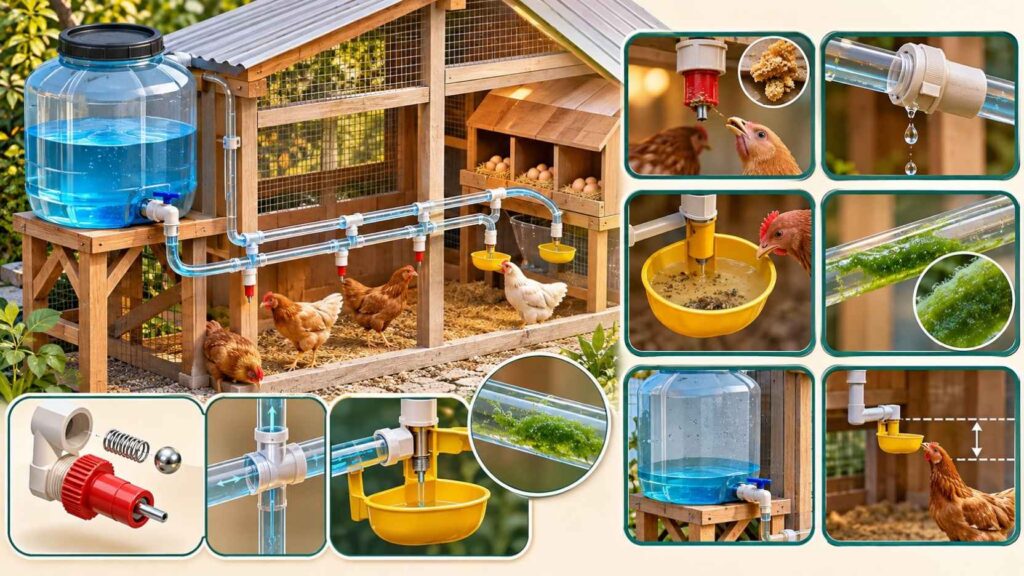
A reservoir may contain several days’ worth of water, but its capacity tells you nothing about whether that water reaches the chickens. 🔎 A reliable inspection therefore checks the reservoir, delivery components, and actual drinking access. Think of the system as a small plumbing installation that needs monitoring rather than a completely hands-off appliance.
Six Things That Can Go Wrong With Automatic Waterers
1. Empty or Unexpectedly Low Reservoirs
An automatic reservoir can empty unexpectedly because of leaking connections, loose lids, excessive demand, or an overlooked refill. ☀️ Hot weather can increase chickens’ water consumption, making yesterday’s adequate supply insufficient today. Check the water level against your normal expectations instead of assuming a large container will last.
For a gravity-fed system, confirm the reservoir contains water and the drinking outlets remain supplied. For systems connected directly to a water source, check that the supply is operating and valves are open. 💧 If water levels decline unusually quickly, investigate before simply refilling the container.
2. Blocked Drinking Nipples
Nipple drinkers can become obstructed by sediment, mineral deposits, debris, or buildup inside the system. 🚰 A full reservoir may still produce little or no water through a blocked nipple. This makes testing water delivery more reliable than judging the system by its appearance.
Press each accessible nipple briefly and confirm that water flows and the mechanism closes afterward. Follow the manufacturer’s flow-rate guidance if the system requires a specific delivery rate. 🔧 If one nipple performs differently, inspect the component and supply line before relying on it again.
3. Leaking or Broken Fittings
Loose connections, worn seals, cracked containers, and damaged drinking cups can gradually release water. 💦 Some leaks are obvious, while others leave only a persistently damp patch beneath the drinker. Wet bedding and unexplained reservoir losses are useful warning signs.
Inspect fittings, hoses, cup attachments, and the area beneath the watering system. Tighten loose connections where appropriate and replace damaged parts using compatible components. 🛠️ Remember that excessive pressure can also contribute to leakage in systems designed for regulated water flow.
4. Dirty Cups and Accumulated Sediment
Automatic drinking cups still have exposed surfaces where feed particles, bedding, dust, and droppings can collect. 🐓 Chickens may continue drinking from these cups despite visible contamination, so their behavior is not proof that cleaning is unnecessary. Inspect the drinking area rather than looking only at the stored water.
Remove debris, wash contaminated cups, and check the small mechanisms that control water delivery. Sediment can interfere with moving parts or accumulate where water circulates poorly. 🧽 Cups that repeatedly become dirty may benefit from better placement or a different watering design.
5. Slime or Biofilm Inside Reservoirs and Lines
Biofilm is a layer of microorganisms embedded in a sticky substance that can attach to wet internal surfaces. 🦠 It may develop inside reservoirs, hoses, tubing, valves, and other locations that are difficult to inspect. Clear-looking water does not necessarily mean the entire system is free from buildup.
Look for slippery surfaces, unusual deposits, discoloration, and recurring slime during scheduled cleaning. Clean removable components and flush suitable water lines according to manufacturer instructions. 🧼 Never assume that adding fresh water alone removes attached biofilm, and avoid using unapproved cleaning chemicals.
6. Chickens Unable to Reach or Operate the Drinkers
A functioning nipple or cup is useless if the chickens cannot access it comfortably. 🐥 Drinkers installed too high can be difficult for smaller birds, while inappropriate positioning may contribute to spills and contamination. Newly introduced chickens may also need time to learn an unfamiliar drinking mechanism.
Watch several birds actually use the system instead of assuming they understand it. Confirm that smaller hens, young birds, and less assertive flock members can reach drinking points without difficulty. 👀 Adjust height according to the equipment instructions and provide additional accessible water when necessary.
The Daily Two-Minute Water Availability Inspection
⏱️ Start by looking at the reservoir or supply connection, then inspect the ground for unusual moisture. Test nipples or drinking cups, examine visible water quality, and observe whether chickens can drink. A small backyard installation may take approximately two minutes, while larger systems require additional inspection time.
The critical question is not whether every component looks clean from a distance. It is whether clean drinking water is available, flowing correctly, and accessible to the entire flock. ✅ If a check fails, provide an alternative clean water source while correcting the problem.
What to Clean Daily Versus During Periodic Deeper Maintenance
Daily maintenance includes checking availability, removing visible debris, cleaning contaminated drinking cups, and addressing leaks immediately. 💧 Exposed drinking surfaces may require daily washing, especially where chickens frequently introduce feed or droppings. Reservoirs and enclosed lines also need a regular cleaning schedule suited to their construction and water quality.
Periodic deeper maintenance involves emptying and washing reservoirs, inspecting seals and fittings, checking filters, and cleaning or flushing appropriate tubing. 🧽 Frequency depends on equipment design, mineral content, water temperature, and the manufacturer’s recommendations. Flush thoroughly after approved cleaning treatments before returning the system to service.
Why Extra Water Capacity Isn’t a Substitute for Clean Water
A larger reservoir provides additional storage, but it does not prevent bacterial contamination, sediment accumulation, or mechanical failures. 🌡️ Water stored in warm conditions may also become less desirable to drink and require more frequent attention. Capacity should therefore be evaluated alongside cleanliness and delivery reliability.
Consider whether the reservoir is shaded, protected from contamination, and easy to dismantle for cleaning. A smaller container with accessible cleaning surfaces may be more practical than a larger system that is difficult to maintain. 🐔 Choose water capacity according to flock demand, while choosing maintenance routines according to actual system conditions.
How to Create a Backup Water Plan
An independent backup waterer provides protection when the main automatic system develops a problem. 🚰 Keep a clean, suitable container available, preferably one that does not depend on the same faulty tubing or valve. During maintenance, confirm that chickens can drink from the backup before disconnecting the primary supply.
Test your backup arrangement occasionally and make sure it has enough capacity for the flock. In freezing weather, remember that both primary and backup drinkers can become inaccessible when ice develops. ❄️ A backup plan is most useful when it has already been checked rather than assembled during an emergency.
Printable Automatic Chicken Waterer Inspection Checklist
Use this checklist during your daily inspection and mark each item as passing or failing. 📋 Any failed water-delivery or access check should be corrected promptly, with alternative drinking water supplied during repairs. Keep the record near your coop supplies to make recurring problems easier to identify.
Daily Water-System Inspection
| Inspection item | Pass | Fail |
|---|---|---|
| Reservoir has adequate water | ☐ | ☐ |
| Water supply is operating | ☐ | ☐ |
| Drinking nipples or cups work | ☐ | ☐ |
| No visible leaks or damage | ☐ | ☐ |
| Drinking surfaces are clean | ☐ | ☐ |
| No obvious slime or sediment | ☐ | ☐ |
| Chickens can reach and drink | ☐ | ☐ |
| Backup water is available | ☐ | ☐ |
Seven-Day Maintenance Log
| Day | Water level | Equipment condition | Cleaning / action |
|---|---|---|---|
| Monday | ______ | ______ | ______ |
| Tuesday | ______ | ______ | ______ |
| Wednesday | ______ | ______ | ______ |
| Thursday | ______ | ______ | ______ |
| Friday | ______ | ______ | ______ |
| Saturday | ______ | ______ | ______ |
| Sunday | ______ | ______ | ______ |
Record unusual water losses, replaced parts, cleaned components, and changes in drinking behavior. 📝 A recurring leak or blocked nipple becomes easier to investigate when you know when the problem first appeared. These records also help establish a realistic deeper-cleaning schedule for your particular equipment.
Final Thoughts: Automation Still Needs Attention
An automatic chicken waterer is valuable because it reduces repetitive chores, not because it eliminates the need to monitor your flock. 🐔 The six most important problems to watch for are empty reservoirs, blocked nipples, leaking fittings, dirty cups, biofilm buildup, and inaccessible drinking points. Checking these conditions regularly helps prevent avoidable interruptions to drinking water.
For beginners, the simplest automatic chicken waterer maintenance routine combines a short daily inspection with cleaning and servicing when needed. 💧 Keep the system functional, protect the water supply, and maintain an independent backup for unexpected failures. A dependable watering system is one you have verified is working, not merely one that holds plenty of water.