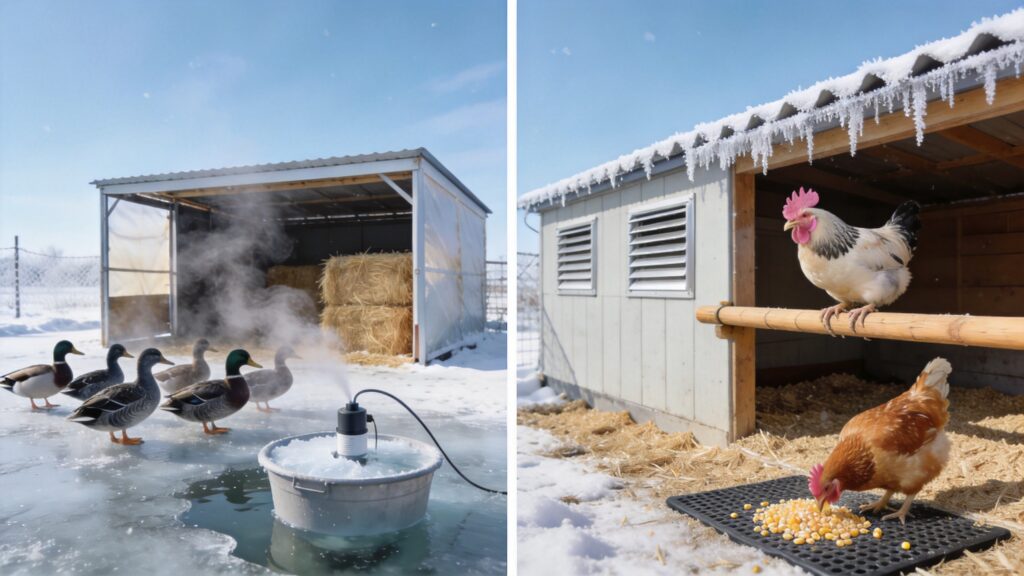
Why Winter Hits Ducks and Chickens Differently
When the mercury drops below zero and snow packs against the coop door, many homesteaders assume all poultry face the same cold-weather struggles. The truth is far more nuanced. Ducks and chickens evolved under very different pressures: waterfowl have a radically different thermoregulatory system, while chickens carry vulnerable combs and wattles that freeze in minutes. Understanding these distinctions is the first step toward building a winter management plan that keeps both species thriving, not just surviving.
1. Shelter Strategies: Coops, Hutches, and Windbreaks
Chickens: Ventilation vs. Drafts – The Eternal Balancing Act
A chicken coop that is too tight will trap moisture from droppings and respiration, leading to frostbite and respiratory disease. The rule of thumb: if you can smell ammonia when you open the door, your ventilation is insufficient. Aim for ventilation high along the roofline (ridge vents or soffit openings) that lets moisture escape without creating a draft at roost level. Chickens prefer a roost that allows them to fluff their feathers and tuck their heads under a wing. Deep-litter method (adding fresh bedding on top of old litter) generates a small amount of heat as it breaks down and keeps the floor dry. In Northern Minnesota, I keep my Wyandottes in a 4×6 coop with a 2-inch gap under the eaves covered in hardware cloth – no supplemental heat, and I’ve never lost a bird to frostbite.
“I switched from heat lamps to a well-ventilated coop with deep litter three winters ago. My electric bill dropped $80 a month, and my hens actually look healthier. The drafts people worry about are nothing compared to the damage from wet air.” — Sarah, homesteader in Zone 4b, Vermont
Ducks: Cold? No Problem. Wet? Big Problem.
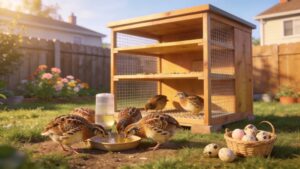
Ducks have a thick layer of down and waterproof feathers that allow them to sleep on ice without issue. Their biggest winter enemy is moisture – but not the same kind that bothers chickens. Ducks produce much wetter droppings and will splash water around their drinking area. A duck house should have a sealed floor (plywood or linoleum) that can be hosed out, a layer of straw or pine shavings that is replaced frequently, and excellent ventilation to prevent icy buildup on their feathers. Many northern keepers provide a simple three-sided shelter with a windbreak cloth on the open side, rather than a fully enclosed coop. Ducks prefer to stay outside even in subzero temperatures; only provide a dry, draft-free area for extreme storms.
2. To Heat or Not to Heat? The Dangerous Question
The homesteading community is split on supplemental heat. My advice: avoid it unless absolutely necessary. Most cold-hardy chicken breeds (Wyandotte, Orpington, Chantecler) and all duck breeds can tolerate -20°F with proper shelter, food, and dry bedding. Adding a heat lamp creates a dangerous dependency: if the lamp fails during a blizzard, the flock may succumb to the sudden cold. Heat lamps also cause many coop fires each year.
Exceptions: extreme prolonged cold (below -30°F for several days), sick or injured birds, or very young chicks that are still feathered out. If you must heat, use a radiant heater (flat panel style) mounted on a non-combustible wall, and set a thermostat so it only activates in a true emergency. For ducks, never heat the house – they will pant and suffer. Instead, provide a warm drinking station (see next section).
- Safe alternatives to heat lamps: Radiant flat-panel heaters, heated perches, heated mats (only for brooders).
- Natural heating: Deep-litter composting in the coop can raise internal temperature 5-10°F. Pile fresh bedding over droppings; the microbial activity releases heat.
- Windbreaks: Bales of straw around the outside of the coop (not touching the wood) reduce wind chill significantly.
3. Water: The Battle Against Ice
Both ducks and chickens must have liquid water available at all times. Dehydration is a far greater killer than cold itself. Chickens need about 0.5-1 liter per bird per day; ducks drink and splash three times that amount. Here are the most effective de-icing methods for a northern homestead:
| Method | Best For | Pros | Cons |
|---|---|---|---|
| Heated poultry waterer (base heater) | Chickens | Easy, thermostatically controlled, safe with metal or plastic | Expensive to run; some units fail after one season |
| Submersible tank heater (with guard) | Ducks (deep buckets) | Keeps large volume ice-free; durable | Requires a deep container; ducks may try to swim |
| Floating stock tank de-icer | Both | Works in metal or plastic tanks; low wattage | Must be anchored; can be chewed by birds |
| Manual hot water exchange | Small flocks | Zero electricity; you can repurpose hot kettle water | Requires 3-4 trips daily in deep cold; water cools fast |
| Solar-heated drip system (advanced) | Off-grid | Free energy; continuous water flow prevents freezing | Complex setup; needs sunny days |
Pro tip for ducks: Place their waterer inside a large, shallow plastic tub (like a kiddie pool) to contain splashes. Add a heated dog water bowl inside the tub – the ducks will drink without soaking the entire bedding area. For chickens, elevate the waterer on a platform covered with hardware cloth so they don’t walk through wet spots.
4. Feeding for Winter Warmth: Fueling the Internal Furnace
In cold weather, birds burn calories just to stay warm. Increase feed quantity by 15–20% and shift the ration composition. Chickens and ducks both benefit from extra corn and black oil sunflower seeds (BOSS) – the fat content generates metabolic heat. Offer whole or cracked corn as a scratch grain in the late afternoon; it takes longer to digest, releasing heat through the night.
For ducks, ensure there is a niacin source (brewer’s yeast or a poultry vitamin supplement) because they cannot synthesize it like chickens can. A deficiency can cause leg weakness, which is deadly when trying to reach food on frozen ground. For laying hens, provide crushed oyster shell free-choice – they will eat more calcium to maintain eggshell quality, even if production drops.
- Morning mash: Warm a mix of fermented feed or cooked oatmeal (no sugar) – it helps warm them up from the inside.
- No-skid feeding: Place feed on rubber mats or in shallow trays to prevent birds from having to stand directly on frozen ground.
- Fat balls: Mix lard or coconut oil with corn, sunflower seeds, and rolled oats, then freeze into hanging blocks for enrichment.
5. Breed Hardiness: Choosing Birds That Laugh at the Cold
Not all chickens and ducks are created equal when it comes to winter survivability. The single biggest factor for chickens is comb size – small or rose combs (Wyandotte, Chantecler, Faverolles) resist frostbite far better than huge single combs (Leghorn, minorca). For ducks, the key is body mass and down density; heavyweight breeds like Muscovy and Aylesbury handle cold better than light runners, but all ducks are superior to most chickens due to their waterproofing.
| Breed | Type | Cold Hardiness | Notes |
|---|---|---|---|
| Wyandotte | Chicken | ★★★★★ | Rose comb, heavy body, excellent layers in winter |
| Chantecler | Chicken | ★★★★★ | Developed in Canada; tiny comb and wattles; lays well |
| Orpington | Chicken | ★★★★☆ | Large body, dense feathers; single comb may get tip frostbite |
| Plymouth Rock | Chicken | ★★★★☆ | Hardy dual-purpose; rose comb varieties exist |
| Muscovy | Duck | ★★★★★ | Extremely cold tolerant; requires shelter from wind only |
| Khaki Campbell | Duck | ★★★★☆ | Slender but excellent foragers; need extra feed in cold |
| Indian Runner | Duck | ★★★☆☆ | Upright posture; less down; can suffer in extreme cold |
| Pekin | Duck | ★★★☆☆ | Heavy but feather quality varies; prone to frostbite on feet if wet |
A practical case: My friend in Fairbanks, Alaska keeps only Chantecler chickens and Muscovy ducks. Neither species receives any heat, and both have survived -50°F wind chills. He gives them extra whole corn at dusk and ensures the water is replaced every three hours with a hot kettle. The Chanteclers lay eggs through December with 14 hours of artificial light; the Muscovies stop laying but stay robust.
6. Health Monitoring: Frostbite, Foot Care, and Warning Signs
Frostbite on chickens’ combs and wattles starts as pale, waxy spots and progresses to black, dead tissue. Do not rub or trim frozen tissue – let it fall off naturally. Prevention: apply a thin layer of Vaseline or bag balm to combs and wattles only when the temperature drops below 15°F. Do this in the evening and reapply after a snowstorm. For ducks, check the feet: although their counter-current blood flow protects them, wet feet that then freeze to a metal surface can cause damage. Provide a small platform of wood or rubber mat under their water.
- Signs of hypothermia: Lethargy, huddling near light sources, fluffed feathers, pale comb.
- Signs of respiratory distress: Wheezing, nasal discharge, watery eyes – often from poor ventilation. Fix the air, not the birds.
- Footpad health: In winter, bumblefoot can develop from standing on hard, frozen ground. Provide soft bedding in sheltered areas.
7. Light Management: Egg Production in Dark Months
Both ducks and chickens are photosensitive; egg production naturally declines with shorter daylight. Many homesteaders add supplemental light to maintain winter eggs, but this can stress birds if done incorrectly. The safe method: add light only in the morning (e.g., 5–8 a.m.) and let the day fade naturally, so birds can roost gradually. Use a timer to give a total of 14–15 hours of light. Ducks are more sensitive to sudden changes – if you choose not to supplement, don’t worry; their bodies will rest and molt, and they’ll lay strongly in spring. A forced molt from inconsistent lighting is worse than no eggs at all.
Conclusion: Work With Their Biology, Not Against It
Winter care for ducks and chickens boils down to one principle: dry, draft-free shelter, abundant food and unfrozen water, and the right genetics for your climate. Ducks are nearly autonomous in cold if given access to open water and a dry windbreak; chickens require more thoughtful housing to prevent moisture buildup. Observing your birds daily and making small adjustments – moving a waterer to a sunny spot, adding a straw bale windbreak – will yield healthier flocks and fewer winter losses. The northern homestead is not a place for panic; it’s a place for preparation.