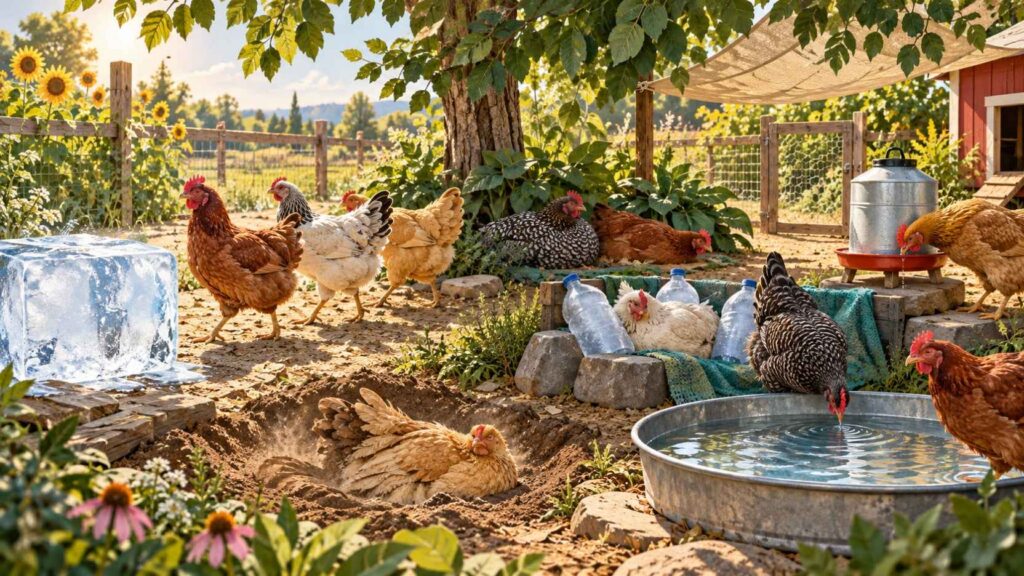
You place a large block of ice inside your chicken run on a scorching afternoon, expecting your hens to gather around it for relief, but they stare suspiciously before walking away. 🧊 If your chickens won’t use ice, you might wonder whether they are afraid, confused, or simply uninterested in your cooling efforts. Fortunately, chickens do not need to interact with ice directly to stay comfortable, and several practical alternatives can help them cope with hot weather.
Chickens naturally respond to heat by seeking shade, reducing activity, panting, and changing their body positions to release warmth. However, unfamiliar objects can discourage them from approaching an otherwise useful cooling station, especially when the object suddenly appears in their usual environment. 🐔 Understanding this behavior helps you create a chicken cooling setup that encourages voluntary use rather than forcing birds to investigate something they find intimidating.
Why Won’t My Chickens Go Near The Ice?
Chickens can be cautious around unfamiliar objects, including containers, equipment, and large blocks of ice placed inside their run. A frozen block may appear unusual because of its shape, reflective surface, surrounding moisture, and changing size as it melts. 👀 Some birds approach new objects immediately, while others prefer observing from a distance before deciding whether they are safe.
Chickens afraid of ice may simply be displaying caution rather than refusing to cool themselves. A hen that ignores ice but continues drinking, eating, moving normally, and resting comfortably in the shade may already be using other ways to manage heat. However, persistent heavy panting, weakness, or unusual inactivity should never be dismissed as ordinary reluctance to investigate a cooling station.
Frozen Water Bottles Vs. Ice Blocks: Which Is More Practical?
Large ice blocks can create puddles, become slippery, and occupy valuable space inside a chicken run. Frozen water bottles for chickens provide a more contained alternative because the ice remains inside the bottle while its outer surface gradually becomes cooler than the surrounding air. ❄️ Place sturdy, tightly sealed bottles in shaded resting areas where birds can investigate without having to climb over them.
Choose containers that will not crack easily, leave expansion space before freezing, and inspect bottles regularly for leaks or damaged plastic. Position them securely so they cannot roll into birds, block pathways, or interfere with feeders and waterers. Although frozen bottles offer an optional cooler surface, they are supplementary tools rather than substitutes for adequate shade, ventilation, and fresh drinking water.
7 Cooling Alternatives For Chickens That Ignore Ice
If traditional ice blocks are unsuccessful, these seven chicken cooling ideas offer different approaches suited to backyard flocks, small chicken coops, and outdoor runs. ☀️ Some require almost no equipment, while others involve inexpensive household items that can be introduced gradually. The most effective combination depends on your climate, the coop’s design, and how your chickens respond to each option.
- Provide Fresh, Cool Drinking Water 💧Fresh water is the most important starting point because chickens rely on drinking water to maintain hydration and support normal body-temperature regulation. Position waterers in shaded locations, inspect them several times during extreme heat, and replace water that has become excessively warm or contaminated. Never depend on an ice block to compensate for an empty waterer, because access to clean drinking water remains essential regardless of which cooling methods your flock prefers.
- Create Several Shaded Resting Areas 🌳Shade helps reduce direct solar heat exposure and gives chickens a comfortable location for resting during the hottest periods. Use suitable shade cloth, trees, covered run sections, or securely installed shelters while checking whether afternoon sunlight reaches areas that were shaded earlier. Providing several shaded locations also reduces competition when dominant chickens occupy the most desirable resting spots, giving smaller or less assertive flock members somewhere else to settle.
- Place Frozen Water Bottles Near Familiar Resting Spots ❄️Instead of placing a large unfamiliar ice block in the middle of the run, position sealed frozen bottles beside locations where your chickens already relax. Some birds may choose to sit near the cooler containers, although others may ignore them completely and prefer ordinary shade. Avoid forcing chickens against frozen surfaces, and replace bottles when necessary while making sure damaged plastic, leaking containers, and rolling objects cannot create additional hazards.
- Improve Ventilation Inside The Coop 🌬️Good ventilation helps prevent hot air from accumulating inside enclosed chicken housing, especially during summer afternoons and warm nights. Openings that encourage natural airflow can improve conditions, while properly installed fans may provide additional air movement when electricity is available. Keep electrical equipment protected from moisture, dust, and curious birds, and remember that ventilation is particularly valuable because chickens can benefit without approaching unfamiliar cooling objects.
- Offer A Shallow, Accessible Water Pan 🚿Some chickens may voluntarily step into shallow water, making a stable, easily accessible pan another optional cooling resource. Choose a low-sided container, keep the water shallow enough for safe entry and exit, and clean it regularly to prevent contamination from droppings and dirt. Never force reluctant chickens into water, since individual birds have different preferences and shallow water pans should remain optional rather than becoming the flock’s primary cooling strategy.
- Maintain Shaded Soil Or Sand Areas 🏖️Chickens naturally scratch, dust bathe, and rest against the ground, making shaded soil or sand a familiar alternative to artificial cooling objects. A dry, shaded dust-bathing area allows chickens to continue their normal behavior, while soil protected from direct sunlight may feel cooler than exposed ground. Avoid turning the entire resting area into mud, because persistently wet conditions can create sanitation problems and make the run less comfortable.
- Offer Small Portions Of Water-Rich Treats 🍉Appropriate water-rich foods, such as small portions of watermelon or cucumber, can provide occasional summer enrichment for chickens that enjoy them. Offer manageable pieces, remove leftovers before spoilage, and keep portions modest so treats do not replace the balanced nutrition supplied by complete poultry feed. Water-rich treats are not a substitute for drinking water or environmental cooling, but they can make a hot-weather routine more interesting without requiring birds to investigate an unfamiliar ice block.
How To Introduce A Cooling Station Without Frightening Your Flock
Start with the locations your chickens already recognize instead of reorganizing the entire run. 🐓 For example, place a frozen bottle near an established shaded resting corner, introduce a shallow water pan along an open edge, and make sure birds retain clear paths to their feeders and waterers. Familiar surroundings allow chickens to evaluate one new object at a time without feeling crowded or trapped.
Observe the flock from a comfortable distance and avoid repeatedly carrying reluctant birds toward the new cooling equipment. Some chickens may investigate immediately, while others could take longer or choose not to interact with certain objects at all. The objective is to provide multiple accessible cooling choices, not to train every hen to use the same station.
Printable Chicken Cooling Alternatives Chart
Use this quick comparison to choose cooling methods that fit your setup, available budget, and daily maintenance schedule.
| Cooling Alternative | Cost | Effort | Electricity Required |
|---|---|---|---|
| Fresh cool drinking water | Low | Daily monitoring | No |
| Shaded resting areas | Low–Medium | Low after installation | No |
| Frozen water bottles | Low | Freeze and replace | Yes, for freezing |
| Improved ventilation | Varies | Low after setup | Only for fans |
| Shallow water pans | Low | Refill and clean | No |
| Shaded soil or sand | Low | Occasional upkeep | No |
| Water-rich treats | Low | Occasional preparation | No |
Best starting combination: Fresh drinking water, reliable shade, and good airflow should come before optional frozen bottles, water pans, and chilled treats.
A cooling approach that works without requiring unfamiliar behavior is generally easier to maintain across an entire flock. Combining several methods also provides alternatives when one station becomes crowded or an individual chicken refuses to use it.
When Ignoring Ice Is No Longer The Main Problem
Panting and holding the wings away from the body can occur when chickens attempt to release excess heat, but worsening symptoms require immediate attention. ⚠️ Warning signs of potentially serious heat stress include pronounced weakness, extreme lethargy, poor coordination, collapse, and heavy panting that continues alongside other signs of distress. A bird showing these symptoms needs prompt cooling and veterinary assistance rather than additional time to investigate a frozen object.
Move an affected chicken into a cooler, well-ventilated environment and provide accessible fresh water without forcing an impaired bird to drink. Cool, not icy, water may be used for careful active cooling, and urgent veterinary guidance is particularly important when a chicken becomes unresponsive or cannot stand normally. Prevention remains preferable, so monitor your flock more frequently during extreme heat and make sure cooling resources remain functional throughout the day.
Let Your Chickens Choose Their Cooling Method
If your chickens won’t use ice, it does not mean you have failed to provide proper summer care. Chickens have different behaviors and preferences, and many will naturally choose shade, water, airflow, or familiar resting surfaces over a frozen object placed in their environment. ☀️ Providing these resources allows the flock to benefit from practical cooling methods without requiring every bird to respond identically.
The most dependable summer routine focuses on fresh water, shade, ventilation, regular observation, and several optional cooling choices. Frozen bottles, shallow pans, shaded soil, and appropriate chilled treats can supplement that foundation without becoming essential to the flock’s safety. 🐔 Ultimately, successful chicken cooling is not about persuading hens to love ice—it is about giving them comfortable places to escape the heat before dangerous heat stress develops.