
Introduction 🐔
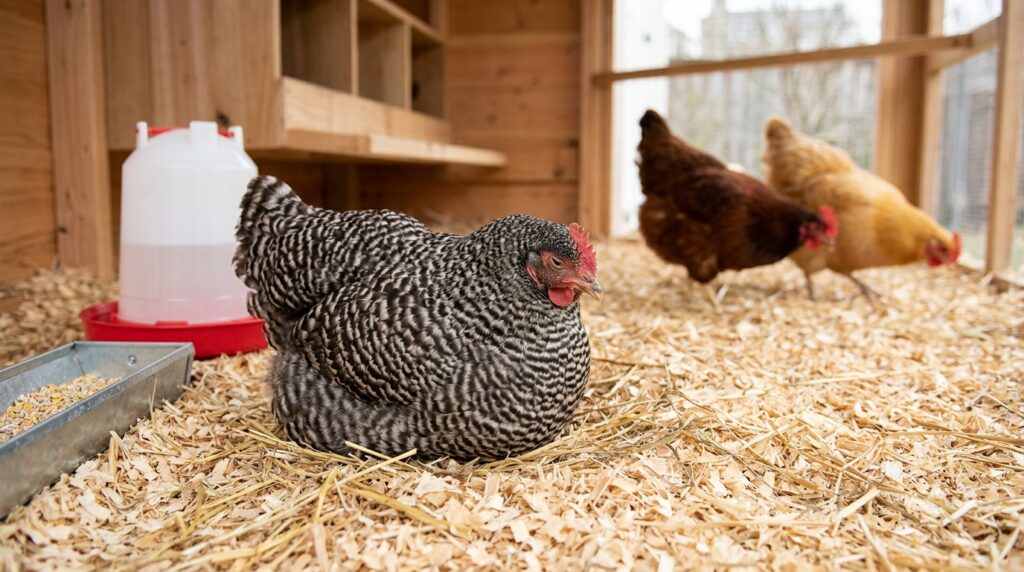
You walk into your backyard chicken coop expecting to see your flock scratching, dust bathing, and searching for food. But one hen is sitting quietly in a corner, her feathers puffed up, her head slightly lowered, and her eyes partially closed.
She isn’t following the other chickens. She isn’t showing much interest in food. Even when the rest of the flock moves around, she remains sitting alone.
Should you be worried?
Yes. A chicken that is unusually lethargic, fluffed up, and isolated may be showing signs of illness.
These behaviors can occur with several different health problems, including infections, digestive disorders, parasites, reproductive complications, and environmental stress.
The challenge is that chickens often hide signs of illness. By the time a bird looks obviously sick, the problem may already be serious.
This guide explains the possible reasons behind these symptoms, what to check first, when to contact a veterinarian, and how to protect the rest of your backyard flock.
1. What Do These Symptoms Actually Mean?
Before trying to identify a possible problem, understand what you’re observing.
Each behavior provides a useful clue, but none is enough to establish a diagnosis.
🐥 Fluffed-up feathers
A chicken naturally fluffs its feathers occasionally to regulate body temperature, rest, or maintain its plumage.
However, prolonged feather fluffing combined with weakness or inactivity is more concerning.
An unwell chicken may maintain a hunched posture with its feathers puffed out for extended periods.
🐥 Lethargy and low energy
A healthy chicken normally responds to movement, explores its surroundings, scratches the ground, and interacts with other birds.
A lethargic chicken may:
- Spend unusually long periods sitting.
- Keep its eyes partially or completely closed.
- Move slowly or reluctantly.
- Show little interest in food.
- Respond less than usual to its surroundings.
🐥 Sitting alone away from the flock
Chickens are social animals. A bird that suddenly separates itself from the group may be experiencing discomfort or illness.
Pay particular attention if the chicken also stops eating, drinking, dust bathing, or following its normal routine.
The University of Maryland Extension identifies reduced activity, lethargy, and self-isolation as recognized sickness behaviors in chickens.
2. Possible Reasons Your Chicken Is Acting This Way
Several conditions can produce similar symptoms. The following possibilities are not diagnoses, but they can help guide your observations.
1. Cold Stress or Environmental Discomfort
Cold temperatures can cause chickens to fluff their feathers to trap insulating air.
A chicken may also sit quietly when trying to conserve body heat.
However, consider the whole situation:
- Is the coop unusually cold or damp?
- Are several chickens huddling together?
- Is the bird otherwise alert and eating?
- Does it return to normal activity when conditions improve?
A chicken that remains weak, isolated, and uninterested in food should not automatically be assumed to be cold.
2. Coccidiosis and Other Digestive Problems
Coccidiosis is an intestinal disease caused by microscopic parasites called Eimeria.
It can affect chickens of different ages, although young birds are particularly vulnerable.
Possible warning signs include:
- Reduced appetite.
- Lethargy.
- Weight loss or poor growth.
- Diarrhea.
- Bloody droppings in some cases.
Not every chicken with coccidiosis has bloody droppings. Diagnosis generally requires veterinary assessment and appropriate testing.
Other digestive problems can also cause discomfort, reduced appetite, and changes in droppings.
3. Internal or External Parasites
Parasites can affect a chicken’s overall health, especially when infestations are significant.
External parasites include mites and lice, which may cause irritation, feather damage, restlessness, and anemia in severe infestations.
Internal parasites, including certain intestinal worms, can contribute to poor condition and reduced productivity.
Check for:
- Tiny moving insects around the vent and under the wings.
- Lice eggs attached to feather shafts.
- Irritated or damaged skin.
- Pale comb or wattles.
- Weight loss despite apparently normal feeding.
A pale comb alone does not identify a specific parasite or illness. It is a reason to investigate further.
4. Respiratory Infection
Respiratory diseases can make chickens weak and less active.
Watch for:
- Sneezing or coughing.
- Wheezing or abnormal breathing sounds.
- Nasal discharge.
- Watery or swollen eyes.
- Swelling around the face.
- Open-mouth breathing or gasping.
Respiratory symptoms combined with lethargy require prompt veterinary attention because several infectious diseases can produce similar signs.
5. Egg-Binding or Other Reproductive Problems
A laying hen that appears weak, repeatedly strains, or sits in an unusual posture may have a reproductive problem.
Egg binding occurs when a hen cannot pass an egg normally.
Possible warning signs include:
- Repeated straining.
- An unusually upright or penguin-like posture.
- Tail pumping.
- A swollen or uncomfortable-looking abdomen.
- Reduced appetite.
- Difficulty walking or standing.
Egg binding can become life-threatening. A veterinarian should assess a hen with suspected egg retention promptly.
Do not attempt to break or pull out an egg yourself, and do not insert objects into the vent.
6. Avian Influenza and Other Serious Infectious Diseases
Although many conditions can cause lethargy, serious contagious diseases must also be considered.
Highly pathogenic avian influenza can cause:
- Sudden death.
- Reduced energy and appetite.
- A drop in egg production.
- Swelling around the head and eyes.
- Purple discoloration of the comb, wattles, or legs.
- Breathing difficulties.
- Diarrhea.
- Loss of coordination.
Not every sick chicken has avian influenza, but these warning signs should never be ignored.
If multiple birds become sick or die unexpectedly, contact your local veterinary or animal-health authority promptly. Avoid moving birds or equipment between flocks until you receive guidance.
3. What to Check First: A Backyard Chicken Health Inspection
If you notice a chicken sitting alone, don’t immediately start giving medication.
Begin with careful observation. A few simple checks can help you provide useful information to your veterinarian.
Check 1: Appetite and Water Intake
Observe whether the chicken is eating and drinking normally.
Look for:
- Unfinished feed.
- Reduced interest in favorite treats.
- Difficulty reaching the feeder.
- Drinking much less than usual.
Reduced food and water consumption can be an early warning sign of illness.
Make sure fresh, clean water is accessible.
Check 2: Comb and Wattles
Look at the color and appearance of the comb and wattles.
Check for:
- Unusual paleness.
- Blue or purple discoloration.
- Swelling.
- Unusual dryness or shriveling.
Changes can accompany several health problems, including circulation issues and serious infections.
A color change should be considered alongside the chicken’s other symptoms.
Check 3: Droppings
Observe fresh droppings if possible.
Note whether they are:
- Unusually watery.
- Green or yellow.
- Bloody.
- Very dark or tar-like.
- Unusually infrequent.
Chicken droppings naturally vary depending on diet and normal cecal emptying. One unusual dropping does not establish a diagnosis.
Persistent abnormal droppings, particularly alongside lethargy, deserve veterinary attention.
Check 4: Breathing
Watch the chicken from a comfortable distance.
Normal breathing should not require obvious effort.
Look for:
- Open-mouth breathing when the bird is not overheated.
- Gasping.
- Tail movement synchronized with difficult breathing.
- Wheezing.
- Nasal discharge.
Difficulty breathing is an urgent warning sign.
Check 5: Legs, Feet, and Movement
Observe whether the chicken can stand and walk normally.
Look for:
- Limping.
- Swollen joints.
- Weakness in one or both legs.
- Tremors.
- Loss of balance.
- Inability to stand.
A bird that cannot stand or shows neurological symptoms needs urgent veterinary assessment.
Check 6: Abdomen and Vent
Without squeezing or applying pressure, observe the abdomen and vent area.
Look for:
- Swelling.
- Wet or dirty feathers.
- Straining.
- Unusual discharge.
- Signs of injury.
These observations may help identify reproductive, digestive, or other health concerns.
4. What Should You Do Immediately?
Practical first-response checklist
If your chicken is clearly unwell, take these steps while arranging veterinary advice.
Step 1: Separate the sick chicken when appropriate.
Move the bird to a clean, quiet, secure isolation area, particularly when an infectious disease is possible.
Use separate feeding and watering equipment. Wash your hands and clean footwear after handling the bird.
If several birds are affected or avian influenza is suspected, contact the animal-health authority before moving birds, following their instructions.
Step 2: Provide a comfortable environment.
Keep the chicken somewhere dry, quiet, and protected from drafts and extreme temperatures.
Provide appropriate warmth if the bird is cold, but make sure it can move away from the heat source.
Avoid overheating an already hot or panting bird.
Step 3: Make clean water available.
Place fresh water within easy reach.
Do not force water into the chicken’s beak. Liquid entering the airway can cause serious complications.
Step 4: Offer familiar feed.
Provide the bird’s normal balanced poultry feed.
Avoid relying on treats, bread, or kitchen scraps as substitutes for proper nutrition.
If the chicken cannot swallow normally or appears extremely weak, seek veterinary help rather than attempting to feed it.
Step 5: Record what you observe.
Write down:
- When the symptoms started.
- Whether the bird is eating and drinking.
- Changes in droppings.
- Egg production changes.
- Any breathing problems.
- Whether other chickens are affected.
Photographs or short videos of unusual movements and droppings may also help a veterinarian.
Step 6: Contact a poultry veterinarian.
A chicken that remains lethargic, fluffed up, and isolated should receive prompt veterinary assessment, especially if it is not eating or drinking normally.
Do not wait several days to see whether it improves.
5. When Is It an Emergency?
Some symptoms require immediate veterinary attention rather than home observation.
Urgent warning signs
Act immediately
- Gasping or struggling to breathe.
- Collapse or inability to stand.
- Seizures, severe tremors, or loss of coordination.
- Severe bleeding or major injury.
- Extreme weakness or unresponsiveness.
- Suspected egg binding with significant distress.
- Sudden unexplained deaths or multiple sick birds.
- Purple discoloration or swelling of the head, comb, or wattles, particularly with other illness signs.Important: If avian influenza is suspected, contact your local animal-health authority and follow its instructions about isolation, movement restrictions, and reporting. Do not transport potentially infected birds without guidance.
6. Common Mistakes Backyard Chicken Owners Should Avoid
When a chicken looks sick, it’s understandable to want to help immediately. However, some well-intentioned actions can make the situation worse.
Mistake 1: Assuming the chicken is simply cold.
Fluffed feathers can be a normal response to cold temperatures, but prolonged lethargy and isolation should not be dismissed.
Mistake 2: Giving antibiotics without a diagnosis.
Antibiotics do not treat viral infections or parasites. Their use should be based on veterinary advice, including appropriate drug selection and egg or meat withdrawal requirements.
Mistake 3: Treating every sick chicken for worms or coccidiosis.
Similar symptoms can have different causes. Unnecessary medication can delay proper diagnosis and treatment.
Mistake 4: Force-feeding or forcing water.
A weak bird may aspirate liquid or food into its respiratory tract. Avoid forcing anything into its mouth.
Mistake 5: Returning the bird to the flock too quickly.
A chicken may appear better while still recovering or potentially carrying an infectious disease. Follow veterinary advice before reintroducing it.
Mistake 6: Ignoring changes in the rest of the flock.
One sick chicken deserves attention, but several birds showing similar symptoms may indicate a flock-level problem.
7. How to Prevent Similar Problems in Your Backyard Flock
You cannot prevent every chicken illness, but good daily management can reduce several common risks.
- Keep the coop clean and dry. Remove wet bedding and manage droppings regularly.
- Provide clean drinking water. Clean waterers frequently and prevent contamination from wild birds.
- Feed a balanced diet. Use an appropriate complete poultry feed rather than relying heavily on treats.
- Inspect your chickens daily. Notice changes in appetite, activity, posture, and egg production.
- Check for parasites. Periodically inspect feathers, skin, and the vent area.
- Quarantine new arrivals. Keep new or returning birds separate for an appropriate period, commonly 30 days, and seek veterinary guidance if illness appears.
- Practice biosecurity. Clean equipment, wash hands, manage footwear, and limit contact with wild birds.
A consistent daily routine makes it easier to notice when something changes.
8. A Simple Daily Chicken Health Checklist
You don’t need complicated equipment to monitor your flock.
Use this quick checklist during your morning or evening coop inspection.
- All chickens are alert and moving normally.
- Birds are eating their regular feed.
- Fresh water is available.
- No chickens are unusually isolated.
- Feathers and posture look normal.
- No obvious breathing difficulties.
- Droppings appear generally normal.
- No unusual swelling or injuries.
- Egg production is consistent with expectations.
- No unexplained deaths.
If something looks unusual, record it and investigate rather than assuming everything is fine.
Final Thoughts ❤️
A chicken that is lethargic, fluffed up, and sitting alone is showing a change that deserves attention.
It might be experiencing environmental stress, parasites, digestive problems, reproductive complications, or an infectious disease. Unfortunately, these symptoms overlap, making it impossible to identify the exact cause through appearance alone.
The best response is to observe carefully, provide a safe and comfortable environment, make clean water available, and contact a poultry veterinarian promptly.
Remember that chickens often hide illness. Waiting until a bird becomes extremely weak can reduce the opportunity for effective treatment.
Your most valuable tool as a backyard chicken keeper isn’t guessing which medication to use. It’s recognizing unusual behavior early and knowing when to ask for professional help.
A few minutes of daily observation can make a meaningful difference in protecting your chickens and the rest of your flock. 🐔




