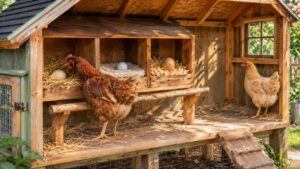
Opening an empty nesting box every morning can be frustrating, especially when your young chickens appear ready to start laying. 🥚 Before assuming something is wrong with egg production, consider whether your chickens are laying eggs in hidden places around the coop or backyard. Sometimes, the eggs exist, but they are simply somewhere you have not thought to search.
Young pullets occasionally choose unexpected laying locations, including quiet corners, dense vegetation, and sheltered areas beneath structures. Older hens may also compete for preferred nesting boxes, making alternative locations more attractive to younger birds. 🐔 This guide explains seven places to check first, why hidden laying happens, and how to encourage hens to use their designated nesting boxes.
Are Your Chickens Not Laying or Just Hiding Their Eggs?
When a chicken reaches laying age but produces no visible eggs, there are two different possibilities to investigate. She may not have started laying, or she may already be producing eggs somewhere outside the nesting boxes. 🔎 The second possibility is particularly worth checking when pullets have access to a garden, backyard, or spacious outdoor run.
Many pullets begin laying around 18–22 weeks, although breed, development, environment, and season can shift the timing. Early eggs may be smaller than expected, and laying patterns can initially be inconsistent as the bird matures. Finding even one small egg in an unexpected location can reveal that your pullet has started laying after all.
Seven Places Chickens May Hide Their First Eggs
Chickens naturally seek relatively private, sheltered locations when preparing to lay eggs. A quiet patch of vegetation or an undisturbed coop corner may appear more appealing than an unfamiliar nesting box. 🌿 If your egg collection suddenly stops or pullets seem overdue, search the following seven locations systematically.
Begin near the coop and gradually expand into the areas your chickens regularly explore. Look for flattened grass, disturbed bedding, shallow nesting depressions, and hens repeatedly visiting the same location. The numbered locations below correspond to the illustrated Backyard Hidden-Egg Search Map.
- Under Shrubs and Bushes. Dense shrubs create natural hiding places that offer shade and privacy. Carefully inspect the ground beneath branches, especially where leaves form a shallow depression. Avoid reaching blindly into vegetation where insects, snakes, or other wildlife could be hiding.
- Inside Garden Vegetation. Vegetable beds, tall grass, and thick ornamental plants can conceal small eggs surprisingly well. 🥬 Look beneath broad leaves, around plant bases, and between closely growing stems. Search gently to avoid damaging plants or disturbing nesting wildlife.
- Secluded Coop Corners. Even chickens living inside a well-designed coop may prefer a quiet floor corner instead of the provided boxes. Check behind interior partitions, beneath low shelves, and along walls where bedding accumulates. These areas are especially worth inspecting when young birds are still learning where to lay.
- Behind Feeders and Equipment. Feed containers, storage bins, and movable equipment may create protected spaces that chickens explore. 🪣 Look behind objects that remain undisturbed for several days. Move lightweight items carefully, and never enter unstable storage areas just to retrieve an egg.
- Beneath Sheds and Raised Structures. The space underneath a raised coop, deck, or small shed may resemble a sheltered nesting location. Inspect accessible openings using a flashlight rather than crawling into unsafe spaces. Never dismantle structures or reach into areas where you cannot see potential hazards.
- Unused Bedding and Straw Piles. Loose straw, dry leaves, and accumulated bedding provide soft material that resembles nesting-box bedding. 🌾 Search neglected corners where chickens scratch shallow depressions or repeatedly settle. Keep these materials dry and managed because neglected piles can also shelter pests.
- Sheltered Corners of the Run. A covered run may contain surprisingly private spots behind barriers, under platforms, or beside sheltered walls. Check places where the flock rarely walks but an individual hen occasionally disappears. These locations deserve particular attention when birds spend most of their day inside an enclosed run.
Why Do New Pullets Sometimes Avoid Nesting Boxes?
A pullet does not automatically understand that the wooden box installed by her owner is the preferred place for laying eggs. Young hens explore potential nesting locations, and some discover quiet alternatives before becoming familiar with the designated boxes. 🐣 Providing nesting boxes before the first eggs appear helps birds become accustomed to using them.
Comfort, accessibility, lighting, and previous experiences can influence where a hen chooses to settle. A bright, noisy, exposed, or frequently disturbed nesting box may be less attractive than a sheltered area nearby. This does not necessarily mean your entire coop design is wrong, but small adjustments can help make the nesting boxes more inviting.
Can Older Hens Keep Young Chickens Out of Nesting Boxes?
Older hens can sometimes interfere with younger pullets trying to access preferred nesting locations. 🐔 A dominant bird may occupy a popular box, peck another hen approaching it, or block access during a busy laying period. Young birds may respond by waiting, retreating, or choosing another location.
However, multiple hens sharing one favorite nesting box does not automatically indicate bullying. Observe whether younger chickens are actually being chased away, repeatedly interrupted, or unable to enter a box comfortably. If competition is occurring, improving access to alternative nesting boxes is generally more useful than repeatedly forcing birds into the same crowded location.
How to Encourage Pullets to Lay in Nesting Boxes
Start by making nesting boxes easy to find, comfortable, and relatively private. 🪺 University extension recommendations commonly suggest approximately one nesting box for every four to five hens, although individual preferences and flock behavior may require additional options. Keep nesting material clean and dry, provide a stable entrance, and position the boxes away from busy areas.
Placing a ceramic, wooden, or other purpose-made dummy egg inside a nesting box may encourage pullets to investigate it. Hens often show interest in locations where eggs already appear to be present, making dummy eggs a simple training aid. 🥚 Remove damaged dummy eggs promptly, and avoid small objects that birds could accidentally swallow.
If chickens repeatedly lay in an unwanted location, make the designated boxes more appealing while safely restricting access to the alternative site when practical. You can also delay supervised free-ranging until later in the day for a short training period, provided the birds remain comfortable and have adequate space, food, and water. The goal is to establish a predictable laying routine without stressing or unnecessarily confining the flock.
How to Check for Hidden Eggs Without Disturbing the Flock
Searching for hidden eggs works best when you observe the chickens before moving anything. 👀 Watch where individual hens repeatedly walk, pause, crouch, or disappear, especially during the hours when they normally lay. A bird visiting the same quiet spot may provide a useful clue, although this behavior alone does not prove she is laying there.
Once you identify a possible location, inspect it calmly while keeping the birds safe. Avoid pulling hens out of nests unnecessarily, chasing them around the yard, or entering spaces that could expose you to wildlife or unstable structures. Collecting eggs regularly also helps prevent breakage, contamination, and the accumulation of unknown-age eggs.
Backyard Hidden-Egg Search Map: A Practical Search Route
The illustrated search map shows seven potential hiding locations around a typical suburban chicken coop, garden, shed, and enclosed run. 🗺️ Treat the numbered spots as a search guide rather than a ranking of which locations are statistically most common. Begin with the easiest accessible areas, then investigate sheltered structures and vegetation where your flock spends time.
You can turn the map into a repeatable inspection routine by checking the same locations whenever expected eggs are missing. Record which hen visits each location and whether you find newly laid eggs there. Over time, these observations can reveal persistent nesting preferences and help you decide where accessibility or privacy improvements are needed.
What If You Find a Pile of Hidden Eggs?
Discovering several eggs together may mean a hen has been using the same secret nest for multiple days. Unfortunately, you cannot determine the safety of unknown-age eggs simply by looking at them. The familiar float test primarily reflects changes in an egg’s air cell and cannot reliably establish whether harmful bacteria are present.
When you cannot establish when the eggs were laid or how they were stored, the safest decision is to discard them rather than assume they are edible. 🥚 Dispose of cracked, heavily contaminated, or suspicious eggs and clean your hands after handling them. Then address the hiding location to prevent repeated collections of eggs whose age and storage conditions remain uncertain.
What If You Still Cannot Find Any Eggs?
If a careful search reveals nothing, consider whether the birds are mature enough to lay or whether another factor is affecting production. Age, breed, daylight, molt, broodiness, nutrition, heat stress, and illness can all influence egg laying. A pullet approaching maturity may simply need more time, particularly if she is developing normally and behaving like the rest of the flock.
Continue monitoring feed consumption, water availability, general activity, and changes in individual birds. 🔍 If an adult hen develops concerning symptoms such as persistent straining, marked lethargy, a swollen abdomen, or breathing difficulties, seek prompt veterinary advice rather than assuming she is hiding eggs. Egg-production troubleshooting should always distinguish ordinary laying variation from signs that require professional attention.
Final Thoughts: Check the Yard Before Assuming Something Is Wrong
An empty nesting box does not always mean your chickens have stopped laying or failed to start. Sometimes, the explanation is a hidden nest beneath a shrub, behind equipment, or inside an overlooked corner of the run. 🐔 A careful search can save unnecessary worry while revealing how your chickens actually use their environment.
The practical solution is to check the seven hiding places, observe nesting behavior, and make designated boxes more attractive. Keep nesting areas accessible and comfortable, collect eggs regularly, and address competition when you see it happening. With consistent observation and a simple search routine, collecting your flock’s first eggs can become much more predictable.