You raised your chickens from fluffy little chicks, watched them grow into beautiful pullets, and prepared the nesting boxes for their first eggs. 🐔 However, while other chickens may begin laying around five months old, your Brahma or Silkie might still be exploring the yard without showing much interest in egg production. This difference can leave backyard keepers wondering whether their chickens are simply late-blooming breeds or whether something is affecting their development.
If you are wondering when do Brahma chickens start laying eggs, a practical expectation is approximately five to eight months, although individual birds can begin earlier or later. Silkies and Cochins can also take longer than many egg-focused breeds, particularly when genetics, seasonal daylight, nutrition, and individual maturity affect their development. 🥚 Understanding these differences helps you recognize normal variation without overlooking warning signs that deserve attention.
Why Some Chicken Breeds Mature Later Than Others 🐣
Not every chicken breed was developed primarily to produce eggs as early or frequently as possible. Commercial egg-laying strains have been selected for efficient production, while dual-purpose chickens combine meat and egg characteristics, and ornamental breeds are often valued for their appearance or temperament. These breeding differences influence physical development and reproductive maturity, making the first-egg timeline different across breeds.
Larger chickens such as Brahmas and Cochins generally develop substantial body frames, while ornamental Silkies have breeding characteristics quite different from production-focused layers. 🌿 However, body size alone cannot predict laying age because genetics, feeding conditions, daylight, and individual development also influence maturity. Two healthy pullets hatched on the same day may therefore begin laying weeks apart without either bird necessarily having a problem.
Brahma Chickens: Why Their First Eggs May Take Longer 🐓
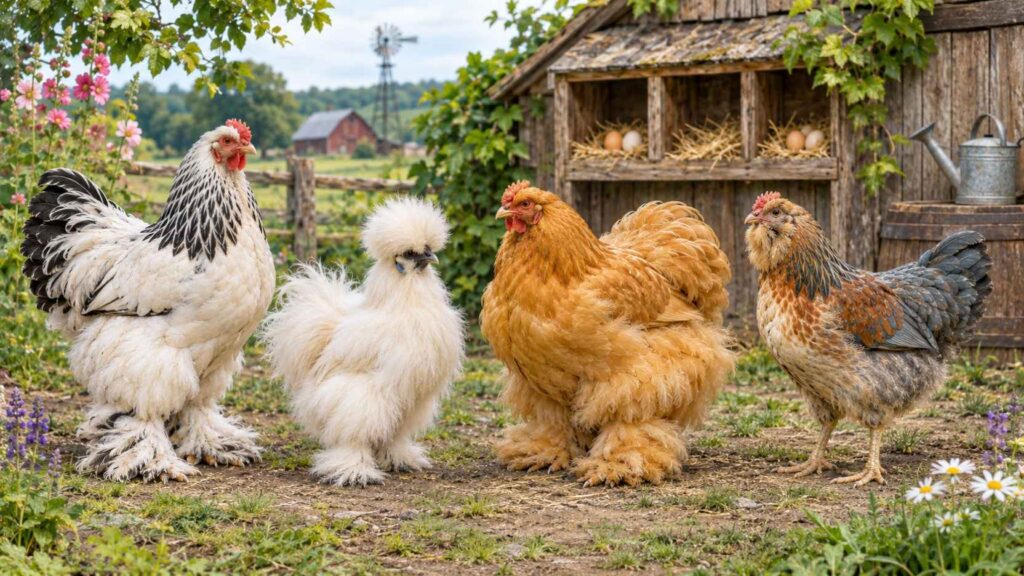
Brahmas are large, feather-legged chickens traditionally valued for their substantial size, calm disposition, and dual-purpose characteristics. Many begin laying around five to eight months, although some slower-developing individuals may take longer, particularly when they mature during shorter winter days. This broad range is more useful than promising that every Brahma will produce her first egg at exactly six months.
A seven-month-old Brahma that is eating normally, gaining appropriate condition, and gradually developing mature characteristics may simply need additional time. Look for changes in comb coloration, increasing interest in nesting areas, and the crouching behavior some pullets display as sexual maturity approaches. 🥚 These signs provide useful clues, but they cannot guarantee that an egg will appear within a particular number of days.
Silkie Chickens: What Owners Should Expect 🐥
Silkies are distinctive ornamental chickens recognized for their unusually soft-looking feathers, feathered legs, and generally compact bodies. Owners asking when do Silkies start laying eggs can use roughly six to nine months as a broad planning estimate, while recognizing that some individuals start earlier and others later. Unlike standardized production strains, Silkies can show substantial variation in development, so a single hatch date does not establish an exact first-egg deadline.
Silkies are also particularly well known for broodiness, the instinct to sit on eggs and attempt to hatch them. 🪺 Broody hens commonly interrupt egg production, meaning a mature Silkie may lay fewer eggs over time than her owner expects. Importantly, broodiness generally explains interruptions after laying has begun, rather than automatically explaining why a young pullet has never produced an egg.
What About Cochins, Bantams, And Easter Eggers?
Cochins are another slow-developing breed, with some taking approximately six to eight months before beginning egg production. 🐔 The Livestock Conservancy specifically recognizes their relatively slow development and notes that some Cochins may not begin laying until around eight months old. Like Silkies, Cochins also have a reputation for broodiness, which can influence their eventual laying patterns.
Bantams are not one single breed, so their smaller bodies do not automatically mean they mature earlier or later than standard-sized chickens. Easter Eggers are also genetically variable because they are not one standardized pure breed, and many begin laying around five to six months, although different breeding lines can vary. 🌈 This is why breed tendencies provide a starting point, while the individual bird’s condition and development remain important.
Chicken Breed Comparison: When To Expect The First Egg 📊
Understanding differences between breeds can prevent unrealistic expectations, particularly in mixed backyard flocks. The following first-egg age estimates are broad planning ranges assembled from hatchery and breed guidance rather than guaranteed biological deadlines. Individual birds may fall outside these windows because of breeding line, season, nutrition, and growing conditions.
| Chicken breed | Approximate first-egg expectation | Individual variation and checks |
|---|---|---|
| Brahma | 5–8 months | Some mature later; check body condition and daylight |
| Silkie | 6–9 months | Wide variation; assess maturity and overall health |
| Cochin | 6–8 months | Slow development; monitor weight and nutrition |
| Other bantams | Often 5–8 months, breed-dependent | Identify the specific bantam breed before estimating |
| Easter Egger | 5–7 months | Breeding lines vary; check maturity and nesting behavior |
| Production-focused layers | Approximately 4–6 months | Often earlier than ornamental and heavy breeds |
These estimates should help you decide when patience is reasonable and when closer monitoring becomes useful. A Brahma approaching eight months is in a different situation from a production-focused pullet of the same age, but neither should automatically be considered unhealthy. The comparison is most useful when combined with hatch dates, feeding records, seasonal conditions, and observations of each bird.
Can A Hen Really Take A Year To Lay Her First Egg?
Backyard chicken discussions occasionally include owners reporting their first eggs at fourteen, fifteen, or even seventeen months. Such experiences may be genuine, but an exceptionally late first egg should not be presented as a normal expectation for Brahmas, Silkies, or Cochins. ⚠️ A report from one flock cannot establish a reliable breed average, especially when the bird’s complete health history and living conditions are unknown.
A lengthy delay may involve multiple influences, including shorter daylight, poor body condition, inappropriate nutrition, reproductive problems, or uncertainty about when the bird actually began laying. Hidden nests can also create confusion because some free-ranging hens deposit eggs where their keepers do not regularly look. If a pullet reaches approximately nine months without any evidence of laying, review her management and health rather than assuming she will naturally wait another several months.
When A Late-Blooming Breed Needs More Than Patience 🔍
Start by checking whether your pullets receive a complete, age-appropriate poultry ration and consistent access to clean drinking water. Growing birds need adequate nutrition to develop properly, while the transition to a calcium-rich layer ration should follow their stage of maturity and the feed manufacturer’s guidance. Excessive treats can displace balanced feed, making nutrition less predictable during an important period of growth.
Next, consider seasonal daylight, recent stress, parasite exposure, bullying, and the bird’s general condition. ☀️ Shorter days can delay reproductive activity, but supplemental lighting should not be used simply to force an immature bird into earlier production without considering proper development. If your chicken is losing weight, becoming lethargic, eating poorly, or otherwise appearing unwell, consult a poultry veterinarian rather than attributing every symptom to slow breed maturity.
Signs Your Brahma Or Silkie May Be Getting Ready To Lay
A pullet approaching reproductive maturity often develops a fuller, more colorful comb and wattles, although these changes look different across breeds. 🪺 She may also spend more time investigating nesting boxes, become increasingly vocal, or crouch when approached by another chicken or her keeper. These behaviors are helpful indicators but are not definitive proof that an egg will arrive immediately.
The first eggs themselves may be noticeably smaller than the eggs a mature hen eventually produces. Some early eggs can also have unusual shapes or shell characteristics while the reproductive system establishes a regular pattern. 🥚 However, persistent abnormal eggs, visible straining, weakness, or a swollen abdomen require attention, and a bird struggling to pass an egg needs prompt veterinary assessment.
How To Support Late-Laying Chickens Without Rushing Them 🌿
Provide clean nesting boxes before your pullets approach their expected laying window so they have a comfortable place to explore. Maintain consistent feeding, suitable housing, dry bedding, fresh water, and enough feeder access that more dominant chickens cannot prevent quieter birds from eating. A calm, predictable environment supports normal development without relying on unnecessary supplements or attempts to accelerate maturity.
Track each bird’s hatch date, physical changes, and first egg rather than comparing every chicken against the fastest layer in the flock. 📅 If you manage several breeds together, record which hens are already producing and which are still developing, while periodically checking for hidden nests. These simple observations make it easier to recognize ordinary variation and identify situations where further investigation is justified.
Final Thoughts: Late Bloomers Still Need The Right Care 🐔
Waiting for a Brahma or Silkie to lay her first egg can test your patience, especially when smaller, egg-focused chickens have already started filling the nesting boxes. However, late-laying chicken breeds often follow different development patterns, and a slower start does not automatically mean poor health or future egg-production failure. The goal is to understand each breed’s reasonable expectations without treating unusually extreme delays as normal.
Most importantly, remember that breed expectations should guide observation, not replace health checks. Give your birds suitable nutrition, appropriate housing, consistent care, and time to mature while watching for anything unusual in their behavior or physical condition. 🥚 When that first egg finally appears, you can appreciate the milestone knowing that good care mattered more than rushing the calendar.