One keeper says 16 weeks, another says 18, and someone else says to wait for the first egg. 🐔 These conflicting answers complicate when to switch chickens to layer feed, particularly when pullets grow well but nesting boxes remain empty. Age, maturity, laying status, and feed-label instructions all influence timing.
A growing pullet needs nutrients that support development, while an actively laying hen needs substantially more calcium to produce eggshells. 🥚 Many commercial laying breeds begin producing around 18 to 22 weeks, but individual birds and slower-maturing breeds may take longer, and daylight can also influence the timing. Use these comparisons to choose a plan suited to your flock.
Why Chicken Owners Recommend Different Switching Ages
The 16-week recommendation may reflect approaching maturity or specific manufacturer instructions. Some permit switching at 16 weeks, while others advise 18 weeks or the first egg. 📅 A recommended starting age is therefore a product-specific feeding instruction, not proof that all pullets develop at the same speed.
University of Minnesota Extension describes switching pullets to laying mash when egg production starts, commonly around 20 weeks in its management guide. Meanwhile, Mississippi State University Extension includes an 18-week transition in one backyard flock guide, showing why reputable recommendations can differ without necessarily being careless. Consider production stage and feed formulation, not one universal deadline.
What Happens If You Switch to Layer Feed Too Early?
Layer feed contains more calcium than a typical starter or grower ration because laying hens use calcium to build eggshells. 🦴 Younger birds that are still developing do not need those high levels, and regularly feeding a layer ration to immature, non-laying chickens can harm kidney function and interfere with healthy development. Extension publications therefore caution against prematurely feeding layer diets to growing birds.
One accidental mouthful is not an emergency, but prolonged access to the wrong ration needs correcting. Check the feeding-stage instructions and calcium information on the label before assuming that every bag marked ‘layer’ is suitable for a 16-week-old pullet. ⚠️ If you have substantially younger birds sharing a feeder with mature hens, manage the group with an appropriate mixed-flock feeding strategy instead of giving everyone standard layer feed.
Should You Wait Until the First Egg?
The first egg is strong evidence that a pullet has entered the laying stage, which makes it a practical trigger for switching to layer feed. 🥚 It is especially useful with slower-maturing breeds that remain healthy and growing after the age when faster commercial layers might already be producing. If your feed program recommends continuing grower or developer feed until the onset of lay, the first egg can guide that decision.
However, waiting for an egg is not the only defensible approach, because some complete layer feeds specifically recommend beginning the transition at about 18 weeks. A pullet close to laying needs calcium for shell production, so following that product’s age-based instructions may be appropriate even if the nesting box is still empty. 📦 If laying is delayed, reassess the ration and other causes instead of assuming more calcium will produce eggs.
When Is an All-Flock Feed a Better Option?
A single-age group of laying hens can usually eat a complete layer ration, but a mixed flock makes the decision less straightforward. 🐓 Roosters, young pullets, and hens that are not laying do not all share the calcium needs of actively laying birds, so a high-calcium ration for everyone may be unsuitable. An all-flock or general-purpose feed explicitly labeled for the ages present can provide a workable common foundation.
Because all-flock feed often contains less calcium, offer laying hens oyster shell separately, following label guidance. 🐚 Separate calcium lets birds consume it independently, without enriching everyone’s ration. Not every product called ‘all flock’ is intended for tiny chicks or every species, so verify its age range, medications, and nutritional directions rather than relying on the name alone.
How to Change Feeds Without Disrupting Eating Habits
Once the new feed is appropriate, a gradual change can help birds accept a different taste, texture, or pellet size. 🌾 Over a week, try one-quarter new feed, then half, then mostly new feed before fully switching. Follow the manufacturer if its directions differ, and avoid extending a starter-to-layer transition unnecessarily once hens have begun laying.
Keep clean water and adequate feeder space available throughout the change, and observe whether shy birds can reach the ration. If hens eat crumbles, new crumbles may be easier to accept than pellets. 💧 Do not let scratch grains, larvae, or kitchen scraps become a substitute for the complete feed while you evaluate whether the transition is working.
What to Observe First Before Switching
Begin by confirming each bird’s approximate age, breed or type, and whether any hens have already produced eggs. 👀 Some pullets develop larger, redder combs and wattles or begin investigating nest boxes before laying, but those signs alone cannot tell you the exact date of the first egg. A flock can also contain early and late developers, making a single group age less useful than observing the birds themselves.
Next, read the feed tag for its stated life stage, calcium level, feeding directions, and whether it contains medication or special warnings. Check that the birds are eating normally, maintaining condition, and receiving enough daylight without assuming lighting explains every delayed first egg. 📝 If guidance conflicts with laying status, consult the manufacturer, extension specialist, or poultry veterinarian.
When to Worry About Poor Appetite or Unexpected Eggs
A healthy flock may briefly investigate new feed, but persistent refusal to eat, lethargy, weight loss, or abnormal droppings should not be dismissed as ordinary pickiness. 🚩 Check whether the feed is fresh, dry, correctly stored, and accessible, and make sure waterers function properly. If multiple birds become sick or stop eating, seek prompt veterinary advice rather than relying on another feed change to fix the problem.
Early eggs may be small or irregular as pullets begin laying, but a first egg still signals that their nutritional needs are changing. Thin shells, repeated shell-less eggs, straining, weakness, or a hunched posture deserve closer attention because nutritional imbalance is only one possible explanation. 🥚 An egg-bound or otherwise distressed bird needs urgent veterinary assessment, not simply additional oyster shell or a different bag of feed.
Feed Switching Decision Chart: Age vs. Laying Status
Use this chart as a starting point, then give the directions for your actual feed and the birds’ production stage priority. 📋 Ages represent common decisions, not fixed deadlines, especially for slow-maturing breeds. If you have actively laying birds, the feeding plan must meet their current calcium requirements instead of treating them as growing pullets.
| Situation | Practical feeding decision | What to check |
|---|---|---|
| Under 16 weeks, not laying | Stay on age-appropriate starter or grower feed. | Feed label and normal growth. |
| Around 16–17 weeks, not laying | Usually continue grower or developer; follow any product-specific pre-lay instructions. | Breed maturity and calcium level. |
| Around 18–20 weeks, not laying | Compare the manufacturer’s transition age with the flock’s actual development. | Read label; assess readiness and delayed maturity. |
| First egg or actively laying | Transition to a complete layer ration, or suitable all-flock feed plus separate calcium. | Feed intake, egg quality, flock composition. |
| Mixed ages or roosters present | Consider properly labeled all-flock feed with separate oyster shell for layers. | Youngest birds’ needs and product suitability. |
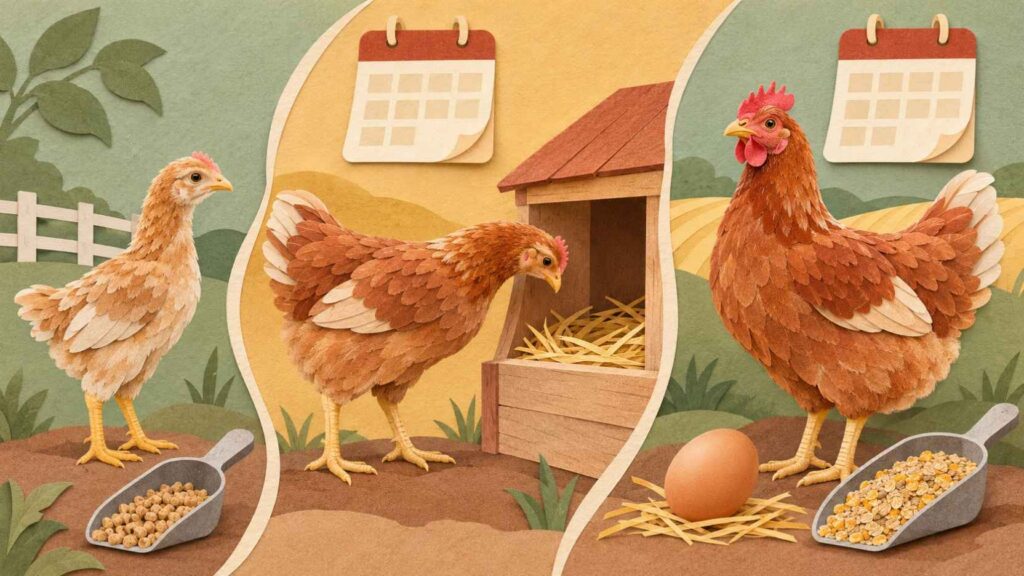
The three-path rule is easy to remember: growing pullets → stay on grower; approaching laying age → check the label and maturity; actively laying hens → provide laying-stage nutrition. ➡️ In mixed groups, branch to a suitable all-flock ration and separate free-choice calcium for the layers instead of forcing one high-calcium feed on every bird. The goal is an appropriate ration as each chicken’s needs change.