
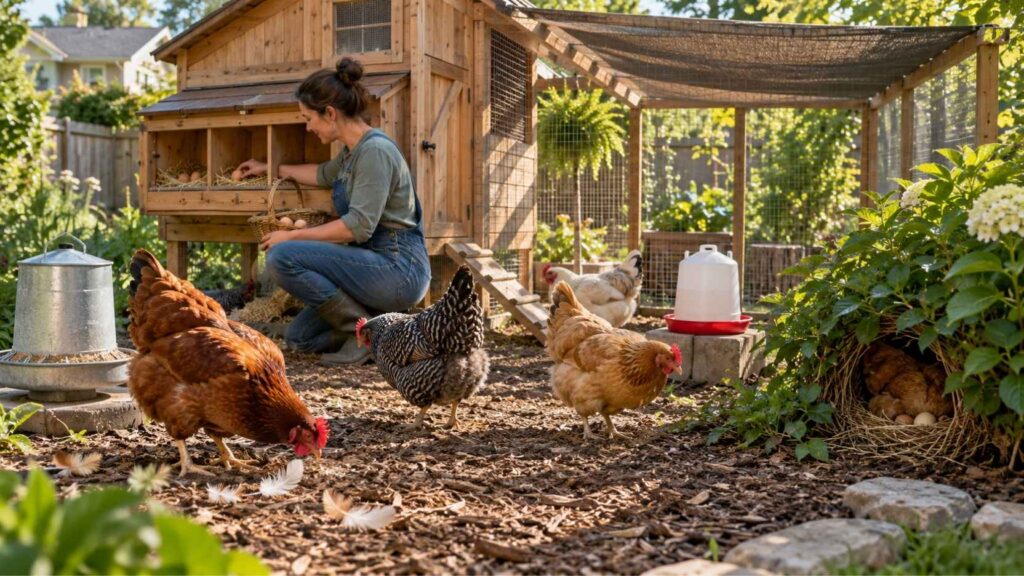
When a flock drops from four eggs a day to one, the best first question is “Where did the eggs go?” 🥚 A slowdown can come from hidden nests, egg theft, molt, broodiness, feed, weather, age, or illness. Checking them in order prevents random troubleshooting.
Think of this guide as a decision tree, not a random list. 🔎 First determine whether eggs are being laid elsewhere, then whether they disappear after laying, and finally whether production itself has slowed. Track eggs for several days because one quiet day proves little.
First, Did Egg Production Actually Stop?
Count only hens that are truly of laying age and compare today with their previous output. Pullets often begin around 18 to 24 weeks, although breed and season can shift the timing. Six hens in the yard do not necessarily mean six active layers.
Compare several days instead of one empty nest box. 📅 Hens do not lay on a perfect once-per-day schedule, and laying time can shift. Record egg numbers, weather, and unusual events.
Step 1 — Search for a Hidden Nest
Cause #1 is a hidden nest, especially with free-ranging hens. 🪺 Check shrubs, sheds, tall grass, stored equipment, decks, and other dark protected spaces. A hen repeatedly disappearing to the same place is a clue.
Watch the birds instead of searching randomly. Follow a suspicious hen from a distance when she leaves the flock. A pile of clean eggs means production did not stop; the nest location changed.
Step 2 — Check Whether Something Is Taking the Eggs
Cause #2 is egg loss after laying. Dogs may carry eggs away, hens can eat eggs, and wildlife may remove them when the coop is accessible. 🐾 Look for shell fragments, yolk stains, disturbed bedding, tracks, or predictable disappearances.
Collect eggs more frequently for several days and limit unnecessary access to nesting areas. If the count improves, your hens may have been laying normally. Check nest-box bedding and crowding too, because accidental breakage can encourage egg eating.
Step 3 — Look for Molting or Broodiness
Causes #3 and #4 are molt and broodiness, both normal reasons for production to fall. During molt, hens replace feathers and often reduce or stop laying. 🪶 Loose feathers, pin feathers, rough plumage, and seasonal timing make molt more likely.
A broody hen stays focused on sitting rather than laying normally. She may remain in the nest, flatten herself, puff up, growl, or quickly return after being moved. One broody hen does not explain every missing egg.
Step 4 — Check Feed and Water
Causes #5 and #6 are water interruption and poor dietary balance, and water comes first. 💧 An empty, dirty, tipped, frozen, or blocked waterer can quickly disrupt intake. During hot weather, confirm that every bird can easily reach clean water.
Next, make sure the flock eats a complete poultry ration appropriate for its life stage. Too much scratch or table food can displace balanced feed and dilute nutrition. Mixed flocks with chicks or non-layers are often managed with an appropriate all-flock ration plus separate calcium for active layers.
Step 5 — Has Anything Changed in the Flock?
Cause #7 is stress from a recent flock or environment change. New birds, a moved coop, confinement, predator visits, a new dog, or pecking-order disruption can affect laying. 🐔 Ask what changed shortly before the egg count fell.
Check whether timid hens are being blocked from food, water, or nest boxes. Multiple feeding and watering points can help when dominant birds guard resources. If the flock otherwise looks healthy, restore a stable routine before making more changes.
Step 6 — Check Heat and Weather Stress
Cause #8 is weather stress, especially sustained heat. ☀️ Chickens commonly eat less when hot, which can reduce the nutrients available for egg production. Shade, airflow, and clean water become especially important.
Cold weather can matter indirectly through frozen water, higher energy demands, shorter days, or changed routines. Ask what the weather changed about eating, drinking, activity, and housing. A decline that begins with extreme weather deserves that connection to be investigated.
Step 7 — Consider Daylight and Season
Cause #9 is reduced daylight. 🌤️ Day length influences reproductive activity, so many backyard hens naturally lay less as autumn and winter days shorten. Molt can overlap with this period and make the seasonal decline look larger.
Check the calendar before assuming healthy-looking hens have a hidden problem. If birds remain active and slow as days shorten, season may explain much of the change. Older hens can show stronger seasonal pauses than young pullets.
Step 8 — Consider the Hen’s Age
Cause #10 is age and the normal decline in production over time. Hens generally lay most heavily in their earlier laying years, then become less consistent as they mature. ⏳ They can stay healthy even as annual totals fall.
Compare each bird with her own past pattern rather than with a young pullet. A mature hen laying fewer eggs than in her first year is not automatically sick. Recording approximate ages makes this normal change easier to recognize.
Step 9 — Look for Health Warning Signs
Causes #11 and #12 are general health problems and reproductive problems. ⚠️ Watch for lethargy, isolation, reduced appetite, weight loss, abnormal droppings, respiratory signs, persistent straining, swelling, or repeated nest visits without laying. A production drop matters more when other signs appear.
Do not diagnose a specific condition from egg count alone because parasites, infection, injury, and reproductive disorders can overlap. A weak, distressed, rapidly declining, repeatedly straining, or abnormally breathing bird needs prompt attention. Significant or worsening signs should be discussed with a poultry-experienced veterinarian or appropriate animal-health professional.
My Chickens Look Completely Normal but Still Aren’t Laying
If every hen looks bright, active, hydrated, and socially normal, return to the non-medical causes first. ✅ Recheck hidden nests, egg theft, broodiness, molt, feed, water, flock changes, heat, daylight, and age. Healthy-looking hens can still reduce the egg basket substantially.
The timeline is often the strongest clue. A one-day drop after a disturbance, a decline during feather loss, and a gradual autumn slowdown point in different directions. Match the timing to flock changes instead of changing everything.
When to Watch and When to Worry
Watching is reasonable when hens remain alert, eat and drink normally, maintain condition, and the decline fits molt, broodiness, weather, daylight, age, or recent stress. 👀 Keep records, correct obvious management problems, and monitor whether production stabilizes. A clear seasonal slowdown usually calls for observation rather than panic.
Seek help sooner when reduced laying comes with breathing difficulty, severe weakness, bleeding, rapid weight loss, persistent straining, abdominal swelling, major diarrhea, or sudden deaths. Separate a clearly sick bird when appropriate so she can be observed and protected from bullying. Worsening signs deserve professional guidance rather than guesswork.
5-Minute Egg-Laying Diagnostic Checklist
Use this 12-cause order from top to bottom so simple explanations are checked before complex ones. 📝 Stop when you find a convincing cause that matches both the birds and the timeline. If nothing fits, continue to the next step rather than assuming the worst.
- Confirm which hens are laying age and compare several days.
- Search for a hidden nest.
- Check whether eggs are being eaten or carried away.
- Look for broodiness.
- Look for molt.
- Confirm clean, working water access.
- Confirm balanced complete feed.
- Review flock or housing changes.
- Compare the decline with heat or severe weather.
- Check season and daylight.
- Factor in each hen’s age.
- Look for health or reproductive warning signs.
Decision-tree shortcut: Hens look normal? Follow hidden nests → missing eggs → broodiness/molt → water/feed → stress → weather/daylight → age. Hens also look unwell? Skip ahead to the health check and seek qualified help when warning signs are significant.




