If you are asking “what time should I let chickens out?”, there is no single hour that fits every backyard flock. A hen entering a secure run faces different risks from one walking straight into an open yard, and owner schedules also change what supervision is possible. The best release time comes from housing setup, laying habits, predator pressure, and your schedule. 🐔
For many flocks, opening the coop into a secure run around daylight is a practical starting point. Free-ranging beyond that enclosure is a separate decision and may happen later in the morning, after most eggs are laid, or after work. Think of the routine as opening different layers of access, not simply “letting the chickens out.”
What Time Should Chickens Come Out in the Morning?
Chickens become active as daylight arrives, so a normal chicken morning routine often begins around sunrise or shortly after. You do not need to match sunrise to the exact minute because season, weather, coop design, and access to food and water also matter. Consistency helps, but secure housing matters more than a perfect clock time.
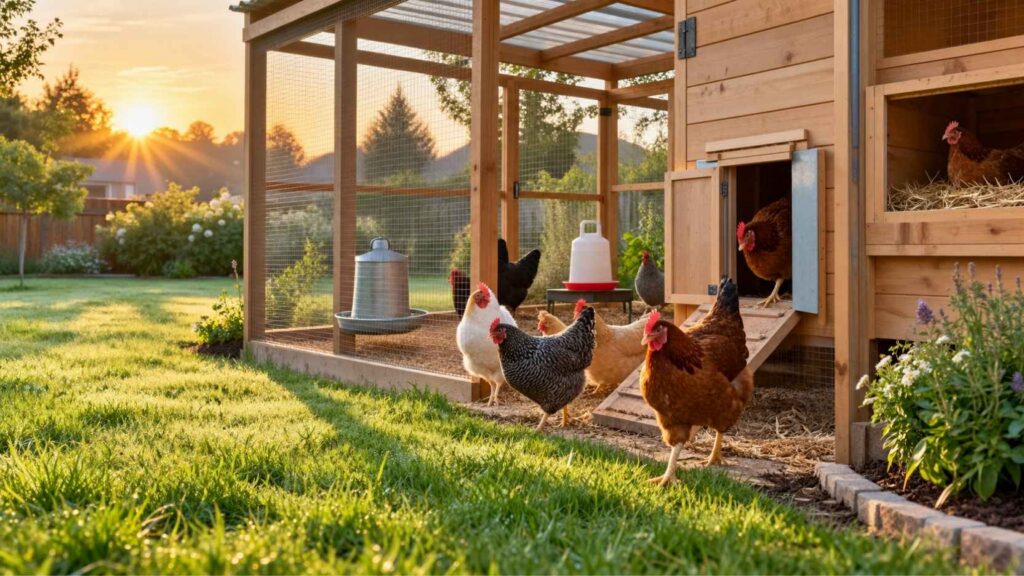
If the coop opens into a covered, predator-resistant run, daylight access lets birds eat, drink, scratch, and visit nest boxes while contained. If the door opens directly into an unfenced yard, the decision carries more risk because daytime predators can still take poultry. Penn State Extension identifies covered, confined runs as the strongest predator protection and advises secure lockup before dark when runs are not predator-proof.
Coop Door vs Run Door vs Free-Range Release
The coop door, run door, and free-range release should not automatically open at the same time. Chickens can leave the sleeping coop at daylight, spend the morning inside a secure run, and enter the larger yard later. This setup gives them movement while preserving safer nesting and feeding access. 🌤️
For a secure run, opening around daylight is simple; for unsupervised free range, local predator pressure deserves more caution. For supervised free range, release the flock when you can actually watch or regularly check it. In the Reddit discussion behind this topic, keepers described everything from sunrise run access to after-work free-ranging, showing how much routines depend on housing and supervision.
Should You Wait Until Chickens Finish Laying?
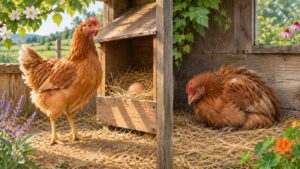
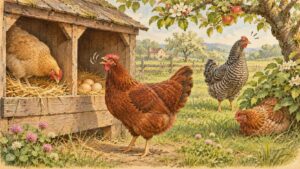
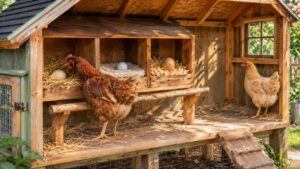
You do not need to keep hens inside the sleeping coop until every bird has laid if they can reach nest boxes from a secure run. However, delaying open-yard free range can help when hens repeatedly hide eggs under shrubs, in sheds, or on neighboring property. The goal is to make the intended nest box the easiest and most familiar place to lay. 🥚
University of Minnesota Extension notes that most chickens finish laying before noon, but individual timing varies. Egg formation generally takes about 24 to 26 hours, so a hen may lay later on successive days instead of using the same hour. Waiting until 9 or 10 a.m. may reduce hidden eggs in one flock while another still has hens nesting later.
Why Some Hens Are Still in Nest Boxes Late in the Morning
A hen sitting in a nest box at 10:30 a.m. is not automatically late or off schedule. Breed, age, season, lighting, and individual reproductive rhythm can all shift laying time. Because egg formation takes slightly more than a day, laying time can gradually move later before a hen pauses for a day. 🕙
Watch your flock for a week or two and note when most eggs are normally laid. If hidden nests are common, keep birds in the coop-and-run system through their main laying window, collect eggs, then open the larger yard. Clean, dry, quieter nest boxes also give hens a better reason to return there instead of choosing tall grass or sheltered corners.
When an Afternoon Free-Range Routine Makes More Sense
Afternoon free range can work well for owners who work away from home, have hidden-nest problems, or prefer supervised roaming. Birds can spend the morning in a secure run, complete much of their laying, and explore once someone is available to watch them. A later release also gives them fewer hours to wander far before evening roosting. 🌿
This schedule is not automatically restrictive if the run already provides enough room, shelter, shade, feed, water, perches, and scratching opportunities. Free range should be an optional enrichment layer, not the only way chickens receive basic daily needs. Controlled yard time can also help protect gardens, respect property boundaries, and reduce conflicts with roaming dogs or neighbors.
What Time Should Chickens Go Back in at Night?
Chickens usually move toward a familiar roost as daylight fades, so sunset is a better reference than a fixed evening hour. A 6 p.m. closing time may be early in summer yet too late in winter, depending on location and season. Let the flock settle, perform a headcount, then secure the coop once every bird is inside. 🌅
Night security depends on more than closing the pop door because latches, vents, wire, flooring, and run connections can also be weak points. Extension guidance emphasizes protected nighttime housing, and Penn State advises locking poultry up before dark when an outdoor run is not predator-proof. If you use an automatic door, regularly confirm that every bird made it inside.
Choose Your Release Time: Decision Table
| Setup | Home All Day | Working Away From Home |
|---|---|---|
| Secure attached run | Open coop-to-run around daylight; add yard time later if desired. | Daylight access to the secure run works well; save open-yard time for after work. |
| Fenced yard, not predator-proof | Release when you can check the flock regularly. | Keep birds in the secure coop/run while away, then use the yard after work. |
| Open free range | Choose a window based on predator pressure and supervision. | Late-afternoon supervised release is often easier to manage before sunset. |
| Hens laying in hidden places | Delay yard access until after the flock’s usual laying period. | Let hens lay in the coop/run during the workday, then release them later. |
The table is a starting framework, not a guarantee that one release time removes predator risk. Weather, wildlife, neighborhood dogs, daylight, and flock behavior can change, so the routine may need to change too. The key question is where the chickens are going when the door opens, not only what the clock says.
A keeper with a secure covered run may give early outdoor access, while someone with open acreage may choose a shorter supervised period. Both routines can be reasonable when they fit the actual setup. Your flock’s environment should decide the schedule, not somebody else’s favorite time.
Daily Routine Table: Sunrise to Sunset
| Time | Practical Backyard Flock Routine |
|---|---|
| Sunrise / daylight | Open the sleeping coop into a secure run, check the flock, and confirm feed and clean water. |
| Morning | Allow nesting and laying, collect eggs, and keep birds contained if hidden nests are a recurring problem. |
| Afternoon | Offer supervised yard or free-range time when appropriate and someone can observe the flock. |
| Sunset | Let birds return to the roost, count them, close and latch the coop, and check for stragglers. |
So, when to let chickens out of the coop depends first on what lies beyond that door. Around daylight is a practical starting point for birds entering a secure run, while open free-ranging should follow predator risk, laying patterns, and supervision. The mistake is treating those two situations as if they need the same answer. 🐓
Build a routine that still works when mornings are busy, seasons change, or one hen lays later than the others. Provide a secure morning area, food and water, accessible nest boxes, optional range time, and protected nighttime housing. Once those basics are reliable, the clock becomes a management tool rather than the rule controlling the flock.