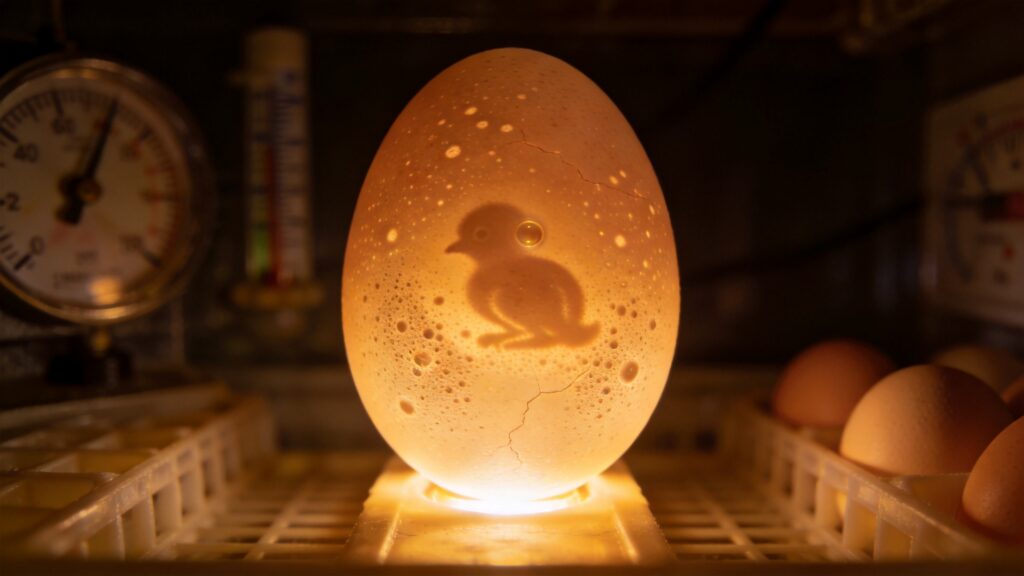
When you candle an egg before incubation, the shell’s texture can tell you more than you think. Porous shells—those with visible pits, tiny cracks, or a sandpaper-like feel—spark fierce debate among breeders and backyard chicken keepers. Some swear by culling every porous egg, while others claim genetics alone determine a chick’s fate. This article dives into the science of shell porosity, explores the real trade-offs between water loss and air cell development, and offers practical advice for deciding whether to set those questionable eggs.
How Porosity Drives Water Loss and Air Cell Size
The shell is not a solid barrier; it’s a matrix of calcium carbonate riddled with microscopic pores—typically 7,000 to 17,000 per egg. These pores allow vital gas exchange (oxygen in, carbon dioxide out) but also permit water vapor to escape. During incubation, the embryo must lose a precise amount of moisture—roughly 13–15% of the egg’s initial weight by internal pipping. Porosity directly controls this evaporation rate.
The Physics of Pore Size
Eggs with excessively large or numerous pores lose water faster than normal. The result is an undersized air cell by day 18, which forces the chick to struggle for oxygen during the final stages of hatching. Conversely, eggs with too few pores (often seen in extremely thick shells) retain too much moisture, creating an oversized air cell that drowns the chick in excess fluid at pip. Both extremes are lethal.
Consider this real-world data from a 2023 study on Rhode Island Reds:
| Shell Type | Pore Density (pores/cm²) | Weight Loss @ Day 18 (%) | Air Cell Diameter (mm) | Hatch Rate (%) |
|---|---|---|---|---|
| Normal | 110–130 | 12.5–14.0 | 18–22 | 87 |
| Porous (sandpaper-like) | >160 | 17.2 | 14 | 52 |
| Glassy (low porosity) | <70 | 9.8 | 27 | 41 |
As the table shows, porous eggs consistently lose too much weight, shriveling the air cell and reducing hatch success by over 30 percentage points.
Breed, Genetics, and the Porous Shell Debate
Not all porous eggs come from unhealthy hens. Genetics play a massive role. Certain heritage breeds—like Marans, Welsummers, and some lines of Ameraucanas—are predisposed to higher pore counts. This trait was historically selected for in hot, arid climates because faster water loss helped embryos cool through evaporation. But in a modern incubator set at 99.5°F and 50% humidity, those same genetic adaptations turn into liabilities.
“The biggest mistake I see is breeders blaming the hen’s diet or health when they get porous eggs. In reality, it’s often just the genetic hand she was dealt. You can feed her the best oyster shell on the market, but if her lineage favors high porosity, those eggs will still blast through moisture like a sieve.” — Dr. Sarah Whitlock, poultry geneticist, University of Georgia
The Controversy: Should You Sacrifice Genetics?
This is where the debate heats up. Some top breeders argue that any porous egg indicates a weakness in shell quality and should never be set, because the trait is heritable. They worry that setting porous eggs perpetuates a line of hens producing suboptimal shells, leading to chronic low hatch rates in future generations.
Others counter that porosity is just one of many polygenic traits. A hen that lays slightly porous eggs might still pass on excellent egg production, disease resistance, or temperament. Culling every porous egg could throw the baby out with the bathwater.
Case Study: Welsummer Line X
In 2021, a well-known Welsummer breeder in Ohio split his flock. He set all porous eggs from one hen line (Line A) and none from another (Line B). Three generations later, Line A still showed 15% higher pore density but also produced 20% more eggs per year and had fewer respiratory issues. Hatch rates for Line A stabilized at 72% compared to Line B’s 88%—a difference the breeder deemed acceptable given the other advantages. Moral of the story: porosity alone isn’t a death sentence for the flock’s genetics.
Should You Set Porous Eggs? Pros and Cons
Here’s a practical breakdown to help you decide at the incubator, with actionable tips based on real hatchery experience.
- PRO: Porous eggs can still hatch if humidity is adjusted upward (55–60%) to slow water loss. Some breeders intentionally set porous eggs from proven productive hens to broaden genetic diversity without losing the line.
- PRO: When you do get a chick from a porous egg, it often emerges stronger because it had to work harder to pip through a drier, more brittle shell. These chicks can be more vigorous.
- CON: Porous eggs are more prone to bacterial invasion. The pores act as highways for pathogens like E. coli and Pseudomonas, leading to exploding eggs or infected hatchlings. This risk increases if your incubator hygiene is less than perfect.
- CON: If you’re selling hatching eggs, porous shells are a customer-service nightmare. Buyers expect high hatch rates, and sending porous eggs (even with a disclaimer) often results in angry emails and refund requests.
When Porous Eggs Make Sense
I recommend setting porous eggs only under these specific conditions:
- You own the hen and know her history. If she’s a top performer in egg numbers or temperament, give her eggs a chance with adjusted incubator humidity.
- You’re working on a rare or endangered breed. Genetic preservation trumps hatch perfection. Every egg counts.
- You have a still-air incubator (which naturally has higher humidity) rather than a forced-air model that dries eggs faster.
Pro Tip: The Water Weight Test
Instead of guessing, weigh a few representative eggs daily. A normal egg should lose about 0.7% of its weight per day. If your porous eggs are losing 1.0% or more, increase incubator humidity to 60% and add a second water channel. Monitor air cell size at candling on day 10 and day 14. If the air cell is still too small (under 10mm at day 10), those eggs likely won’t hatch regardless of adjustments.
Conclusion
Porous eggs are not automatically doomed—but they demand extra attention and a willingness to adjust incubation strategy. Understanding the genetic roots of porosity lets you make informed culling decisions rather than following dogma. When managed correctly, a slightly porous egg can still produce a strong chick that carries valuable traits into the next generation. But for commercial hatcheries or anyone selling hatching eggs, the risk-reward balance clearly favors skipping them. Know your flock, test your incubator conditions, and let data—not fear—guide your choice.