Raising quail offers a unique blend of rewards—from fresh eggs and meat to natural pest control—but it also comes with a sobering responsibility: protecting these small, ground‑dwelling birds from a host of predators. Unlike chickens, quail are exceptionally vulnerable due to their size, inability to roost high, and tendency to panic. A single raccoon or hawk can wipe out an entire flock in minutes. This guide provides a comprehensive, field‑tested approach to quail predator protection, covering the most common threats, physical barriers, and the strategic use of livestock guardian dogs, so you can sleep soundly knowing your flock is secure.
Understanding the Predators: Aerial and Ground Threats
To defend your quail effectively, you must first know what you’re up against. Predators fall into two broad categories—aerial and ground—and each requires a different defensive mindset. Aerial threats strike with speed from above, while ground predators rely on stealth, digging, or brute force. Below is a quick reference of the most common culprits.
| Predator | Type | Primary Method | Typical Activity |
|---|---|---|---|
| Red‑tailed Hawk | Aerial | Dive from above, snatch birds in open runs | Daytime |
| Great Horned Owl | Aerial | Stealthy night strikes, silent flight | Night/dusk |
| Raccoon | Ground | Pry open latches, reach through mesh, dig under fences | Night |
| Rat Snake / King Snake | Ground | Squeeze through gaps as small as ½ inch, swallow eggs and chicks | Day/Night |
| Fox | Ground | Dig under enclosures, jump low fences | Dawn/dusk |
| Norway Rat | Ground | Chew through plastic, eat eggs and young chicks | Night |
Notice that many ground predators are nocturnal, while hawks hunt during the day. This two‑shift threat cycle means your defences must work around the clock. Do not assume that a sturdy pen during the day is safe at night—raccoons and snakes are remarkably persistent.
Why Quail Are Especially Vulnerable
Unlike chickens, quail rarely fly to high perches. Bobwhite and Coturnix quail prefer to stay on the ground, hiding in cover. This makes them easy targets for snakes that slither through grass, and for raccoons that simply walk into a coop. Additionally, quail have a strong flight response—they flush vertically when startled, often hitting the roof of an enclosure and injuring themselves. A predator that causes panic can lead to fatal pile‑ups even without making physical contact.
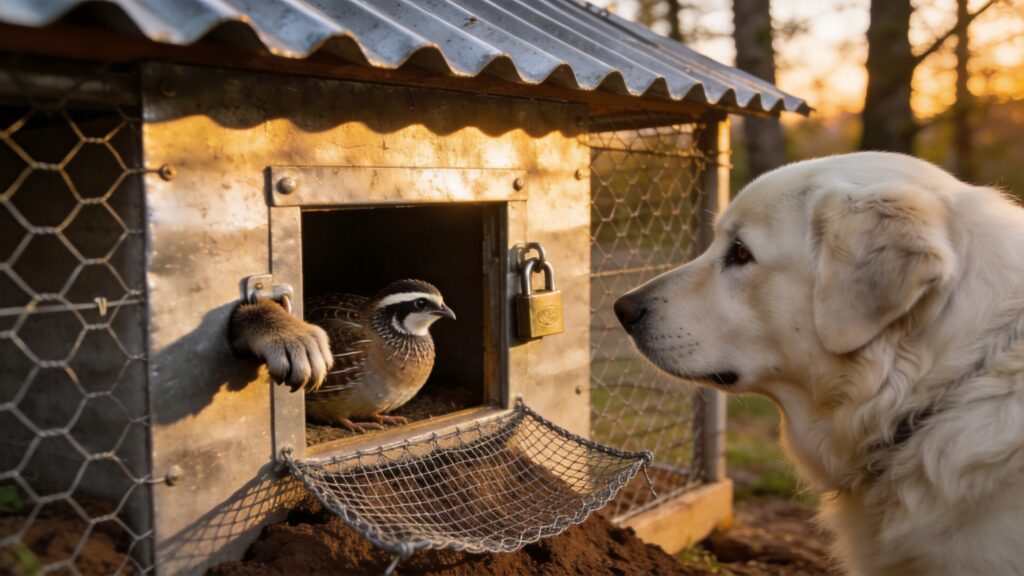
“I lost 12 quail in one night to a single raccoon that opened a simple carabiner latch. Since then, I’ve used padlocks and galvanised steel mesh. Never underestimate how clever a raccoon can be.” — Mark T., quail breeder, Tennessee
Physical Barriers: The First Line of Defence
No matter how diligent you are, if your enclosure has a weak point, a predator will find it. Physical barriers are the non‑negotiable foundation of quail protection. But not all wire and wood are equal—here’s what works and what fails.
Hardware Cloth vs. Chicken Wire
Many beginners use standard chicken wire (1‑inch hexagonal mesh). Stop doing that. Chicken wire is designed to keep chickens in, not predators out. A raccoon can rip through it in seconds, and a determined snake can squeeze through the larger openings. Instead, use hardware cloth—galvanised welded wire mesh with openings no larger than ½ inch (12.7 mm). For quail, ¼‑inch mesh is even better, especially on the bottom and lower sides, because it excludes snakes and even the smallest rodents.
Roof and Side Coverage
Quail pens must have a solid roof or at least a tight mesh top. Hawks and owls will dive through any uncovered area. Use hardware cloth or a solid panel (corrugated plastic or metal) for the roof. If you use mesh, make sure it is supported by crossbars to prevent sagging, which can create gaps along the edges. For side walls:
- Bury the fencing at least 12‑18 inches deep, with an outward “apron” (a 12‑inch L‑shaped turn outward at the bottom) to foil diggers like foxes and raccoons.
- Use pressure‑treated lumber for the frame to resist rot and chewing.
- Cover all corners with extra hardware cloth, because predators will test them relentlessly.
Embedded Skirt and Concrete Apron
For the most secure set‑up, consider pouring a concrete perimeter footer or burying a hardware‑cloth skirt that extends outward 12 inches from the pen’s base. This stops raccoons and foxes from burrowing under the wall. If concrete isn’t practical, use heavy‑duty pavers or railroad ties around the outside. Remember: a predator only needs a few inches of clearance to shove its head and body under.
Practical Case: The 2‑inch Gap
A friend of mine lost a dozen quail to a juvenile rat snake that entered through a ⅜‑inch gap where the roof mesh met the wooden frame. Any gap larger than a pencil eraser is a potential entry point. After that, he sealed every seam with silicone caulk and added a strip of ¼‑inch hardware cloth over the joints. The flock has been safe for three years now.
Integrating Livestock Guardian Dogs (LGDs) with Quail
Physical barriers are vital, but they cannot stop every threat—especially aerial attacks that happen in the blink of an eye or a snake that climbs a nearby tree and drops onto the roof. This is where a well‑trained livestock guardian dog becomes your most valuable asset. LGDs are not herding dogs; they are bred to stay with the flock and deter predators through presence, barking, and confrontation.
Choosing the Right Breed
Not all guardian dogs are suited for quail. The best breeds for small‑flock protection are those that are calm, not overly prey‑driven, and naturally protective without being aggressive toward the birds. Consider:
- Great Pyrenees: Excellent with poultry, gentle, but requires large space.
- Anatolian Shepherd: Very independent, strong territorial instincts, works well in hot climates.
- Maremma Sheepdog: Highly protective, bonds closely with the flock, lower prey drive than some other breeds.
Avoid breeds with high prey drives (like terriers or huskies)—they may view your quail as entertainment rather than flock members.
Introducing the Dog to Quail
Success hinges on a slow, supervised introduction. Do not simply turn a new LGD loose with the quail. Instead:
- Keep the dog on a leash outside the pen for several days. Let it observe the quail without chasing.
- Reinforce calm behavior with treats and praise. Correct any stalking or pouncing immediately.
- Once the dog is indifferent to the birds inside the enclosure, allow it inside while you are present. Quail will panic at first; the dog should ignore them.
- Gradually increase unsupervised time, but always check for signs of stress in the birds (feather loss, reduced egg laying).
“My Great Pyrenees, Molly, now treats the quail coop as part of her patrol. She sleeps beside it at night and barks at anything that approaches—even a falling branch. The quail don’t even flinch when she walks by. It took two months of slow introductions, but it was worth every minute.” — Sarah L., homesteader, Oregon
Limitations and Responsibilities
An LGD is not a set‑and‑forget solution. You must provide proper fencing (the dog needs its own secure perimeter), fresh water, shade, and regular veterinary care. Also, a single dog cannot prevent a hawk strike that occurs 200 feet away—but its barking can scare the hawk before it dives. For maximum effectiveness, combine LGD use with a covered pen. The dog patrols the area while the quail have a protected roof overhead.
Creating a Layered Defence Strategy
No single method—barriers, dogs, or vigilance—is 100% effective. The best approach uses multiple layers that reinforce each other. Here is a practical checklist that many American quail keepers follow:
- Layer 1: Fortified Enclosure
- ½‑inch hardware cloth on all sides, solid roof, buried apron, locked latches with padlocks (not carabiners).
- Layer 2: Perimeter Deterrents
- Motion‑activated lights, ultrasonic repellents, or a radio playing talk radio (to simulate human presence).
- Layer 3: Livestock Guardian Dog
- A trained LGD that patrols the area 24/7, alerts to danger, and actively chases off ground predators.
- Layer 4: Daily Inspection
- Walk the perimeter every morning and evening. Look for dig marks, droppings, or disturbed mesh. Check for snakes that may have climbed nearby trees.
This layered approach has proven effective even in areas with high predator pressure, such as rural Texas or the Pacific Northwest. For example, one commercial quail farm in Georgia uses all four layers and reports less than 1% annual predator loss—compared to 20% or more on farms using only chicken wire and no guardian animals.
Seasonal Considerations
Predator pressure changes with the seasons. In spring, raccoons and foxes have hungry pups to feed and become bolder. Summer heat drives snakes closer to water sources (including quail waterers). Fall and winter bring hungry hawks that have fewer rodents to hunt. Adjust your defences accordingly: add extra lighting in spring, seal gaps before snake season, and place reflective tape or bird‑of‑prey decoys during hawk migration periods.
Conclusion
Protecting quail from hawks, raccoons, snakes, and rodents requires more than wishful thinking. Start with a fortress‑grade enclosure built from hardware cloth and buried fencing, then reinforce it with daily patrols. For the ultimate defence, consider integrating a livestock guardian dog that bonds with your flock. By stacking these layers, you can enjoy the many benefits of quail keeping without the heartbreak of predator losses. Invest the time now—your quail will reward you with years of healthy production.