Introduction
Keeping backyard chickens should not mean spending a fortune on predator-proof fencing, expensive coop kits, or high-tech security systems. Whether you have three hens in a small backyard or a growing flock, you can improve their safety with careful planning, practical repairs, and a few well-chosen materials.
The important thing is knowing where to spend your money. A decorative coop may look sturdy but still have gaps around the doors, weak wire mesh, or openings beneath the fence. Predators such as raccoons, foxes, rats, and neighborhood dogs can exploit these weak spots in different ways.
The good news? You can make a chicken coop safer on a budget by fixing the most vulnerable areas first. Here is how to prioritize affordable upgrades without sacrificing essential protection.
1. 🔍 Inspect Your Coop Before Buying Anything
The cheapest improvement is often identifying a problem before paying for new materials.
Walk around the coop during daylight and inspect:
- Doors that do not close tightly.
- Loose hinges and easy-to-lift latches.
- Torn, rusted, or poorly attached mesh.
- Gaps where walls meet the roof.
- Openings beneath the run fence.
- Soil disturbed by digging.
- Feed spills and clutter that attract pests.
Try gently pushing the fence and testing whether the door stays securely closed. Look at ground level, not just at eye height. Small gaps can be easy to overlook when you’re focused on the main structure.
Make a list of the problems you find and rank them by urgency. This prevents spending money on cosmetic upgrades while serious entry points remain open.
2. 🧰 Upgrade Weak Latches First
A sturdy door is not much use if a predator can pull the latch open.
Some animals, particularly raccoons, can manipulate simple fasteners. A basic hook or loose sliding bolt may not provide enough protection for a vulnerable coop.
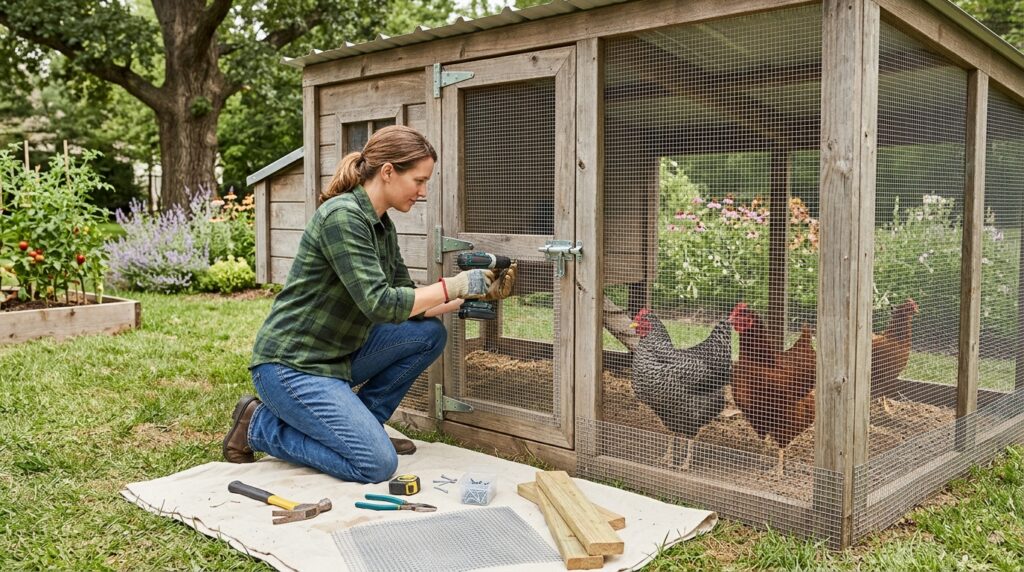
Budget-friendly fix: Install a sturdy latch that resists pulling, lifting, and sliding. Depending on the door design, a two-step fastening system may provide extra security.
Before buying hardware, check the door’s thickness, frame condition, and existing screw holes. A strong latch attached to rotten wood can still fail.
Test the door after installation by pushing and pulling it from outside. The goal is a door that closes completely and stays shut without relying on a loose or damaged fastening point.
3. 🛡️ Use Hardware Cloth Where Protection Matters Most
Chicken wire is designed mainly to contain chickens. It should not be relied on as the only barrier against determined predators.
Welded hardware cloth is generally a better option for vulnerable openings because its construction is more resistant to tearing and pulling than ordinary chicken wire. The appropriate mesh opening and wire strength depend on the animals you need to exclude.
To keep costs manageable, prioritize areas such as:
- Windows and ventilation openings.
- Gaps beneath raised coops.
- Weak sections of the run.
- Damaged corners and wall joints.
- Other places where predators could reach the birds.
Measure each opening before purchasing materials. Choose mesh suitable for the expected predator risks, and fasten it securely to sound framing with appropriate screws, washers, or other durable fixings.
Avoid simply draping new mesh over damaged wire. The underlying structure must be secure, too.
4. 🕳️ Stop Predators From Digging Under the Run
Some predators may dig beneath a fence to reach chickens. A run that looks secure above ground can still have a vulnerable bottom edge.
One practical option is a hardware-cloth apron extending outward from the base of the enclosure. A properly installed apron can discourage digging because an animal approaching the fence encounters the barrier rather than an easy route underneath.
Another option is an underground barrier, although installation may require more labor and materials.
For a budget-conscious project:
- Inspect the full fence perimeter for holes and gaps.
- Repair loose sections and fill disturbed soil.
- Identify the areas most vulnerable to digging.
- Add a suitable apron or buried barrier where needed.
- Secure the barrier firmly to the existing enclosure.
Don’t assume a thin layer of loose soil will stop a persistent animal. The barrier’s material, placement, and attachment all matter.
5. 🪵 Repair Existing Materials Before Replacing the Whole Coop
You may not need a brand-new coop if the basic structure remains sound.
Look for reusable materials already on hand, such as sound lumber, suitable screws, hinges, or roofing panels. You can often use these for small repairs instead of replacing entire sections.
However, reuse materials only when they are structurally sound and safe for poultry. Avoid rotten wood, sharp exposed edges, loose wire ends, and materials with unknown chemical treatments.
A useful rule is to spend money on the parts that must resist force or prevent entry. Decorative trim and appearance upgrades can wait.
6. 🌳 Remove Easy Access Routes Around the Coop
Predators may use nearby objects to approach an enclosure or reach higher openings.
Check for:
- Low branches over the run.
- Stacked lumber beside the fence.
- Unused equipment leaning against the walls.
- Dense weeds hiding damage near ground level.
- Open feed containers attracting rodents.
Move clutter away from vulnerable walls and keep the immediate perimeter easy to inspect. Trim branches where practical if they provide a route onto the roof.
These steps cost little or nothing, although they do not replace secure doors, strong barriers, and appropriate fencing.
7. 🌾 Store Feed Properly to Reduce Pest Problems
Spilled grain and accessible feed can attract rodents and other wildlife. Rodents may consume feed, contaminate storage areas, and investigate spaces around the coop.
To reduce the problem:
- Store feed in tightly closed, rodent-resistant containers.
- Clean up spills promptly.
- Avoid leaving large amounts of feed exposed overnight.
- Remove leftover scraps that may attract wildlife.
- Keep the storage area clean and dry.
A secure feed container is often a more useful purchase than decorative coop accessories. It also helps protect feed from moisture and spoilage.
Remember that feed management reduces attractants but cannot guarantee that predators will stay away.
8. 💡 Don’t Depend on Cheap Gadgets Alone
Motion-activated lights and other deterrents may seem like an inexpensive shortcut, but their effectiveness varies by device, location, animal, and circumstances. Animals may also become accustomed to some deterrents.
If your budget is limited, prioritize physical barriers first:
- Secure doors and latches.
- Repair gaps and damaged mesh.
- Protect the base of the run against digging.
- Cover vulnerable openings.
- Keep feed and the surrounding area tidy.
You can consider lights or other supplementary deterrents later. They should support a secure enclosure, not replace one.
9. 💰 Make a Simple Budget Before Shopping
The most effective budget is based on the problems your coop actually has.
| Priority | Possible purchase | Why it matters |
|---|---|---|
| High | Secure latch and door repairs | Prevents doors from being opened or left unsecured |
| High | Suitable hardware cloth | Reinforces vulnerable openings |
| High | Fasteners and sound framing repairs | Keeps barriers firmly attached |
| High when digging is a risk | Materials for a ground-level apron | Helps deter digging beneath the run |
| Medium | Rodent-resistant feed storage | Reduces accessible food and pest problems |
| Optional | Motion-activated lighting | Adds a supplementary deterrent |
Prices vary by location, material quality, and the size of your coop, so compare local prices before deciding what to buy.
Measure twice before purchasing mesh or lumber. Buying the right amount the first time can prevent waste, while using unsuitable materials just because they are cheaper can lead to repeat repairs.
10. ✅ Create a Five-Minute Nightly Security Routine
Even a well-built coop needs regular checks. Weather, wear, and daily use can loosen fasteners or create new gaps.
Before nightfall:
- Count all your chickens.
- Close and test every door.
- Check that latches are fully secured.
- Look for fresh digging or gaps beneath the fence.
- Inspect damaged mesh and exposed openings.
- Store feed and clean up food scraps.
- Confirm that automatic doors have closed completely, if you use them.
After storms, predator sightings, or construction work, inspect the coop more thoroughly.
If you discover a serious opening, secure the area before leaving the flock overnight. A temporary barrier should be sturdy and safe, with a proper repair completed as soon as possible.
Final Thoughts 🐓
Securing a chicken coop on a budget is not about buying every available product. It is about identifying the weakest points and directing your money toward the repairs that matter most.
Start with the doors, latches, mesh, and ground-level barriers. Reuse sound materials when appropriate, keep feed secure, and make evening inspections part of your routine.
Most importantly, don’t confuse a low price with good value. A cheap material that fails under pressure may cost more in the long run than a properly installed, durable repair.
Build security in layers, fix the biggest risks first, and improve your coop one practical step at a time. Your chickens don’t need a luxury enclosure, but they do need a dependable one.