Raising chickens and ducks together can be a rewarding endeavor, offering fresh eggs, natural pest control, and endless entertainment. However, these two species have dramatically different needs when it comes to housing, feeding, and social behavior. Without careful planning, you may end up with stressed birds, injured animals, or even disease outbreaks. This guide dives deep into the practical steps for creating a harmonious mixed flock, drawing on real-world experience and avian science to help you avoid common pitfalls.
Understanding the Core Differences Between Chickens and Ducks
Before you even build a coop, you must appreciate that chickens and ducks are not just feathered cousins. They evolved in different environments, which shapes everything from their beak shape to their sleep cycles.
Species-Specific Behavior at a Glance
| Trait | Chickens | Ducks |
|---|---|---|
| Sleeping posture | Perch on roosts (elevated) | Sit on flat ground (no perching instinct) |
| Water interaction | Brief sips; can drown in deep water | Must submerge head/beak to clean nostrils; love splashing |
| Foraging style | Scratch and peck | Dabble, filter, and gulp |
| Noise level | Moderate (loud egg song) | Can be very loud (especially females) |
| Mud/water tolerance | Can lead to foot infections if constantly wet | Thrive in wet conditions; need water to thrive |
Key insight: Ducks are amphibious birds; chickens are terrestrial. Designing a shared space that accommodates both is the central challenge.
Designing a Dual-Purpose Coop and Run
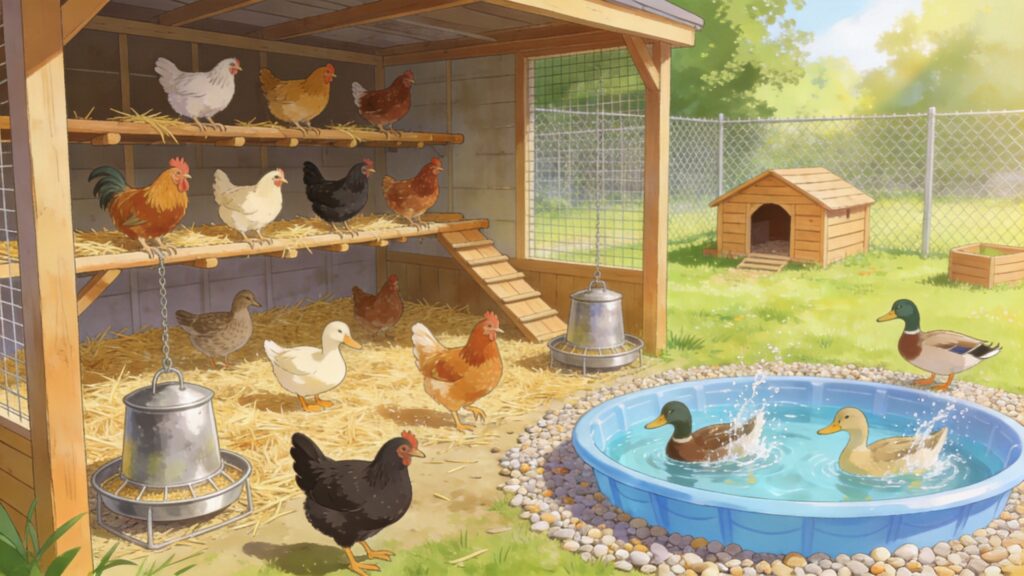
A common mistake is to build a standard chicken coop and then add ducks. That almost always leads to disaster. Your coop must incorporate separate but compatible zones for roosting, nesting, and water play.
The Floor Plan: Zoning Is Everything
- Roosting area (only for chickens): Install perches at least 2 feet off the ground. Ducks cannot use them and will sleep underneath, so make sure the ground below is dry and well-bedded.
- Nesting boxes: Ducks prefer ground-level nests (a low, dark corner with straw). Chickens will use elevated boxes. Place both types at opposite ends of the coop to reduce territorial disputes.
- Water area (duck pond): Inside the run, create a shallow, splash-proof water station. A small kiddie pool with a ramp works well. Surround it with pea gravel or a flat paver to minimize mud that chickens will track.
“I once tried putting a full-sized duck pool inside a standard chicken run. Within a week, the chickens had bumblefoot, and the ducks had nowhere to swim. Now I use a segregated splash zone with a low rim—the ducks love it, and the chickens stay dry.” — Martha, backyard flock owner in Oregon
Ventilation and Bedding
Ducks produce significantly more moisture than chickens (from respiration and wet bedding). Use a deep-litter method with pine shavings and diatomaceous earth to absorb ammonia. Ensure cross‑ventilation at roof level to prevent respiratory issues in chickens.
Feeding and Watering: A Delicate Balancing Act
Chickens and ducks have different nutritional requirements, especially for protein and niacin. Trying to feed them the same diet will lead to deficiency or obesity.
Separate Feed Stations (Non‑Negotiable)
- Chicken feed (16-18% layer ration) placed in a high trough that only chickens can reach. Ducks need higher protein (20-22% starter/grower) and niacin supplementation (brewers yeast).
- Duck feed should be offered in a low, heavy bowl that chickens cannot tip over. Add brewer’s yeast at 2 tablespoons per cup of feed to prevent leg deformities.
- Grit and oyster shell – both species need grit, but ducks require it for digestion. Offer two separate containers.
Water System Design
Ducks must have water deep enough to submerge their entire beak and head (at least 2 inches) to clean their nostrils and eyes. Yet chickens can drown in such water if they fall in. Solution: Use a nipple drinker set low for chickens (1 gallon size) and a separate duck waterer with a wire grid on top to prevent chickens from climbing in. Place the duck waterer inside the splash zone to contain wetness.
Managing Social Dynamics and Preventing Bullying
Chickens have a rigid pecking order; ducks are more egalitarian but can be pushy at food time. Introductions must be gradual, and the space must allow weaker birds to retreat.
Step‑by‑Step Integration
- Phase 1 (visual contact): Keep ducks and chickens side by side in separate runs for 1-2 weeks. Let them see each other through a wire mesh.
- Phase 2 (shared daytime only): Allow them to free‑range together under supervision for several hours. Provide multiple feeding stations spaced far apart.
- Phase 3 (cohabitation): After 2 weeks with no serious fighting, combine them in the run permanently. Add extra hideouts (low boxes, shrubs, or pallet barriers).
Warning signs: If a chicken relentlessly pecks a duck’s neck (ducks have sensitive skin), or a duck bites a chicken’s wattle, separate them immediately. Sometimes a single aggressive bird requires rehoming.
Gender Ratios That Reduce Conflict
Too many drakes (male ducks) will relentlessly chase hens and even attempt to mate with chickens, injuring them. Keep one drake for every 4-5 ducks. For chickens, one rooster per 8-10 hens. Avoid keeping drakes with only chickens—the imbalance causes chaos.
Preventing Disease Transmission Between Species
Ducks can be asymptomatic carriers of pathogens like Salmonella, Campylobacter, and avian influenza, which can devastate chickens. Conversely, chickens can spread coccidiosis to young ducklings. A strict biosecurity routine is your best defense.
Critical Hygiene Practices
- Separate boots and tools
- Use dedicated footwear for the duck area and the chicken area. Cross‑contamination is a leading cause of outbreaks.
- Weekly deep clean of waterers
- Duck waterers become slimy with algae and bacteria within days. Scrub with a 10% bleach solution, then rinse thoroughly.
- Quarantine new birds for 30 days
- Even if they look healthy, new additions may carry duck viral enteritis or chicken pox. House them in a separate building first.
“I lost three hens to duck‑borne botulism because I shared one waterer. Now I use separate systems and never let chickens drink from the duck pool. Simple change, huge difference.” — Tom, small farm owner in Wisconsin
Vaccination and Deworming Schedule
Consult a veterinarian about vaccinating ducks for duck viral hepatitis and chickens for Marek’s disease. Both species should be dewormed with fenbendazole or ivermectin (careful: ivermectin is toxic to some duck breeds) every 3 months if they free‑range.
Seasonal Considerations and Winter Care
Ducks are more cold‑hardy than chickens, but their wet living conditions can freeze into dangerous ice. In winter, insulate the coop but avoid sealing it airtight. Add a radiant heat panel near the duck waterer to keep it from freezing—but never use a heat lamp with ducks (they produce too much moisture and fire risk is high). Chickens will appreciate a heated roosting area only if the temperature drops below 20°F.
Conclusion
Successfully raising chickens and ducks together is about respecting their differences while leveraging their complementary strengths. By designing separate zones for roosting, feeding, and water, managing introductions carefully, and enforcing strict hygiene, you can enjoy the best of both worlds—rich duck eggs, steady chicken eggs, and a lively, healthy flock. Start small, observe closely, and be prepared to adjust your setup.