People researching backyard chickens often hear reassuring claims such as “chickens only take 10 minutes a day,” while experienced keepers sometimes describe weekends spent cleaning runs, repairing fencing, or dealing with an injured bird. 🐔 Both experiences can be true because chicken keeping includes routine daily chores, periodic maintenance, seasonal preparation, and occasional unexpected problems. The better question is therefore not simply how many minutes chickens take each day, but whether the entire rhythm of chicken care fits realistically into your schedule.
A well-designed coop with adequate feeders, waterers, bedding, secure fencing, and perhaps an automatic door can dramatically reduce repetitive work, but good equipment does not eliminate responsibility. Chickens still need someone to notice whether every bird is present, whether water is available, whether the coop remains secure, and whether something unusual is happening. Understanding those different layers of work gives beginners a much more realistic picture of how much work chickens actually are before bringing a flock home.
How Many Minutes Per Day Do Chickens Actually Need?
There is no universal chicken care time per day because flock size, coop design, weather, feeding systems, predator pressure, and management style all change the workload. A small flock with large-capacity feeders, reliable waterers, deep bedding, and an automatic coop door may require only brief routine checks on an uncomplicated day. A flock using smaller containers, manually operated doors, temporary fencing, or equipment that constantly needs adjusting can create considerably more hands-on work.
It is also important to separate required care from optional chicken time, because many owners willingly spend far longer with their birds than basic husbandry requires. Watching chickens forage, hand-feeding treats, gardening around the run, photographing the flock, or simply sitting outside with them may add considerable time without technically being chores. 😊 When someone says chickens take an hour every day, that hour may include enjoyable interaction rather than an hour of mandatory cleaning and feeding.
What You Actually Do Every Morning
A practical morning routine starts with making sure the flock made it safely through the night and can access its daytime space. Perform a quick headcount, verify that the coop or automatic door opened correctly, and briefly observe the chickens as they begin moving around. Birds that remain isolated, appear unusually quiet, limp, struggle to breathe, or refuse to approach food deserve closer attention because behavioral changes can be an early signal that something is wrong.
Next, check that feed and clean water are available, even when you use containers designed to last several days. Waterers can leak, freeze, tip, become dirty, or run empty unexpectedly, while feeders occasionally jam or become contaminated by moisture or pests. 💧 A fast equipment check often takes little time, but skipping it because a feeder or waterer is supposedly “automatic” can turn a minor problem into a serious one.
What You Actually Do Every Evening
Evening chicken chores are largely about confirming that the flock is safely settled before nighttime predators become active. Collect eggs if you have not already done so, glance at the feed and water situation, and verify that every chicken has returned to the secure area. 🥚 Chickens normally return toward their roost around dusk, but counting them prevents an escaped, trapped, injured, or unusually slow bird from accidentally spending the night outside.
Finally, make sure the coop is properly closed and predator-resistant, whether you shut the door manually or use an automatic system. Automatic doors reduce daily labor, but they should still be checked because batteries, sensors, tracks, or programming can occasionally fail. A sturdy latch and secure hardware matter because raccoons and other predators can exploit surprisingly small weaknesses in doors, fencing, vents, and run connections.
The Chores That Don’t Happen Every Day
Several jobs dramatically influence how much work chickens feel like even though they are not part of the daily routine. Large feeders may need refilling every few days or longer depending on flock size, while waterers periodically require more thorough washing rather than a simple refill. Nesting boxes also need attention when bedding becomes dirty, damp, crushed, or contaminated with broken eggs or droppings.
Run and coop maintenance varies greatly depending on your bedding system, stocking density, climate, and available space. Some keepers remove soiled material frequently, while others use deeper litter systems that require adding and managing bedding over a longer period before a larger cleanout. 🧹 Neither approach makes maintenance disappear, so beginners should count occasional 20-, 30-, or 60-minute jobs when estimating the real workload of keeping chickens.
Weekly And Monthly Chicken Work
Weekly chicken care is often less about performing one fixed chore and more about giving the entire setup a closer inspection than it receives during quick daily checks. Wash or scrub equipment as needed, refresh nesting material, remove concentrated manure buildup, inspect bedding moisture, and look for holes developing around fencing or run edges. Also examine feeders, waterers, door mechanisms, locks, roofing, and hardware before small problems become expensive repairs.
Monthly responsibilities may include deeper cleaning, purchasing feed and bedding, reorganizing storage, checking for pest activity, and evaluating whether the flock’s living area still works as intended. 🛠️ Feed bags are heavy, bedding takes storage space, and routine supply trips consume time even though they happen away from the coop. This is one reason how much work chickens are cannot be measured accurately by standing beside the coop with a stopwatch each morning.
Seasonal Work Beginners Forget To Count
Summer can increase chicken-care time because reliable access to fresh water, ventilation, and shade becomes particularly important during hot weather. Owners may need additional water stations, frozen water bottles or other appropriate cooling strategies, more frequent water checks, and adjustments to shade as the sun’s position changes. ☀️ Hot conditions can also make wet or dirty areas smell and deteriorate faster, increasing the importance of ventilation and bedding management.
Winter creates different challenges, particularly in climates where water freezes and severe weather affects access to the coop. Keepers may spend additional time managing water, checking ventilation without creating strong drafts at roost level, clearing snow, protecting supplies, or inspecting buildings after storms. ❄️ Spring mud, heavy rain, autumn leaf buildup, and seasonal predator activity can also temporarily turn an otherwise easy routine into considerably more work.
The Days When 10 Minutes Suddenly Becomes An Hour
The biggest weakness in promises of “10-minute chicken care” is that they describe normal days while ignoring abnormal ones. A sick or injured chicken may need isolation, observation, wound care appropriate to the situation, transportation to a veterinarian when necessary, or modifications to its environment. An escaped bird, predator attempt, damaged fence, leaking waterer, stuck automatic door, flooded run, or fallen branch can likewise erase your normal routine almost instantly.
Flock management itself can create temporary workload spikes because chickens are social animals with established group dynamics. Introducing new birds, managing a broody hen, dealing with bullying, changing housing, or moving chickens may require repeated observation and adjustment rather than one quick solution. ⚠️ These situations are not necessarily constant, but a realistic beginner should have enough flexibility to handle unexpected chicken work when it appears.
Required Chicken Care Vs. Time You Choose To Spend With Them
Required chicken care centers on welfare and security: food, clean water, safe housing, suitable environmental conditions, observation, egg collection where appropriate, sanitation, and responding when something goes wrong. Those responsibilities cannot simply be skipped because you have a particularly busy week. Even a highly automated backyard setup still depends on a person confirming that the systems are functioning and the birds appear healthy.
Optional time is everything beyond that basic responsibility, and for many people it becomes one of the best parts of chicken keeping. 🌿 You might let the flock forage under supervision, rearrange enrichment, build perches, grow chicken-safe plants, photograph different breeds, or simply watch their surprisingly complicated social behavior. Separating these two categories makes it easier to determine whether chickens fit your lifestyle without treating pleasurable time with your flock as another household burden.
Can Chickens Fit Around A Full-Time Job?
Low-Maintenance Setup
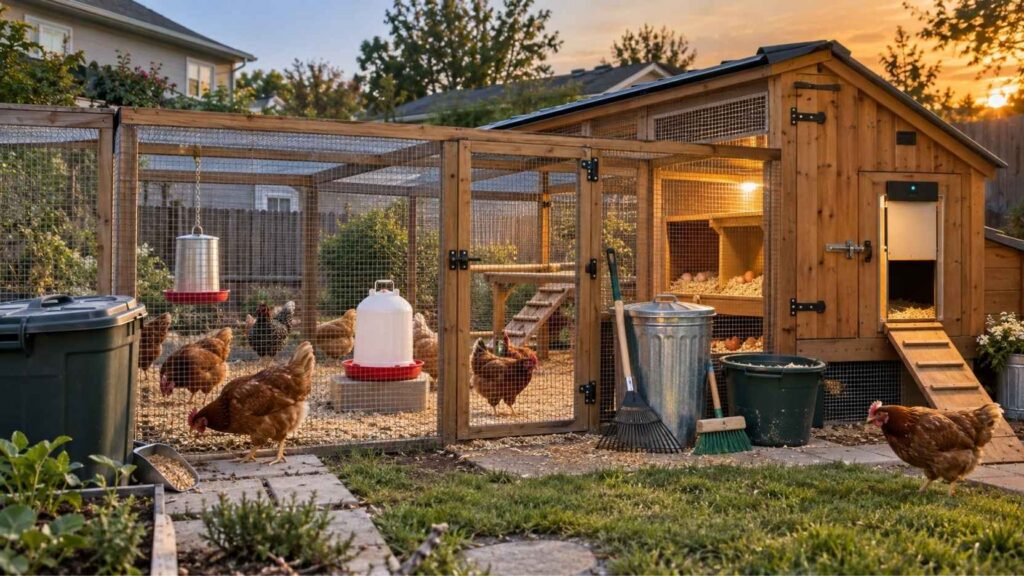
A relatively low-maintenance chicken setup might include a modest flock, secure permanent coop and run, generously sized feeders and waterers, easy-access nesting boxes, effective bedding management, and a dependable automatic door. Daily involvement can remain quite short when everything is functioning properly, although morning and evening welfare checks should still be part of the routine. The tradeoff is that building a system this efficient usually requires thoughtful setup, reliable equipment, and occasional larger maintenance sessions.
Medium-Maintenance Setup
A medium-maintenance setup may involve manual opening and closing, smaller food or water containers, more frequent bedding replacement, supervised free-ranging, or a run requiring regular attention. These arrangements are completely workable around many full-time jobs, but they create more small chores that must happen on schedule. 🐓 Someone also needs a plan for travel, late workdays, illness, or other occasions when the regular keeper cannot complete those responsibilities.
High-Maintenance Setup
A higher-maintenance arrangement might include a larger flock, breeding, chicks, multiple pens, frequent free-ranging supervision, complicated flock integrations, or housing that requires substantial manual cleaning and management. Such setups can become a genuine hobby or small homestead activity rather than simply keeping several laying hens in the backyard. The important lesson is that chickens themselves are not automatically high-maintenance—the system you build around them strongly determines the workload.
Daily → Weekly → Monthly → Seasonal Chicken Chore Calendar
| Schedule | Typical Chicken Chores |
|---|---|
| Daily | Headcount, observe behavior, check feed, check water, collect eggs, verify doors and security |
| Weekly | Wash equipment as needed, refresh bedding, clean problem areas, inspect fencing and hardware |
| Monthly | Deeper setup inspection, restock feed and bedding, check storage, evaluate pests and equipment |
| Seasonal | Prepare shade or winter water systems, inspect ventilation, weatherproof housing, manage storms and changing conditions |
| Unexpected | Injuries, illness, escapes, predator damage, broken equipment, flooding, broody hens, flock integration |
Think of this calendar as a planning framework rather than a rigid cleaning schedule, because different housing systems and environments require different frequencies. A waterer that stays clean for several days in one coop may need daily scrubbing somewhere else, while bedding that remains dry in a covered run may deteriorate quickly during weeks of heavy rain. What matters is regularly evaluating conditions instead of blindly following a calendar when the flock is telling you something needs attention sooner.
So, Are Chickens High Maintenance?
For many backyard keepers, chickens are low-to-moderate daily work but occasionally high-effort animals, which is very different from saying they require only a few minutes forever. Most ordinary days can become predictable once your coop, food, water, bedding, and security systems are working well, but responsible ownership also means being available for the larger jobs that appear periodically. 🏡 The best setup is therefore not the one promising the smallest possible chore time; it is the one you can reliably maintain through normal workdays, bad weather, vacations, and unexpected problems.
Before getting chickens, imagine your schedule on your busiest weekday, hottest summer afternoon, coldest or wettest morning, and the weekend when something breaks. If you can still provide food, water, security, observation, sanitation, and backup care during those moments, backyard chickens may fit comfortably into your life. That reality-first approach produces a far more useful answer than asking whether chickens take exactly 10, 20, or 30 minutes per day.