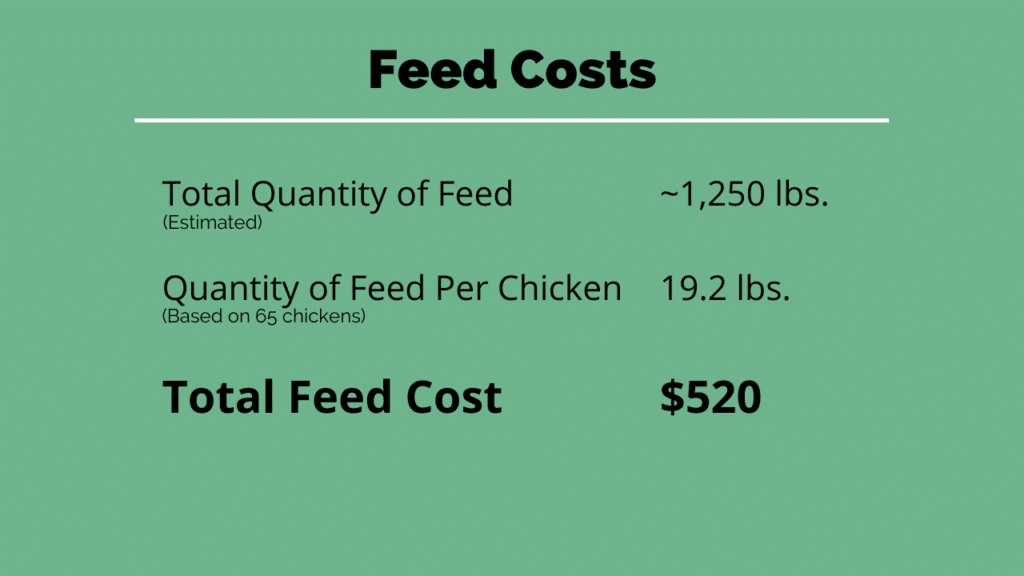
One of the most important questions for anyone considering backyard chickens is not how much the coop costs, but how much the chickens will cost every month after the setup is finished.
A coop is usually a one-time purchase. Feed is different. You buy it again and again.
For a small backyard flock, feed will often be the largest regular expense. But it is not the only one. Bedding, grit, oyster shell, treats, replacement supplies, and an emergency medical reserve can all affect your monthly chicken budget.
The good news is that monthly chicken costs are relatively easy to estimate once you know how much your flock eats and what feed costs locally.
Here is a simple way to calculate your 2026 backyard chicken budget.
What Does It Cost to Feed One Chicken?
The exact amount of feed a chicken eats varies with breed, age, body size, weather, activity level, access to pasture or forage, and how much feed gets wasted.
For a basic planning estimate, many backyard chicken keepers use approximately 0.20–0.25 pounds of feed per adult laying hen per day.
That means a flock of six hens could consume roughly:
6 hens × 0.25 lb × 30 days = 45 pounds per month
This is a planning estimate rather than a guarantee. Your actual consumption may be higher or lower.
If your local feed costs $20 for a 50-pound bag, for example, 45 pounds would represent about $18 worth of feed.
If the same amount of feed costs $30 per 50-pound bag, the monthly cost would be about $27.
This is why local feed prices matter so much.
A Simple Monthly Feed Formula
You do not need a complicated calculator.
Use this formula:
Monthly Feed Cost = Number of Chickens × Daily Feed per Chicken × Number of Days × Feed Price per Pound
For example, assume:
- 6 hens
- 0.25 lb per hen per day
- 30 days
- $0.50 per pound of feed
The calculation is:
6 × 0.25 × 30 × $0.50 = $22.50
Your estimated monthly feed cost would therefore be about $22.50.
If your feed costs $0.60 per pound, the same flock would cost approximately $27 per month.
The important point is that you can substitute your actual local price into the formula.
Four Hens: A Small-Flock Example
Let’s start with four adult hens.
Using 0.25 pounds of feed per bird per day:
4 × 0.25 × 30 = 30 pounds per month
That means four hens may require roughly 30 pounds of feed per month under this planning assumption.
If feed costs $20 per 50-pound bag:
30 ÷ 50 × $20 = $12
If feed costs $30 per 50-pound bag:
30 ÷ 50 × $30 = $18
So a reasonable planning range might be around $12–$18 per month for the feed portion alone under those hypothetical prices.
Remember that this is not the entire chicken budget.
Six Hens: The Classic Backyard Flock
Six hens are a useful example because they represent a manageable flock size for many backyard situations.
At 0.25 pounds per bird per day:
6 × 0.25 × 30 = 45 pounds
At a hypothetical feed price of $20 per 50-pound bag:
45 ÷ 50 × $20 = $18
At $30 per bag:
45 ÷ 50 × $30 = $27
So six hens might require approximately 45 pounds of feed per month under this example.
On an annual basis:
45 × 12 = 540 pounds
That is approximately 10.8 50-pound bags per year.
This is an important number to understand before getting chickens. A flock that looks small in the backyard can consume hundreds of pounds of feed over a year.
Ten Hens: When Feed Costs Become More Noticeable
Now consider ten hens.
At 0.25 pounds per bird per day:
10 × 0.25 × 30 = 75 pounds per month
At $20 per 50-pound bag:
75 ÷ 50 × $20 = $30
At $30 per bag:
75 ÷ 50 × $30 = $45
The annual consumption would be approximately:
75 × 12 = 900 pounds
That is about 18 50-pound bags per year.
The calculation demonstrates an important principle: flock size has a direct effect on recurring feed expenses.
More chickens may mean more eggs, but it also means more feed, more bedding, more cleaning, and potentially more equipment.
Your Monthly Chicken Budget Is More Than Feed
Feed is usually the main recurring expense, but don’t stop your calculation there.
A realistic monthly budget can include:
- Feed
- Bedding
- Grit
- Oyster shell
- Treats
- Cleaning supplies
- Replacement equipment
- Veterinary or medical reserve
Some of these expenses will not occur every month.
For example, you may not buy a new feeder every month. But setting aside a small amount for equipment replacement prevents occasional purchases from becoming unexpected financial surprises.
Bedding Costs
Bedding expenses depend heavily on your coop design and management system.
Some chicken keepers use pine shavings, while others use straw or other appropriate bedding materials.
If you clean the coop frequently, you may use more bedding.
If you use a properly managed deep-litter approach, you may purchase bedding less frequently.
Instead of asking, “How much do I spend on bedding this month?” you can calculate an annual average.
For example:
Annual Bedding Cost ÷ 12 = Average Monthly Bedding Cost
If you spend $120 on bedding over a year, your average monthly cost is $10.
This makes your budget easier to compare.
Grit and Oyster Shell
Two small expenses that beginners often forget are grit and calcium supplementation.
Grit can be useful for chickens that do not have sufficient access to natural grit.
Laying hens also need an appropriate calcium source to support eggshell production. Oyster shell is one commonly used option.
These expenses are usually much smaller than feed, but they still belong in a complete chicken budget.
You can estimate them annually and divide by twelve.
For example:
$60 per year ÷ 12 = $5 average monthly cost
Again, the exact amount depends on your flock and local prices.
What About Treats?
Treats can become surprisingly expensive if you are not careful.
Vegetable scraps, grains, mealworms, and commercial treats may all be used by backyard chicken keepers.
But treats should not replace a properly formulated chicken diet.
For budgeting purposes, give treats their own category.
If you decide to spend $10 per month on treats, simply add that amount to your monthly chicken budget.
This also helps you see whether treats are becoming a significant part of your overall spending.
Don’t Forget Medical Costs
You may not spend money on veterinary care every month.
That does not mean you should budget zero.
A better approach is to create an emergency reserve.
For example, if you want to set aside $120 per year:
$120 ÷ 12 = $10 per month
You are not necessarily spending $10 every month. You are creating a financial reserve that can be used if a bird becomes injured or sick.
This is especially useful for beginners because unexpected animal-care expenses can otherwise disrupt a household budget.
A Complete Monthly Chicken Budget Example
Let’s put everything together for six hens.
Assume the following hypothetical monthly averages:
| Expense | Estimated Monthly Cost |
|---|---|
| Feed | $20–$30 |
| Bedding | $5–$10 |
| Grit/Oyster Shell | $3–$6 |
| Treats | $0–$10 |
| Medical Reserve | $5–$15 |
| Equipment/Maintenance Reserve | $5–$10 |
| Estimated Total | $38–$81 |
These are example planning numbers, not universal 2026 prices.
Your actual total could be lower or higher depending on local feed prices, flock management, bedding choices, and health expenses.
Use Your Actual Feed Price
The easiest way to make this calculation more accurate is to check the price of the feed you actually intend to buy.
Suppose your local store sells a 50-pound bag for $28.
First calculate the price per pound:
$28 ÷ 50 = $0.56 per pound
For six hens eating approximately 45 pounds per month:
45 × $0.56 = $25.20
Your estimated monthly feed cost is therefore about $25.20.
If the bag costs $35 instead:
$35 ÷ 50 = $0.70 per pound
Then:
45 × $0.70 = $31.50
The flock has not changed.
The feed price has.
That is why using national averages alone can produce misleading results for individual households.
A Fill-in-the-Blank Chicken Cost Calculator
You can copy this simple template into a spreadsheet:
Number of hens: ______
Estimated feed per hen per day: ______ lb
Days per month: 30
Feed price per pound: $______
Monthly feed cost:
Number of hens × daily feed × 30 × feed price per pound
Monthly feed = $______
Then add:
Bedding = $______
Grit/Oyster shell = $______
Treats = $______
Medical reserve = $______
Maintenance reserve = $______
Total Monthly Chicken Cost
Feed + Bedding + Supplements + Treats + Medical Reserve + Maintenance = $______
Multiply that number by twelve to estimate your annual recurring cost.
The Cost Per Dozen Eggs
Once your hens begin laying, you may want to calculate the cost of your eggs.
The simplest formula is:
Cost Per Dozen Eggs = Total Egg-Related Costs ÷ Number of Dozens Produced
If your flock costs $600 per year to operate and produces 40 dozen eggs:
$600 ÷ 40 = $15 per dozen
This calculation does not include startup infrastructure unless you specifically choose to include it.
If you include the coop, fencing, equipment, and chickens themselves, your first-year cost per dozen may be much higher.
That is why backyard eggs are not automatically cheaper than supermarket eggs.
Final Thoughts
The monthly cost of keeping chickens is usually much easier to understand when you separate feed costs from total flock costs.
For planning purposes, a flock of four hens may consume roughly 30 pounds of feed per month, six hens around 45 pounds, and ten hens around 75 pounds under the example assumption of 0.25 pounds per bird per day.
But your real budget should also include bedding, grit, oyster shell, treats, maintenance, and an emergency reserve.
The most useful formula is simple:
Number of hens × feed used × local price = monthly feed cost
Start with that number, then add the other recurring expenses.
Before bringing chickens home, check the price of feed in your area and build your budget around your actual flock size. A few minutes of calculation can give you a much more realistic picture of what backyard chicken keeping will cost throughout the year.