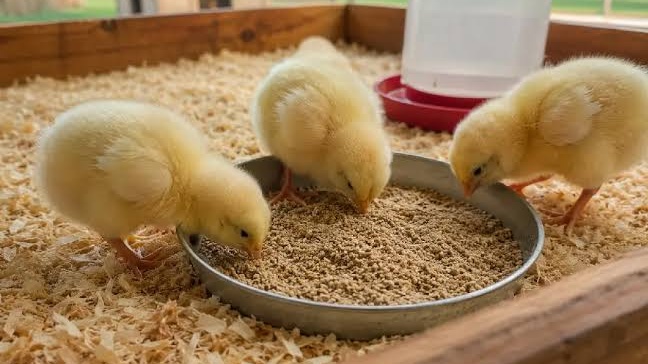
One of the first questions new chicken keepers ask is surprisingly difficult to answer: How many chicks should I buy?
It is tempting to order a large group because baby chicks are small and inexpensive compared with adult chickens. But those tiny chicks eventually become full-sized birds that need coop space, outdoor space, feed, water, and daily care.
The right starting number depends on your goals, available space, local regulations, budget, and whether you are buying sexed chicks or straight-run chicks.
Before placing an order, it helps to understand a few basic terms and make a simple flock-size plan.
Start With Your Desired Adult Flock Size
The easiest way to determine how many chicks to buy is to start with the flock you actually want as adults.
For example, suppose you eventually want four laying hens.
You might be tempted to order four chicks and assume you are finished.
But the situation can be more complicated.
Chicks may be sold in minimum quantities, some may be straight run rather than sexed, and not every chick will necessarily develop into the type of adult bird you originally wanted.
Instead of asking only, “How many chicks can I buy?” ask:
How many adult chickens can I legally and comfortably keep?
That number should guide your purchase.
Consider:
- Local chicken-keeping regulations
- Coop capacity
- Outdoor run space
- Predator protection
- Feed costs
- Daily maintenance
- Your experience level
- Whether you want eggs, breeding birds, meat birds, or a mixed flock
If your property comfortably supports six hens, there is little benefit in buying twelve chicks simply because they are available.
Why Do Hatcheries Have Minimum Orders?
One of the biggest surprises for first-time chicken keepers is the hatchery minimum order.
Some hatcheries establish minimum quantities for shipping baby chicks. The exact rules vary by hatchery, breed, season, destination, and order type.
Why?
Very young chicks have special shipping requirements.
They cannot simply be treated like ordinary packages. Temperature, timing, handling, and access to appropriate conditions during transportation all matter.
Shipping a single chick can also create practical problems because young chicks depend on group warmth and have limited reserves.
For this reason, hatcheries may require customers to purchase several chicks rather than allowing a single chick to be shipped by itself.
Minimum orders can also vary between breeds. Rare breeds, specialty breeds, sexed birds, and other categories may have different ordering requirements.
Always check the specific hatchery’s current terms before placing an order.
What Does “Straight Run” Mean?
Straight run chicks are chicks that have not been separated by sex.
In simple terms, you are purchasing a mixed group of males and females.
For example, if you order ten straight-run chicks, you should not assume that all ten will become laying hens.
You could receive a mixture of pullets and cockerels.
The exact ratio is not guaranteed.
This matters enormously for backyard chicken keepers who mainly want eggs.
A small urban or suburban flock may have limited space and may not be allowed to keep roosters at all.
In that situation, ordering straight-run chicks can create a problem later.
Before buying straight-run chicks, check your local rules regarding roosters and decide whether you have a plan for unwanted males.
What Are Sexed Chicks?
Sexed chicks have been identified as male or female before sale, depending on the breed and the method used.
For a beginner who wants laying hens, sexed female chicks can make flock planning much easier.
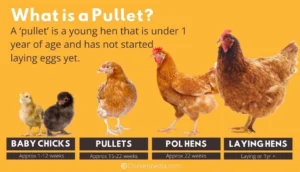
A female chicken intended for egg production is generally called a pullet while she is young.
Once she matures, she becomes a hen.
Male chicks are commonly called cockerels when young and roosters when mature.
Sexing is useful, but it is not necessarily a guarantee of perfect accuracy. Different breeds and sexing methods have different limitations.
Read the seller’s terms carefully so you understand what “sexed” means and what, if any, accuracy guarantee applies.
Pullets vs. Cockerels
Understanding these terms makes hatchery listings much easier to read.
Pullet
A pullet is a young female chicken.
If your primary goal is future egg production, pullets are generally the birds you are looking for.
Cockerel
A cockerel is a young male chicken.
If you are keeping chickens for eggs in a small backyard flock, cockerels may not be part of your plan.
However, some chicken keepers intentionally raise males for breeding, meat, flock protection, or other purposes.
The important thing is to know what you are buying before the chicks arrive.
How Many Chickens Should I Start With?
There is no universal number that works for every backyard.
For a beginner, a small flock is often easier to manage than a large one.
Consider a few hypothetical flock sizes.
Starting With 3–4 Hens
A small group can make sense when space is limited.
You will have fewer birds to feed and less bedding to manage.
However, you also have less flexibility if one bird becomes ill, dies, or needs to be separated.
Starting With 5–6 Hens
This can provide a practical backyard laying flock for households that have enough legal and physical space.
It also gives you some flexibility in managing individual birds.
But six adult chickens still require proper housing, ventilation, predator protection, and daily care.
Starting With 8–10 or More
A larger flock may make sense for families that use many eggs, have larger properties, or want to raise several breeds.
However, costs increase quickly.
More birds mean more feed, bedding, manure, water, cleaning, and potentially larger housing requirements.
Do not choose a flock size based only on how cute the chicks are.
A Simple Planning Formula
You can use this basic planning formula:
Chicks to Order = Desired Adult Hens ÷ Expected Survival Rate
For example, suppose your goal is six adult hens.
If you use an illustrative planning assumption of 90%, the calculation would be:
6 ÷ 0.90 = 6.67
You would therefore need to consider ordering approximately seven chicks, subject to the seller’s minimum order and your flock plan.
But this is a planning formula, not a fixed mortality rate.
You should not assume that 10% of chicks will automatically die.
Good husbandry, chick quality, housing, temperature management, predator protection, disease prevention, and many other factors affect outcomes.
The formula simply demonstrates why your desired adult flock size and initial chick count are not always identical.
Don’t Buy Extra Chicks Without a Plan
Beginners sometimes hear advice such as, “Buy more because you might lose some.”
There is some logic behind planning for uncertainty, but buying extra chicks creates another problem: you still have to raise them.
Every additional chick eventually needs:
- Brooder space
- Heat during the brooding period
- Feed
- Water
- Bedding
- Coop space
- Run space
- Predator protection
- Healthcare
- Long-term care
A chick may cost relatively little compared with the total cost of keeping a chicken for several years.
Buying ten extra chicks to solve a small planning problem can therefore create a much larger housing and flock-management problem.
Check Local Chicken Laws Before Ordering
This step should happen before you purchase chicks.
Chicken regulations vary by location.
Rules may address:
- Maximum number of chickens
- Rooster restrictions
- Minimum lot size
- Coop setbacks
- Property zoning
- Permit requirements
- Where the coop can be located
- Neighbor or nuisance rules
Do not assume that because a friend can keep eight chickens, you can legally keep eight chickens too.
Your city, county, municipality, HOA, or other applicable authority may have different rules.
If roosters are prohibited, ordering straight-run chicks can become especially complicated.
Think About Your Future Flock, Not Just Your Brooder
A common beginner mistake is designing the brooder around baby chicks without thinking about adult chickens.
Six tiny chicks may look like they barely need any room.
A few months later, you will have six growing birds that need substantially more space.
Before buying, ask:
Where will these chickens live six months from now?
Measure your planned coop and run.
Think about cleaning access, ventilation, predator protection, feed storage, and winter or summer conditions.
If you cannot comfortably house the adult flock, reduce the number of chicks rather than hoping the problem will solve itself later.
A Simple Chick-Ordering Checklist
Before clicking “Place Order,” answer these questions:
1. How many adult hens do I actually want?
Write down a specific number.
2. How much coop and run space do I have?
Measure rather than guessing.
3. What does local law allow?
Check chicken and rooster restrictions before buying.
4. Am I buying sexed chicks or straight-run chicks?
Do not assume all chicks are female.
5. What is the hatchery minimum order?
Read the current ordering and shipping requirements.
6. What happens if I receive a cockerel?
Have a plan before the birds arrive.
7. Can I afford the full flock?
Include feed, bedding, equipment, and future healthcare—not just the chick price.
8. Is my brooder ready?
Have heat, bedding, water, feeder, and chick starter ready before the chicks arrive.
Final Thoughts
Figuring out how many chicks should I buy is really a question about your future adult flock.
Start with the number of hens you can legally and comfortably keep. Then consider hatchery minimums, sexed versus straight-run chicks, available space, budget, and your long-term care plan.
If you want laying hens, sexed female chicks can make planning simpler, while straight-run chicks require you to prepare for the possibility of males. Hatchery minimums can also affect small-flock plans, especially when ordering by mail.
Most importantly, don’t let a low chick price or a cute group of baby birds determine your flock size.
Plan for the adult chickens first.
Once you know how many adult birds you can realistically keep, choosing the right number of chicks becomes much easier.