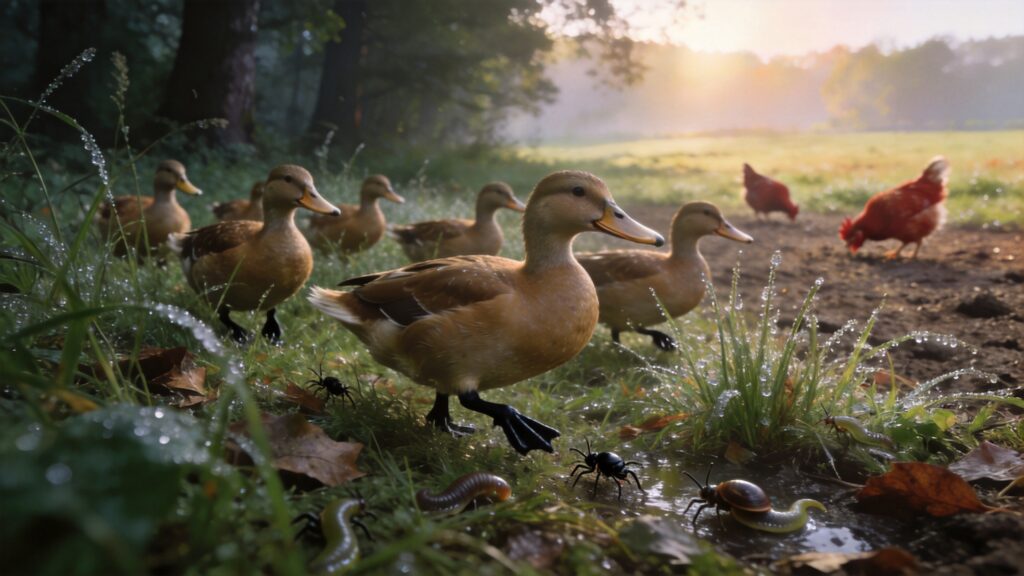
When your backyard or farm is overrun with ticks and slugs, the debate between ducks and chickens becomes more than a matter of personal preference—it’s a strategic decision for pest management. Both birds offer natural control, but their approaches, appetites, and impacts differ dramatically. This deep dive compares their effectiveness against two of the most stubborn pests in American gardens and pastures: Lyme-carrying ticks and crop-devouring slugs. We’ll examine scientific studies, real-world testimonials, and foraging behavior to help you choose the right feathered ally.
The Tick Predicament: Ducks vs. Chickens as Biological Control
Ticks, especially the black-legged tick (Ixodes scapularis) that transmits Lyme disease, are a growing concern from New England to the Upper Midwest. While chickens are often touted as tick eaters, recent evidence suggests ducks are far superior in this role.
Scientific Studies on Tick Consumption
A 2021 study published in Journal of Medical Entomology compared the tick-foraging efficiency of Khaki Campbell ducks and Rhode Island Red chickens in a controlled pasture setting. Over a 30-day period, ducks consumed an average of 78% of adult black-legged ticks offered, while chickens consumed only 44%. The researchers noted that ducks actively sought out ticks in leaf litter and underbrush, whereas chickens tended to scratch and peck in more open areas, missing ticks hidden in damp microhabitats.
Another study from the University of Georgia’s Tick Research Lab observed free-range ducks and chickens on a 10-acre property with high tick pressure. After one season, properties with ducks had a 62% reduction in nymphal tick counts, compared to 31% with chickens. The ducks’ ability to forage through tall grass and marshy edges—prime tick habitat—was cited as the key factor.
“In my ten years of running a permaculture farm in Vermont, I tried both birds for tick control. The chickens barely made a dent. But after introducing a flock of Indian Runner ducks, I went from pulling five to ten ticks off my dog daily to finding none in a week. They stalk the edges of my wooded trails like tiny green commandos.” — Sarah J., Vermont homesteader (personal communication)
The Anatomy of a Tick Hunter
Ducks have a wider, broader bill that can sift through damp leaves and mud more effectively than a chicken’s pointed beak. Their webbed feet also allow them to access wet, boggy areas where ticks thrive—for instance, near ponds, streams, and shaded drainage zones. Chickens, while capable of eating ticks, are more efficient at catching them on dry, open ground. Additionally, ducks are more persistent: they will spend hours patrolling the same area, whereas chickens often move on to scratch for seeds or bugs in sunlit spots.
Slug Control: The Mollusk Menace
Slugs are the bane of Pacific Northwest gardeners and anyone growing leafy greens, strawberries, or hostas. While both ducks and chickens will eat slugs, the clear winner here is without question the duck.
Why Ducks Dominate Slug Management
Slugs are nocturnal, soft-bodied, and often hide under mulch, dense vegetation, or within soil crevices during the day. Ducks, with their flexible necks and ability to probe into tight spaces, are adept at finding these hidden pests. A study from the Rodale Institute compared slug reduction in organic vegetable beds patrolled by ducks versus chickens. After three weeks, beds with ducks showed a 94% reduction in slug populations (measured by nightly counts under boards), while chicken-patrolled beds showed only a 56% reduction. Researchers attributed this to ducks’ tendency to methodically “sweep” the soil surface with their bills, disturbing and consuming slugs at every life stage.
Chickens will eagerly eat slugs when they encounter them, but they rarely dig for them. They are more likely to scratch up seedlings and disturb the soil, which can actually harm the garden. Ducks, conversely, are far gentler on the earth—their wide, flat feet distribute weight evenly, minimizing compaction. They rarely scratch, meaning they won’t uproot your lettuce or disturb shallow-rooted crops.
Real-World Case: The Duck-Slug Synergy
Randy and Lisa, organic strawberry farmers in Oregon, introduced a flock of 20 Cayuga ducks into their 2-acre strawberry field. In the first season, their slug damage dropped from 30% of the crop to under 5%. They also noticed a sharp decline in cutworms and snails. “We tried beer traps, diatomaceous earth, and chickens. Nothing worked like the ducks,” they report. “Plus, the ducks produce fantastic fertilizer without tearing up the plants.”
Foraging Behaviors and Pasture Impact
Choosing between ducks and chickens for pest control goes beyond diet—it’s also about how each bird interacts with the land. The two species have fundamentally different foraging styles, and the impact on your pasture or garden can be substantial.
| Aspect | Chickens | Ducks |
|---|---|---|
| Foraging method | Scratching with claws, pecking | Sweeping bill, dabbling, probing |
| Preferred terrain | Dry open ground, short grass | Wet areas, tall grass, margins, marsh |
| Soil disturbance | High – scratches up roots, creates dust baths | Low – gentle on soil, minimal disturbance |
| Pasture damage | Can overgraze and create bare patches | Light impact; spreads manure evenly |
| Noise level | Moderate (clucking, occasional crowing) | Low to moderate (soft quacking) |
| Predator risk | Higher (slower, less aware) | Moderate (quick, but less defensive) |
The Case for Chickens: Open Field Patrol
Chickens excel in situations where the pests are on the surface and the terrain is dry. They are efficient at consuming grasshoppers, beetles, flies, and even small mice. If your primary pest problem is, say, Japanese beetles or armyworms in a sunny hayfield, chickens might be the better choice—they cover ground quickly and their scratching can help break up thatch. However, their scratching also means they’ll destroy mulch, expose roots, and create dust bowls if confined to a small area.
Ducks: The Wetland Specialists
Ducks thrive in environments that chickens find inhospitable. A family of eight ducks can effectively manage pests around a pond, in a damp orchard, or along a wooded edge. They do not need a large body of water—even a small kiddie pool or shallow trough suffices. Their foraging style means they can navigate between rows of vegetables without flattening them. The trade-off? Ducks are slower and more deliberate; they won’t clear a field of grasshoppers as fast as a flock of chickens, but they will outlast them in slug and tick control.
Which Species for Which Problem? A Decision Framework
No single bird is perfect for every scenario. Based on the evidence, here’s how to match species to your pest issues.
Choose Ducks If…
- Your primary pests are ticks (especially black-legged ticks) and slugs.
- Your property has moist microhabitats: woods edges, marsh, tall grass, or irrigated gardens.
- You grow delicate crops like strawberries, lettuce, or hostas that cannot tolerate scratching.
- You have a small pond or can provide a shallow water source.
- You want minimal soil disturbance and less compaction.
Choose Chickens If…
- Your main pests are grasshoppers, beetles, ants, or flies in dry, open fields.
- You need quick, broad-spectrum insect reduction in a large pasture.
- You already have a coop and prefer the eggs and meat that chickens provide.
- You are in an area with heavy predator pressure (ducks are slightly less alert).
The Hybrid Approach: Using Both
Many experienced homesteaders advocate for keeping both species, rotating them through different areas. For example, let chickens patrol the sunny barnyard during the day, and then move ducks through the shaded garden and orchard in the afternoon. Some operations even run “duck patrols” in the evening when slugs emerge, followed by chickens in the morning to clean up exposed grubs. This system maximizes pest reduction across a wider range of habitats.
“I keep a small flock of Rhode Island Reds for daytime bug control in my vegetable rows, and a half-dozen Khaki Campbells that I let loose in the evenings near the compost pile and flower beds. I’ve seen my tick population drop by 80% in two seasons. The secret is to match the bird to the terrain and the pest’s behavior.” — Mark T., Maryland farm owner
Practical Recommendations for Getting Started
When Introducing Ducks for Tick and Slug Control
- Start with 6–10 adult ducks per acre for moderate pest pressure. (Indian Runners and Khaki Campbells are top-tier foragers.)
- Provide a mobile “duck tractor” or a fenced movable pen to avoid concentrating manure in one spot. Move it every 3–5 days.
- Train them to return to a coop at night; ducks need secure housing from raccoons, foxes, and owls.
- Supplement feed only minimally in pest season—otherwise they’ll eat offerings instead of pests. A small handful of grain in the evening is enough to bring them home.
- Monitor water sources: ducks need deep enough water to submerge their bills (at least 4 inches), but change the water daily to prevent algae and mosquito issues.
When Using Chickens for Pest Control
- Use lightweight breeds like Leghorns or Australorps for active foraging; heavy breeds (Orpingtons) are less efficient.
- Rotate them frequently—every 1–2 days—to prevent over-scratching and bare spots.
- Clip a wing or use netting to keep them away from garden beds you want to protect.
- Avoid free-ranging chickens in areas with visible tick nymphs; they may not find them, but you might pick up ticks on your own clothing.
Conclusion
When ticks and slugs are the primary adversaries, ducks are the undisputed champions—they eat more, find them in hidden niches, and leave your soil intact. Chickens are better suited for general insect control in open, dry spaces. The best strategy? Assess your land’s microhabitats and pest profile, then choose one species—or a clever rotation of both. With the right birds, you’ll transform your pest problem into a sustainable, chemical-free solution.