If you are raising chickens in a backyard, homestead, or small family farm, you may not want birds that are bred for just one purpose. You might want reliable eggs, but you may also prefer chickens with good body size, calm personalities, useful meat characteristics, and the ability to adapt to different backyard conditions.
That is where dual-purpose chicken breeds come in.
A dual-purpose chicken is generally selected for both egg production and a reasonably substantial body. Unlike specialized laying breeds, which are mainly developed for producing large numbers of eggs, dual-purpose breeds can provide a more balanced combination of eggs, meat, temperament, and general usefulness.
For many backyard keepers, that balance makes more sense than choosing a highly specialized breed.
What Does “Dual-Purpose Chicken” Actually Mean?
The term “dual-purpose” does not mean a chicken will produce eggs at the same level as a specialized commercial layer and meat at the same level as a commercial broiler.
Instead, it describes a breed that can serve more than one practical purpose.
A typical dual-purpose chicken may:
- Produce a useful supply of eggs
- Develop a larger body than lightweight laying breeds
- Be suitable for small-scale meat production
- Adapt well to backyard or homestead environments
- Have a generally manageable temperament
- Work well in a mixed flock
This makes dual-purpose breeds especially interesting for families who want chickens that are useful without turning their backyard into a highly specialized poultry operation.
1. Plymouth Rock: A Classic Backyard All-Rounder
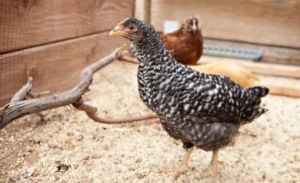
The Plymouth Rock, particularly the popular Barred Plymouth Rock, is one of the classic choices for backyard chicken keepers.
These chickens are known for their attractive barred feather pattern, relatively substantial bodies, and generally calm disposition.
For families, Plymouth Rocks can be appealing because they offer a practical balance. They can provide a steady supply of brown eggs while also developing enough body size to be considered useful as a meat bird.
They are also active enough to enjoy normal backyard life without being as specialized as commercial laying strains.
Why choose Plymouth Rock?
Plymouth Rocks can be a good match if you want:
- Brown eggs
- A traditional American backyard breed
- Reasonable body size
- A generally friendly temperament
- A versatile flock bird
Their balanced characteristics make them particularly useful for beginners who do not want to commit to a highly specialized breed.
2. Wyandotte: Beauty and Practicality
Wyandottes are another popular dual-purpose option, especially for keepers who want attractive birds as well as practical production.
They are available in several striking color patterns, including Silver Laced, Golden Laced, Blue, and other varieties.
But their appeal is not only visual.
Wyandottes have relatively substantial bodies and can provide a useful supply of brown eggs. Their compact, rounded shape can also make them a practical choice for colder climates.
Their rose comb is another characteristic that may be worth considering in northern areas because smaller, less exposed comb surfaces can reduce the risk of frostbite compared with very large single combs.
Why choose Wyandottes?
Consider this breed if you want:
- Attractive feather patterns
- Good body size
- Brown eggs
- A cold-weather-friendly type
- A traditional dual-purpose breed
Wyandottes can be especially interesting for backyard keepers who want their flock to be both productive and visually appealing.
3. Australorp: Excellent Eggs With Useful Body Size
Australorps are often associated with egg production, but they can also work well as dual-purpose backyard chickens.
Originally developed from Black Orpington stock in Australia, Australorps became known for their strong laying ability while retaining a substantial body.
That combination is useful for backyard keepers who prioritize eggs but do not want an extremely lightweight layer.
Black Australorps are particularly recognizable because of their dark plumage, which can show a greenish sheen in sunlight.
They are generally considered calm and manageable, making them suitable for mixed backyard flocks.
Why choose Australorp?
Australorps may fit your flock if you want:
- Strong egg production
- A larger-bodied chicken
- A calm backyard temperament
- A classic black-feathered appearance
- A breed that can serve multiple purposes
If eggs are your primary goal but you still want a reasonably substantial bird, Australorp is worth considering.
4. Orpington: Gentle, Large, and Family-Friendly
Orpingtons are especially popular with families because of their large bodies, soft feathering, and generally calm personalities.
Buff Orpingtons are perhaps the most recognizable variety, with warm golden-buff feathers and a rounded appearance.
They are not usually chosen because they are the most efficient egg-producing birds available. Instead, their appeal comes from balance.
They can provide eggs while also developing a larger body than lightweight laying breeds. Their calm temperament can also make them easier to manage around children, although individual chickens can vary considerably.
Orpingtons can also be useful for keepers who simply enjoy having large, attractive chickens in the backyard.
Why choose Orpington?
They may be a good fit if you want:
- Large-bodied chickens
- A calm and gentle flock
- Brown eggs
- Attractive appearance
- A family-oriented backyard breed
One consideration is their dense feathering. In hot climates, shade, ventilation, clean water, and protection from excessive heat become especially important.
5. Rhode Island Red: Productive and Practical
Rhode Island Reds are another well-known American breed that can fit the dual-purpose category.
They are valued for their egg production and sturdy bodies. Their deep red-brown plumage also gives them a distinctive appearance.
For backyard keepers, Rhode Island Reds can be useful when the goal is practical production rather than purely ornamental value.
However, temperament can vary between individual birds and breeding lines. Some may be more assertive than very gentle breeds such as Orpingtons.
Why choose Rhode Island Red?
Consider them if you want:
- Good brown-egg production
- A sturdy, practical bird
- A traditional American breed
- Chickens suited to a productive backyard flock
They can be particularly attractive to homesteaders who care more about utility than decorative appearance.
How Should You Choose Between Dual-Purpose Breeds?
Instead of asking which dual-purpose breed is universally best, start by asking what you actually need.
If eggs are your priority
Look closely at breeds such as Australorp, Plymouth Rock, or Rhode Island Red.
If temperament matters most
Orpingtons and many Plymouth Rocks can be attractive options, especially for family-oriented flocks.
If you live in a cold climate
Wyandottes and Plymouth Rocks are worth researching because their body type and comb characteristics can be useful considerations for winter management.
If appearance matters
Wyandottes and Orpingtons offer distinctive looks without sacrificing practical backyard value.
If you want a balanced homestead bird
Plymouth Rock, Australorp, Orpington, and Wyandotte can all fit the general dual-purpose concept, depending on your priorities and individual birds.
Remember That Breed Is Only Part of the Equation
Even the right breed will not perform well if the flock environment is poor.
Before bringing chickens home, consider your available coop space, outdoor run, predator protection, ventilation, feed, water, winter conditions, and summer heat.
You should also check local regulations. Some cities limit the number of chickens allowed, prohibit roosters, or establish minimum distances between coops and neighboring properties.
Breed selection should therefore happen after you understand your actual backyard conditions.
What About Roosters?
Roosters are an important consideration for anyone interested in a self-sustaining or breeding flock.
A rooster is not necessary for hens to produce eggs. Fertilization is only required if you want fertile eggs that can potentially be incubated.
Roosters can also be noisier and may be restricted by local ordinances.
If your primary goal is simply fresh eggs for the household, an all-hen flock may be considerably simpler.
Final Thoughts
Dual-purpose chickens are designed around a practical idea: one flock can provide several benefits instead of specializing in just one.
Plymouth Rocks offer a classic balance of eggs, body size, and manageable temperament. Wyandottes combine useful production with distinctive appearance and characteristics that can suit colder regions. Australorps are particularly appealing when egg production is important but you still want a substantial bird. Orpingtons stand out for their large size and generally gentle personality, while Rhode Island Reds offer another practical option for productive backyard flocks.
The right choice ultimately depends on your goals.
Before buying chicks, decide whether your priority is eggs, temperament, body size, climate tolerance, appearance, or a combination of these factors. Then choose a breed whose characteristics fit your backyard rather than simply choosing the most popular chicken breed.
That approach can make your flock easier to manage—and much more useful for everyday backyard life.