Introduction 🐔
Keeping backyard chickens can be rewarding, but it also comes with responsibilities that go beyond providing food, clean water, and a safe coop. One important risk every poultry owner should understand is avian influenza, commonly called bird flu.
Highly pathogenic avian influenza (HPAI) can spread among domestic poultry and wild birds. It can cause serious illness and death in chickens, and infected birds may sometimes show few obvious signs before the problem becomes apparent.
You do not need a large commercial farm to take biosecurity seriously. Even a small backyard flock can be exposed through wild bird droppings, contaminated shoes, equipment, visitors, or newly introduced birds.
The goal of biosecurity is simple: reduce the chances of bringing disease into your flock and limit its spread if exposure occurs. Here are practical steps that everyday chicken keepers can use.
1. Understand How Bird Flu Can Reach Your Backyard
Avian influenza viruses can spread through contact with infected birds and contaminated materials. Wild waterfowl and other wild birds can carry avian influenza viruses, sometimes without appearing sick.
Possible routes of exposure include:
- Wild bird droppings: Contaminated droppings can reach feed, water, soil, and outdoor surfaces.
- Shared water sources: Ponds, puddles, and uncovered water containers can attract wild birds.
- Dirty footwear: Shoes can carry contaminated material from other poultry areas.
- Equipment and supplies: Feed containers, crates, tools, and transport equipment can move contamination.
- New or returning birds: Birds from another flock, a swap, a show, or a market may introduce disease.
- Unprotected visitors: People who have recently handled other poultry may unintentionally bring contamination onto your property.
A backyard flock is not automatically safe because it is small or separated from commercial farms. Exposure can happen in ordinary residential settings.
2. Keep Wild Birds Away From Your Chickens
Wild bird exclusion is one of the most important everyday precautions.
Wild birds can enter a chicken run to eat spilled feed, drink water, or find shelter. Reducing these opportunities helps lower contact between wild birds and domestic poultry.
Practical steps include:
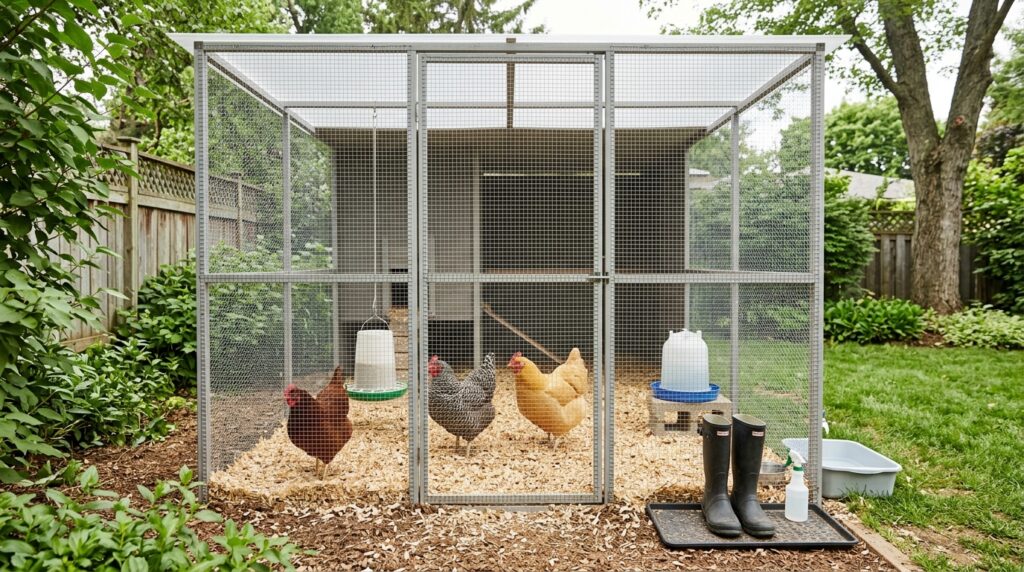
- Cover outdoor runs with suitable netting or roofing where practical.
- Repair holes and gaps that allow wild birds to enter.
- Keep feeders and waterers inside a protected area.
- Clean up spilled feed promptly.
- Avoid placing poultry feed or water near ponds and areas frequented by wild birds.
- Prevent chickens from accessing standing water that wild birds may use.
Netting should be maintained and checked regularly. It must not create hazards for your chickens or trap wild birds.
If your flock regularly shares outdoor space with wild birds, consider temporarily using a covered, enclosed run during periods of increased local bird flu activity.
3. Make Clean Shoes and Equipment Part of Your Routine
You do not need complicated equipment to establish a basic biosecurity routine.
One of the simplest measures is to use dedicated footwear for the chicken area. Keep a pair of washable boots or shoes near the entrance and avoid wearing them to other poultry properties, farms, or live-bird markets.
A practical routine looks like this:
- Remove visible dirt, mud, and manure from footwear.
- Clean surfaces with detergent and water.
- Apply an appropriate disinfectant according to its label.
- Allow the required contact time before use.
- Keep clean footwear separate from dirty footwear.
Important: Disinfectants do not work reliably through thick dirt or manure. Cleaning comes first. Follow the product label for dilution, contact time, ventilation, and safe use around animals. Never mix cleaning chemicals.
Use the same principle for feeders, waterers, crates, and tools. Clean them before disinfecting, and avoid sharing equipment with other poultry keepers unless it has been properly cleaned and disinfected.
4. Quarantine New Birds Before Introducing Them
Adding new chickens can introduce disease even when the birds appear healthy.
Whenever you buy, adopt, or receive new birds, keep them physically separated from your existing flock for a quarantine period. A commonly used minimum is 30 days, although local veterinary or animal-health guidance may recommend a different period depending on the disease risk.
During quarantine:
- Use separate feeders and waterers.
- Keep separate footwear and cleaning equipment.
- Care for the established flock first and the new birds afterward.
- Watch for changes in appetite, breathing, droppings, and activity.
- Avoid sharing equipment or allowing direct contact between groups.
Quarantine reduces risk, but it cannot guarantee that a bird is disease-free. Some infections may not be immediately apparent, so consult a poultry veterinarian or local animal-health authority if you have concerns.
Avian Flu and Backyard Chickens: Practical Biosecurity Steps Every Owner Should Know
Introduction 🐔
Keeping backyard chickens can be rewarding, but responsible chicken keeping involves more than providing fresh water, nutritious feed, and a secure coop. Owners also need to protect their birds from infectious diseases, including avian influenza, commonly known as bird flu.
Highly pathogenic avian influenza (HPAI) can spread among domestic poultry and wild birds. It can cause severe illness and death in chickens. Even a small backyard flock can be exposed through wild bird droppings, contaminated footwear, equipment, visitors, or newly introduced birds.
The good news is that everyday biosecurity habits can reduce the risk. You do not need a commercial farm or expensive equipment to build a sensible protection routine.
This guide explains how bird flu can reach backyard chickens, what warning signs to watch for, and which practical steps can help protect your flock and your family.
1. Understand How Bird Flu Can Reach Your Backyard
Wild birds, including ducks, geese, and gulls, can carry avian influenza viruses without appearing sick. They may spread the virus through droppings and contaminated environments.
Possible routes of exposure include:
- Wild bird droppings: Contamination can reach feed, water, soil, and outdoor surfaces.
- Shared water sources: Ponds, puddles, and uncovered water containers can attract wild birds.
- Dirty footwear: Shoes and boots can carry contaminated material from other poultry areas.
- Equipment and supplies: Feed containers, crates, tools, and transport equipment can move contamination.
- New or returning birds: Chickens introduced from another flock, a swap, or a market may bring disease into your existing group.
- Visitors: People who have recently handled other poultry may unintentionally carry contamination onto your property.
A small flock is not automatically protected because it is separated from commercial poultry farms. Everyday contact with contaminated materials can create exposure risks. CDC+2
2. Keep Wild Birds Away From Your Chickens
Wild bird exclusion is one of the most important everyday precautions.
Wild birds may visit a chicken run to eat spilled feed, drink water, or find shelter. Reducing these opportunities helps limit contact between wild birds and domestic poultry.
Practical steps include:
- Cover outdoor runs with suitable netting or roofing where practical.
- Repair holes and gaps that allow wild birds to enter.
- Keep feeders and waterers inside a protected area.
- Clean up spilled feed promptly.
- Avoid placing poultry feed or water near ponds and areas frequented by wild birds.
- Prevent chickens from accessing standing water that wild birds may use.
- Store feed in secure containers that wildlife and rodents cannot easily access.
Netting should be maintained and checked regularly. It should not create hazards for your chickens or trap wild birds.
If wild birds regularly enter your yard, consider using a covered, enclosed run, especially when local authorities report increased avian influenza activity. USDA-APHIS Defend the Flock+1
3. Make Clean Shoes and Equipment Part of Your Routine
You do not need complicated equipment to establish a basic biosecurity routine.
One simple measure is to use dedicated footwear for the chicken area. Keep washable boots or shoes near the entrance and avoid wearing them to other poultry properties, farms, or live-bird markets.
A practical cleaning routine:
- Remove visible dirt, mud, and manure from footwear and equipment.
- Wash with detergent and water.
- Apply an appropriate disinfectant according to its label.
- Allow the required contact time.
- Keep clean equipment separate from dirty equipment.
Important: Disinfectants do not work reliably through thick dirt or manure. Cleaning comes first. Follow product instructions for dilution, contact time, ventilation, and safe use around animals. Never mix cleaning chemicals.
Use the same principle for feeders, waterers, crates, and tools. Avoid borrowing poultry equipment from other keepers unless it has been properly cleaned and disinfected.
A footbath can be part of a biosecurity setup, but it is not a replacement for removing dirt and manure from footwear. USDA-APHIS+2
4. Quarantine New Birds Before Introducing Them
Adding new chickens can introduce disease, even when the birds look healthy.
Keep newly acquired birds physically separated from your established flock before allowing contact. A quarantine period of around 30 days is a commonly used precaution in backyard poultry keeping, but ask a poultry veterinarian or local animal-health authority about the appropriate period and monitoring procedures for your circumstances.
During quarantine:
- Use separate feeders and waterers.
- Keep separate footwear and cleaning equipment.
- Care for your established flock first and the new birds afterward.
- Watch for changes in appetite, breathing, droppings, and activity.
- Do not allow direct contact between the groups.
Quarantine reduces some disease risks, but it cannot guarantee that a bird is disease-free. If bird flu is suspected, contact animal-health officials before moving birds or equipment.
5. Recognize Warning Signs of Avian Influenza
Early recognition matters because avian influenza can spread quickly through poultry populations.
Possible warning signs include:
- Sudden or unexplained deaths.
- Reduced appetite or water consumption.
- Ruffled feathers and unusual tiredness.
- Coughing, sneezing, or difficulty breathing.
- Discharge from the eyes or nose.
- Diarrhea.
- Swelling around the eyes, head, or neck.
- Purple discoloration of the comb, wattles, or legs.
- A sudden drop in egg production.
- Misshapen or discolored eggs.
These signs are not exclusive to bird flu. Other poultry diseases and health problems can cause similar symptoms. You cannot confirm avian influenza by appearance alone. CDC+1
6. What to Do If You Suspect Bird Flu
Act promptly
If several birds become sick, deaths occur unexpectedly, or you notice concerning symptoms:
- Contact your veterinarian or animal-health authority immediately. In the United States, report suspected illness to your State veterinarian or USDA.
- Avoid moving birds. Do not sell, give away, transport, or take birds to poultry gatherings while a disease investigation may be needed.
- Restrict access. Keep visitors, pets, and other animals away from the flock area.
- Avoid handling sick or dead birds. Do not touch carcasses, droppings, litter, or potentially contaminated water without appropriate protective equipment and official guidance.
- Do not attempt to dispose of carcasses yourself without advice. Follow instructions from the relevant animal-health authority.
- Keep records. Note when symptoms started, how many birds are affected, recent bird purchases, and possible contact with wild birds.
In the United States, USDA APHIS provides a reporting contact at 1-866-536-7593. Your State veterinarian or local animal-health office can also advise you. USDA-APHIS Defend the Flock+2
Do not assume that isolating one visibly sick chicken is enough. If HPAI is suspected, get professional instructions before handling or moving birds because the virus may already have spread.
7. Protect Yourself While Caring for Your Flock
Bird flu is primarily an animal-health concern, but people can become infected after close, unprotected exposure to infected birds or contaminated environments.
To reduce your risk:
- Wash your hands with soap and running water after handling chickens or their equipment.
- Keep poultry outside the home, especially away from kitchens and food-preparation areas.
- Avoid touching sick or dead birds and contaminated litter with bare hands.
- If exposure to potentially infected birds is unavoidable, follow public-health and animal-health guidance on appropriate personal protective equipment (PPE).
- Avoid stirring up dust, feathers, and droppings when dealing with a suspected infected area.
- Contact a healthcare professional or local health department if you develop symptoms after a possible exposure, and explain the exposure.
Children should be supervised around poultry, and handwashing should be part of every visit to the coop. CDC+2
8. A Simple Daily Biosecurity Checklist
Biosecurity works best when it becomes a regular habit rather than something you remember only during an outbreak.
| Daily task | What to check |
|---|---|
| Feed | Protected from wild birds and rodents |
| Water | Clean, fresh, and protected |
| Run | No obvious holes or wild bird access |
| Shoes | Dedicated and reasonably clean |
| Equipment | No sharing without cleaning |
| Flock health | Appetite, behavior, breathing, and egg production |
| Visitors | Access limited to necessary people |
Once a week, inspect the coop and run for damaged screens, spilled feed, standing water, rodent activity, and areas where wild birds may enter.
A written checklist can help every family member follow the same routine.
Final Thoughts 🥚
Avian influenza is a serious risk, but backyard chicken owners can take meaningful steps to reduce exposure. Protecting feed and water, limiting wild bird contact, cleaning footwear and equipment, separating new birds, and monitoring flock health all contribute to better biosecurity.
No routine can guarantee that a flock will never encounter bird flu. However, consistent prevention and quick reporting can help protect your chickens, neighboring flocks, and the people who care for them.
You do not need a complicated system to get started. Build a few reliable habits, follow local animal-health alerts, and make biosecurity part of everyday chicken keeping.
This article provides general educational information. Follow current instructions from your veterinarian and local animal-health authorities, especially during an active outbreak.