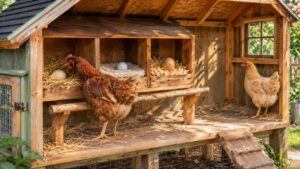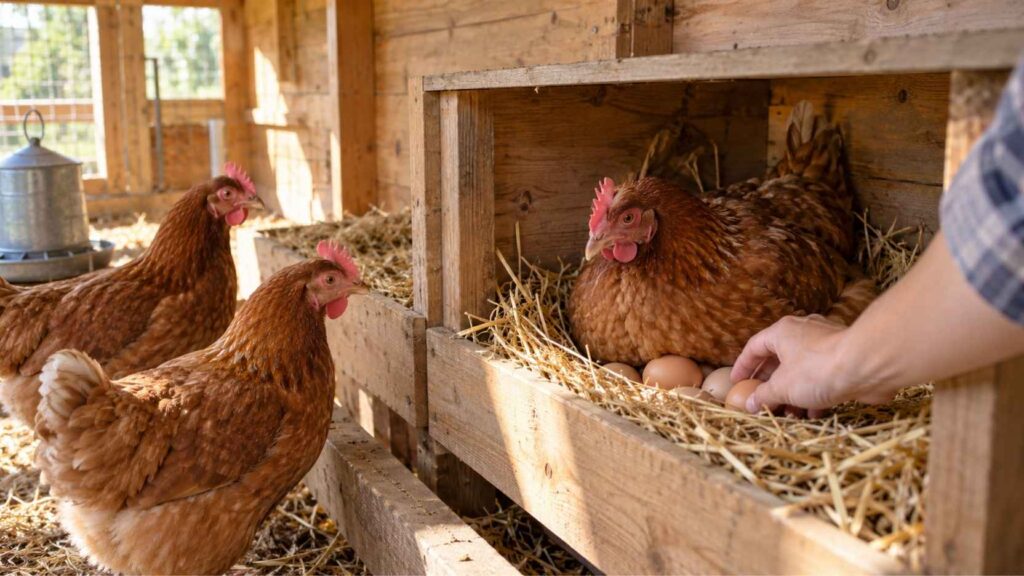
Seeing a hen in the nesting box when you need to collect eggs can make a new keeper hesitate. 🐔 You may worry that reaching under her will frighten her or make the nest feel unsafe. Usually, the better question is why she is still sitting there.
A hen may be actively laying, resting after laying, waiting out another hen, or becoming broody. Regular collection still matters because eggs left longer in busy nests have more chances to become dirty or broken. The goal is therefore calm collection without unnecessary disturbance.
First Identify Why She’s Sitting There
Do not assume that every hen sitting on eggs is broody. A normal laying visit can involve settling, turning, rearranging bedding, becoming quiet, and remaining in the box briefly after the egg appears. ⏳ Watch her pattern before deciding what to do.
She Is Actively Laying
If she looks settled and has only recently entered the box, waiting is usually easiest. There is little benefit in reaching underneath her at the exact moment she is trying to lay unless an egg is at immediate risk. 🥚 Letting her finish often turns the situation into a simple collection a few minutes later.
She Finished Laying but Hasn’t Left
Some hens linger because nesting boxes are dark, comfortable, and secluded. A short stay after laying does not automatically mean broodiness, especially if she soon rejoins the flock. If your schedule allows, give her a little time and see whether she leaves naturally.
Another Hen Wants the Same Nest
Hens often choose one favorite nesting box even when several similar boxes are available. You may see another hen waiting, vocalizing, pacing, or trying to squeeze into the occupied box. 🏠 When one nest becomes unusually busy, collecting more frequently can help reduce egg buildup and breakage.
She May Be Going Broody
Broodiness is usually a persistent pattern rather than one long nesting visit. A broody hen may sit for extended periods, return quickly when removed, flatten over the clutch, puff up, vocalize defensively, peck, and reduce or stop normal laying. 🪶 Broody hens may also become protective when eggs are removed.
Should You Reach Underneath a Laying Hen?
You generally can remove eggs from beneath a calm hen, but you do not need to interrupt active laying whenever waiting is practical. Move slowly from the side, keep your hand low, and avoid pressing one egg against another. 🤲 A relaxed hen may simply shift her body or quietly protest.
If she becomes highly defensive or the box is crowded with fragile eggs, forcing the issue may create more trouble than leaving one collection until later. Sudden movement can lead to kicking, stepping, flapping, and broken shells inside a confined nest. Your priority should be safe eggs and low nest traffic, not making every collection happen immediately.
Signs Your Hen Wants to Be Left Alone
One warning peck does not prove that a hen is broody. Some hens simply dislike being touched while nesting and may raise their feathers, shift away, grumble, or peck when surprised. ⚠️ Judge the behavior together with how long she sits and whether it repeats.
A hen that leaves after laying and resumes eating, scratching, drinking, dust bathing, and flock activity is behaving differently from a hen that keeps returning to the nest. Persistent sitting plus stronger nest defense is more meaningful than a single annoyed reaction. Look for a repeating cluster of behaviors, not one dramatic moment.
Why Forcing a Hen Out Can Create More Problems
Pulling or shoving a laying hen from the box is rarely the best first choice. She may kick bedding, step on eggs, collide with another bird, or cause a burst of traffic around a crowded nest. 💥 Eggs are safer when the nesting area stays clean, padded, and relatively calm.
Broken eggs are especially worth preventing because hens may investigate and eat the contents, creating a management problem you would rather avoid. Extension guidance emphasizes adequate nesting space, clean bedding, lower nest traffic, and frequent egg collection as prevention measures. Calm handling is therefore practical flock management, not simply politeness toward the hen.
What If You Need to Leave for Work?
You do not need to wait beside the coop until every hen finishes laying. If one hen is calmly occupying a nest, collect from the other boxes and leave hers until your next round if the eggs are otherwise safe. 🕗 Backyard routines should work around real jobs, school, and family schedules.
If several eggs are already under her, gently removing the older ones before leaving can also be reasonable if she tolerates your hand. Penn State recommends collecting eggs early and often, with at least twice-daily collection advised, especially during temperature extremes. A before-work and after-work routine is practical for many small flocks.
When a Favorite Nesting Box Becomes Overcrowded
Having enough boxes does not guarantee that hens will use them evenly. A favorite nest may attract several hens while the box beside it stays empty, creating queues, crowding, and more contact with existing eggs. 😅 More frequent collection can help when one nest repeatedly fills faster than the others.
Also check whether the less popular boxes are clean, dry, dim, comfortable, and easy to enter. Nest design matters because hens generally prefer secluded laying areas, while dirty or poorly placed boxes may be ignored. Think of the problem as reducing a nesting bottleneck, not assigning one box to each hen.
Is She Laying—or Broody? Quick Comparison
A laying hen usually visits the box, produces an egg, and then returns to normal flock life. A potentially broody hen is more likely to make the nest the center of her day, sit for long periods, return persistently, and defend the clutch. Broodiness also commonly involves reduced or stopped laying.
Do not label a hen broody because she sat longer than expected once. Breeds and individual birds vary, so look for the same behavior over repeated checks and multiple days. If broodiness is confirmed, the next decision becomes whether to let her incubate an appropriate clutch or manage the broodiness if chicks are not wanted.
“Laying Hen vs Broody Hen” Mini Decision Tree
- Recently entered and calm: give her time to finish laying.
- Finished but lingering: wait if convenient, or gently remove older eggs if she tolerates it.
- Several hens want one box: collect more often and improve the other boxes.
- Sits for hours, returns repeatedly, puffs up, growls, or guards the nest day after day: broodiness is more likely.
- Seems weak, injured, unable to stand, or unusually inactive outside the nest: do not assume broodiness; check her health promptly.
What to Observe First → When to Worry
Start with three questions: How long has she been there, does she leave and behave normally afterward, and is the pattern repeating? 👀 Those observations tell you far more than whether she pecked your hand once. A normal laying visit usually calls for patience rather than intervention.
Worry less about the idea that touching one egg will automatically ruin the nesting box for her. Focus instead on repeated nest guarding, egg breakage, crowding, cleanliness, and changes in normal flock behavior. Collect regularly, avoid unnecessary force, and let the hen’s observable pattern guide your next step.