🐔 Your chicken stopped roosting but still eats, walks around, and behaves almost normally during the day, so should you worry? Finding a hen sleeping on the coop floor instead of her usual perch can be confusing, especially when she still runs toward food and interacts with the flock. Although one unusual night does not automatically mean illness, a sudden change in sleeping behavior deserves attention.
Chickens naturally seek elevated places to rest, but injuries, uncomfortable perches, bullying, and underlying health problems can change that preference. 🪶 The important distinction is whether your hen cannot physically reach the roost or can reach it but chooses to avoid it. These seven checks will help you investigate the situation without immediately assuming the worst.
Why Would a Chicken Suddenly Stop Roosting?
Roosting is a natural chicken behavior that provides an elevated resting place away from the coop floor. Most healthy adult laying hens prefer suitable perches, although young birds, heavier breeds, and chickens with mobility limitations may behave differently. 🌙 When an established roosting habit changes suddenly, the reason may involve the chicken, the perch, or the flock.
A hen might avoid jumping because her feet hurt, because dominant chickens push her away, or because the perch has become unstable. She might also feel unwell without showing obvious symptoms, since chickens can conceal signs of weakness. Still eating is reassuring, but it does not rule out pain, injury, or illness.
7 Things to Check Before Assuming She’s Sick
🔎 Start by observing the hen during ordinary activities rather than immediately picking her up or forcing her onto a perch. Look for differences between her usual behavior and what she does now, including small changes in movement, balance, confidence, and flock interactions. These observations help distinguish physical difficulty, social avoidance, environmental discomfort, and possible health problems.
1. Can She Walk, Jump, and Balance Normally?
Watch your hen move across the run, step over low obstacles, and navigate familiar areas. 🐾 Notice whether she limps, favors one leg, hesitates before stepping down, or uses her wings unusually when maintaining balance. A chicken that walks normally on flat ground may still struggle with the effort of jumping onto an elevated perch.
Do not repeatedly make her jump to test her ability because this could worsen an existing injury. Instead, observe movements she chooses naturally and compare them with those of healthy flockmates. Difficulty climbing or landing suggests that accessibility or physical discomfort deserves closer attention.
2. Is Another Chicken Keeping Her Off the Roost?
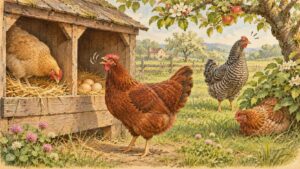
🐓 Pecking-order disagreements can affect where chickens sleep, particularly when preferred perches are crowded. Watch during the evening as birds settle and notice whether another hen pecks, chases, blocks, or repeatedly displaces the affected bird. A chicken may eventually stay on the floor rather than continue competing for space.
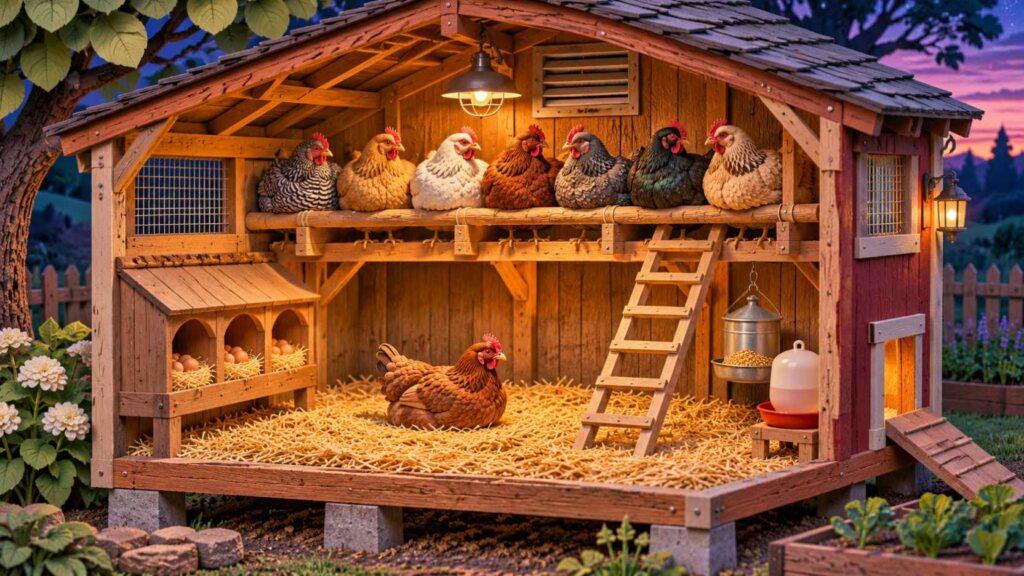
Check whether every chicken has enough usable perch room, with approximately 6–10 inches (15–25 cm) per bird serving as a common planning guideline for standard chickens. Extra space can be particularly helpful when dominant birds guard desirable positions. If your hen approaches the roost confidently but retreats after confrontations, flock behavior may be contributing to the problem.
3. Has Her Posture, Energy, or Appetite Changed?
A chicken can continue eating while experiencing pain or early illness. 🩺 Compare her energy, alertness, posture, and normal activities rather than relying on appetite alone. Warning signs include prolonged hunching, drooping wings, reluctance to move, unusual isolation, or spending more time resting.
Check whether she drinks normally, produces typical droppings, and continues her usual laying pattern. Changes in breathing, abdominal appearance, coordination, or egg production can provide important additional clues. A change in roosting combined with other abnormal behavior warrants veterinary advice, even if she still accepts treats.
4. Are Her Feet, Legs, or Wings Painful?
🦶 Examine the hen’s feet and legs gently when she can be handled without unnecessary stress. Look for swelling, wounds, scabs, damaged nails, abnormal leg positioning, or sore-looking footpads that could make gripping a perch uncomfortable. Footpad infections, including bumblefoot, are among the possible causes of painful movement.
Also inspect for visible wing injuries or signs that she is protecting one side of her body. Avoid squeezing swollen areas, pulling limbs, or attempting to remove embedded material yourself. If you discover significant swelling, an open wound, or persistent lameness, arrange a veterinary examination rather than assuming the problem will disappear.
5. Is the Perch Too High, Narrow, or Unstable?
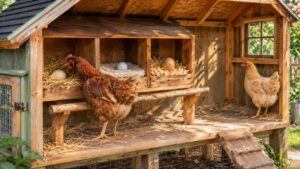
Sometimes the problem is the roosting setup rather than the chicken. 🪵 A loose perch, awkward landing space, slippery surface, or excessive height can discourage birds from using it. Heavy breeds, older hens, and chickens recovering from injuries may particularly benefit from lower, easier-to-access perches.
Inspect the wood for splinters, sharp edges, loose connections, and accumulated droppings. A stable, appropriately sized perch with comfortable edges and a safe route up and down is generally preferable to an unnecessarily high bar. Consider adding a lower roost or intermediate step if your chicken struggles with the existing arrangement.
6. Could Nighttime Pests or Disturbances Be the Problem?
🦠 A roost may look clean during the day while harboring pests that become active after dark. Red poultry mites, for example, can hide in cracks and perch joints during daylight before emerging to feed on chickens at night. Inspect joints, crevices, and nearby woodwork for mites, suspicious deposits, and other signs of infestation.
Also consider whether predators, rodents, drafts, bright lights, or recent coop changes are disturbing resting birds. Watch quietly around dusk or after dark without repeatedly frightening the flock. If several chickens suddenly avoid the same roost, an environmental problem becomes especially important to investigate.
7. Is She Broody, Molting, or Adjusting to Change?
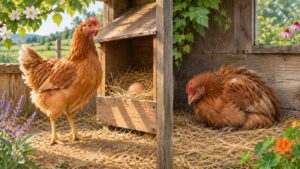
Not every unusual sleeping location is caused by disease or injury. 🥚 A broody hen may remain inside a nesting box for extended periods, while newly introduced or younger chickens may still be learning where they belong at night. Changes in flock membership, housing arrangements, or familiar routines can also temporarily disrupt roosting behavior.
Molting can coincide with changes in activity and comfort, although it should not automatically explain persistent roost refusal. Observe whether the bird is otherwise comfortable, mobile, and behaving consistently with her usual condition. A sudden change in an established adult hen deserves more attention than a young bird learning a new sleeping arrangement.
Seven-Point Roost Refusal Inspection Checklist
Use this checklist during your first inspection and repeat relevant checks if the behavior continues.
| Check | What to Look For |
|---|---|
| ☐ 1. Mobility | Limping, weak jumping, poor balance |
| ☐ 2. Flock behavior | Pecking, chasing, blocked perch access |
| ☐ 3. General health | Hunched posture, low energy, abnormal breathing |
| ☐ 4. Feet and legs | Swelling, wounds, scabs, painful movement |
| ☐ 5. Perch condition | Instability, excessive height, insufficient space |
| ☐ 6. Nighttime environment | Mites, disturbances, drafts, predators |
| ☐ 7. Recent changes | Broodiness, molt, new birds, coop adjustments |
How to Check the Roost Without Disturbing the Flock
🔦 Begin your inspection before the chickens settle for the night, when you can examine the perch without disturbing sleeping birds. Check its stability, available space, landing area, and surrounding surfaces, including cracks where parasites may hide. Make necessary repairs during daylight whenever possible.
Return quietly around dusk to watch how the flock chooses its sleeping positions. Notice whether your hen attempts to climb, gets displaced, or avoids the roost completely despite having access. Observing the decision she makes naturally is usually more informative than repeatedly placing her on the perch.
When Sleeping on the Coop Floor Becomes Concerning
A single night on the floor may reflect temporary disturbance, but repeated avoidance following an established roosting routine deserves investigation. ⚠️ Pay particular attention when the behavior appears suddenly alongside limping, reduced movement, abnormal posture, weight loss, or changes in drinking and egg production. These combinations make a simple perch preference less convincing as an explanation.
Seek prompt veterinary attention for a chicken that cannot stand, experiences severe balance problems, struggles to breathe, has significant injuries, or shows marked abdominal swelling or persistent straining. Do not delay assistance merely because she eats a little when offered food. Normal appetite cannot guarantee that an underlying condition is harmless.
What to Do When Your Hen Keeps Avoiding the Roost
✅ Start with the least disruptive solution supported by your observations, such as securing a loose perch, improving access, or adding another comfortable roosting position. If bullying appears responsible, provide adequate space and monitor interactions rather than immediately removing the affected hen without understanding the situation. Keep the coop bedding clean and dry so a temporarily floor-sleeping chicken is not forced to rest in accumulated droppings.
If mobility problems or other health abnormalities are present, prioritize appropriate veterinary assessment and protect the hen from further injury. 🐔 A temporary low resting area may help a bird with limited mobility, but repeatedly forcing her onto a high perch can create additional risk. Continue observing her daytime activity and nighttime choices while addressing the underlying cause.
Final Thoughts: Watch the Chicken, Not Just the Perch
When a chicken stops roosting but still eats, the most useful first step is to compare her normal movement, social behavior, health, and sleeping environment. One hen avoiding a perch may point toward individual discomfort or bullying, while several birds avoiding it can suggest a shared housing problem. Neither pattern provides a diagnosis, but both can guide your next inspection.
🐔 The goal is not simply to get the chicken back onto the roost—it is to understand why she stopped using it. A safer perch, less competition, or treatment for an underlying problem may eventually restore her normal routine. Careful daily observation helps you respond appropriately without overlooking genuine warning signs.