
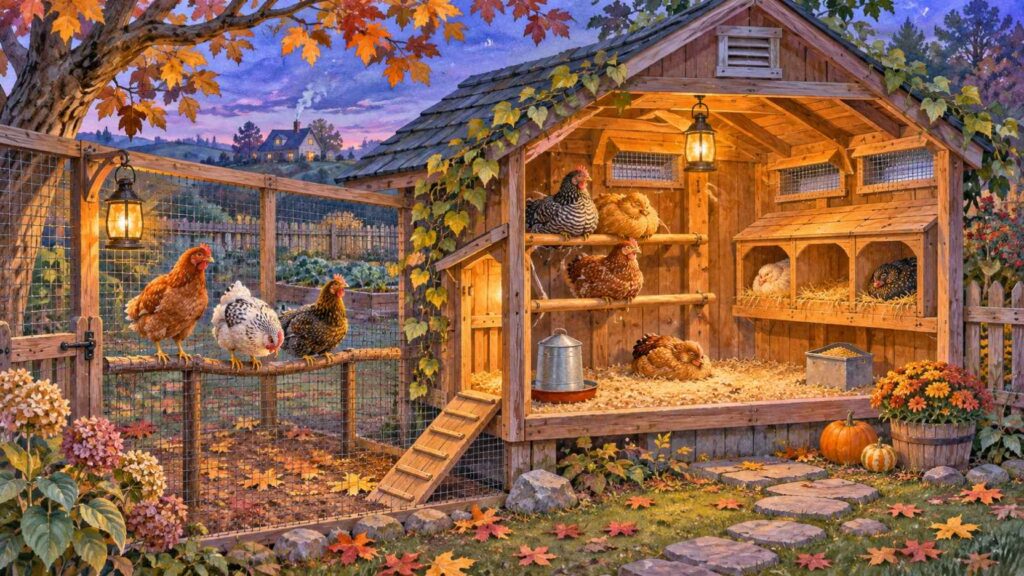
Introduction: Is It Normal for Chickens to Sleep Outside Their Coop?
🐔 Finding your chickens sleeping in the run instead of coop can be confusing, especially when you have already provided a comfortable shelter with nesting boxes, bedding, and roosting bars. Some chickens simply develop a preference for outdoor perches, while others avoid their coop because something inside makes them uncomfortable or unsafe. The challenge is figuring out whether you are dealing with an established habit, a housing problem, or a warning sign that needs immediate attention.
Chickens naturally seek elevated places to rest because roosting is part of their instinctive nighttime behavior. 🌙 However, an enclosed run is not automatically as secure as a properly constructed, predator-resistant sleeping coop, particularly when its roof, fencing, or ground-level barriers have weaknesses. Before repeatedly carrying stubborn hens indoors, investigate these seven possible explanations and make changes that address the behavior’s underlying cause.
1. The Chickens Have Not Learned Their New Sleeping Routine
🐣 Newly purchased chickens, recently relocated hens, and young birds transitioning from a brooder may not immediately recognize their coop as the designated sleeping area. They sometimes settle wherever they happen to be when daylight fades, especially if the outdoor run already contains familiar perches. This behavior can become a routine when chickens repeatedly spend their evenings in the same location without learning to return indoors.
Start by checking whether every chicken can easily locate and enter the coop before sunset. A consistent evening routine, gentle guidance through the entrance, and carefully placing birds on indoor roosts after dusk can help establish the correct sleeping location. Avoid frightening or aggressively chasing them, because stressful handling may make the coop even less appealing.
2. The Outdoor Roost Feels More Appealing
🌳 Chickens often prefer elevated sleeping positions, so a tall outdoor perch may attract them more than a low indoor roost. If the run contains a sturdy branch or high wooden platform while the coop offers only a narrow, unstable bar, the outdoor location may seem more comfortable. The same problem can happen when indoor perches are difficult to reach or positioned awkwardly near walls.
Examine whether the indoor roost provides sufficient width, stability, accessibility, and space for the birds to settle naturally. For many standard laying hens, approximately 9–12 inches of usable perch length per bird is a practical planning allowance, although larger breeds may require more room. 🪵 Position roosts at a safe, accessible height, preferably above nesting boxes, while avoiding excessive elevations that could cause injuries when heavier chickens jump down.
3. Poor Ventilation Makes the Coop Uncomfortable
💨 A chicken coop that looks comfortable from outside may trap moisture, ammonia, dust, and stale air when ventilation is inadequate. Chickens produce moisture through respiration and droppings, making proper airflow especially important in smaller shelters. If the interior smells strongly of ammonia or shows condensation around windows and walls, the birds may be experiencing an uncomfortable environment.
Inspect ventilation openings, roof vents, and airflow paths without assuming that completely sealing the building will keep chickens healthier. Fresh air should circulate while avoiding persistent cold drafts directly across resting birds during colder weather. 🏠 Remove accumulated droppings, replace damp bedding, and improve protected ventilation openings so the coop remains dry, breathable, and secure.
4. Heat, Humidity, or Cold Drafts Are Driving Them Outside
🌡️ Chickens may avoid indoor roosting when the coop becomes excessively hot during warm evenings, especially when roofing materials absorb sunlight throughout the day. High humidity can make poorly ventilated housing particularly uncomfortable, while direct cold drafts may create problems during winter. These environmental conditions differ from ordinary roosting preferences because the birds may be responding to something physically unpleasant.
Check the temperature and humidity inside the coop around the time chickens normally begin settling down. During hot weather, improve shade and ventilation, while colder conditions require dry bedding and protection from direct wind without blocking necessary air exchange. ☀️ Remember that adding insulation, closing every opening, or installing unnecessary heating equipment can introduce other problems rather than fixing the original discomfort.
5. The Coop Is Too Crowded for Comfortable Roosting
🐓 Overcrowding can make nighttime settling difficult because chickens need enough room to enter, move around, and establish comfortable roosting positions. When too many birds compete for limited perch space, some may be pushed toward the floor, nesting boxes, or outdoor sleeping areas. A coop that accommodated young pullets comfortably may become cramped once the flock reaches adult size.
Measure the usable indoor floor area and roosting space rather than relying on the number of chickens advertised on a coop’s packaging. University of Minnesota Extension recommends approximately 3–5 square feet of indoor space per laying hen, although housing arrangements and breed sizes influence practical requirements. 📏 If space is insufficient, consider expanding the sleeping area, adding appropriately positioned perches, or reducing crowding instead of repeatedly forcing displaced birds onto occupied roosts.
6. Bullying or Flock Hierarchy Problems Are Keeping Hens Outside
👀 Chickens establish social hierarchies, and dominant individuals may control preferred sleeping positions or intimidate lower-ranking flock members. A timid hen might approach the coop entrance but retreat after being pecked, chased, or blocked by another bird. This is particularly worth investigating when only one or two chickens remain outside while the rest settle indoors.
Observe the flock during the final hour before sunset to identify repeated aggression or competition near the entrance and roosts. Providing additional properly spaced perches, accessible pathways, and sufficient indoor room may reduce conflict among birds. ❤️ Persistent injuries, severe feather damage, or a chicken repeatedly excluded from food, water, and shelter require more active management and potentially temporary separation.
7. Something Inside the Coop Is Disturbing Them
🔎 Chickens that previously slept indoors but suddenly refuse to enter may be responding to a disturbance. Possible explanations include nighttime predators, rodents, biting mites, unfamiliar noises, or changes in the sleeping environment. Red poultry mites are especially worth checking because they can hide in cracks and around roost fixtures during daylight before feeding on chickens at night.
Inspect perch joints, nesting areas, corners, ventilation openings, and the exterior for evidence of pests or attempted predator entry. 🦝 Look for droppings, damaged wire, disturbed bedding, unusual scratching sounds, or tiny mites around roost connections, and investigate suspicious signs rather than assuming a particular pest is responsible. Repair security weaknesses immediately, and use poultry-appropriate pest-management methods or seek qualified veterinary guidance when parasites are suspected.
Seven-Reason Chicken Roosting Troubleshooting Table
📋 When chickens won’t go into the coop at night, begin by observing the flock before moving equipment or changing their routine. The following table connects common observations with possible explanations and practical corrections. Use it as a starting point, remembering that several problems can occur together.
| What to Observe First | Likely Explanation | What to Check or Change | When to Worry |
|---|---|---|---|
| New birds gather outside | Unfamiliar routine | Guide them indoors consistently | They repeatedly remain exposed overnight |
| Birds choose high run perches | More appealing outdoor roost | Improve indoor perch placement | Unsafe outdoor heights or falls |
| Damp walls or ammonia smell | Poor ventilation | Improve airflow and sanitation | Strong ammonia or persistent moisture |
| Coop feels excessively hot or drafty | Temperature discomfort | Adjust shade, vents, and draft protection | Heat stress or severe cold exposure |
| Birds cannot settle together | Overcrowding | Increase floor and perch space | Injuries or repeated displacement |
| One hen repeatedly retreats | Bullying | Observe dominance and improve access | Persistent attacks or wounds |
| Birds suddenly avoid familiar coop | Predators, mites, or disturbances | Inspect security and hidden pests | Predator evidence or significant infestation |
How to Get Chickens to Roost Inside Again
🌙 The most reliable approach to how to get chickens to roost inside begins with fixing any physical problem before attempting behavior training. Once the coop is comfortable, ventilated, sufficiently spacious, and secure, guide the chickens indoors around dusk using their normal evening routine. Place reluctant birds gently on appropriate indoor roosts when necessary, and repeat consistently while monitoring whether they begin entering independently.
For new birds, a brief period of familiarization inside a safe, adequately ventilated coop may help them associate the building with nighttime shelter. However, never confine chickens in an overheated, overcrowded, poorly ventilated space or deprive them of necessary food and water to establish the habit. 🐔 Avoid using treats as the only solution, because food rewards cannot compensate for bullying, parasites, inadequate ventilation, or unsafe housing.
When Outdoor Sleeping Becomes a Safety Concern
⚠️ Hens sleeping outside coop walls may face additional exposure to predators, rain, wind, and temperature extremes, even when their run appears fully enclosed. Some predators can climb fences, dig beneath barriers, manipulate simple latches, or reach through openings that appear too small to be dangerous. Hardware cloth secured to a sturdy frame, protected roof openings, dependable latches, and barriers against digging are important parts of nighttime protection.
If chickens suddenly begin avoiding the coop, prioritize inspecting it for immediate hazards rather than waiting to see whether the behavior disappears. Missing birds, blood, damaged fencing, predator tracks, severe pest activity, or evidence of respiratory distress require prompt action. 🛡️ A chicken remaining outdoors because it prefers an elevated perch presents a different management problem from one that is frightened, injured, or unable to enter shelter safely.
Conclusion: Make the Coop Comfortable, Accessible, and Secure
🐔 When chickens are sleeping in the run instead of the coop, the solution is rarely as simple as repeatedly putting them back inside. New routines, attractive outdoor perches, ventilation problems, uncomfortable temperatures, crowding, bullying, and nighttime disturbances can all influence where a flock chooses to rest. Understanding which factor applies helps you make targeted improvements instead of guessing.
Start with nighttime security, then evaluate the coop’s environment, roosting arrangements, social dynamics, and evening routine. 🌙 Keep observing how the chickens respond after each correction, because comfortable and predictable sleeping conditions encourage better habits over time. The goal is not merely to make chickens enter the coop, but to provide a shelter they can use comfortably and safely every night.




