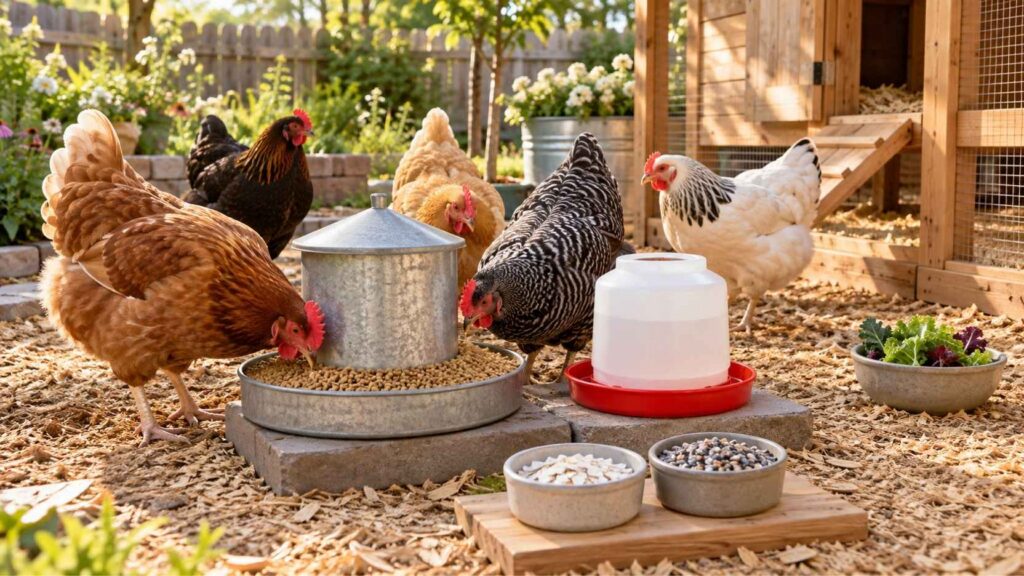
A bag of commercial layer feed can look almost suspiciously simple when the internet is filled with chicken keepers offering herbs, sunflower seeds, mealworms, probiotics, vitamins, kitchen scraps, oils, and homemade grain mixtures. 🐔 For a beginner who wants healthy hens and good eggs, buying more products can easily feel like being a more responsible chicken keeper. In reality, a properly formulated complete layer ration is designed to provide the major nutrients a laying hen needs in the correct proportions, which is why adding more ingredients is not automatically an improvement.
The simplest feeding hierarchy is also one of the safest: complete layer feed first, unlimited clean water second, an appropriate calcium strategy when needed, and treats or additions last. That does not mean every supplement is useless, nor does it mean every backyard flock should be managed identically. 🌾 It means supplements should solve an identifiable need instead of becoming a collection of “healthy-looking” ingredients that slowly replaces the balanced ration your hens were supposed to eat.
Why Plain Layer Feed Can Look Too Simple
Humans naturally associate dietary variety with good nutrition, so a bowl containing pellets or crumbles every day may look boring compared with colorful vegetables, seeds, herbs, insects, and grains. Chickens also become extremely enthusiastic when they see favorite treats, reinforcing the impression that those foods must somehow be better than ordinary feed. 🌻 But enthusiasm is not nutritional evidence, and a hen choosing mealworms before pellets is similar to a person choosing dessert before dinner.
Commercial poultry nutrition works differently from assembling an attractive snack tray because the ration has already been formulated around protein, energy, amino acids, vitamins, minerals, calcium, phosphorus, and other nutritional requirements. Mississippi State Extension describes poultry feeds as “complete” because they are intended to contain the nutrients required for growth, egg production, and health in appropriate proportions. Therefore, the plain appearance of layer feed is not evidence that something important is missing.
What “Complete Feed” Actually Means
A complete layer feed is intended to serve as the primary diet for chickens that have reached the appropriate laying stage, rather than acting as merely one ingredient in a homemade mixture. Layer formulations differ from starter and grower feeds because an actively laying hen has different nutritional demands, particularly for calcium used in eggshell production. 🥚 This is also why chicks and growing pullets should receive feeds formulated for their life stage rather than simply sharing a high-calcium layer ration because adult hens eat it.
The important word is complete, because its nutritional balance assumes that the birds actually consume enough of the formulated feed. If hens fill themselves with large quantities of scratch grain, bread, corn, seeds, or table scraps, they may consume less of the ration containing the carefully balanced nutrients. Mississippi State Extension specifically cautions that adding substantial amounts of other ingredients can disturb the balance of an otherwise complete poultry feed.
The Daily Foundation: Feed + Fresh Water
For an ordinary flock of laying hens, your daily nutritional foundation does not need to resemble a supplement cabinet. Keep an appropriate complete layer ration available consistently, protect it from moisture and contamination, and use feeders that minimize scratching and waste. 🌾 Healthy laying hens normally regulate their own feed consumption reasonably well when a suitable complete ration is continuously available rather than being unnecessarily restricted.
Just as important is constant access to fresh, clean water, because feed and water intake are closely connected and egg production requires substantial water. 💧 A hen that cannot drink normally will not maintain ordinary feed consumption and production simply because her feeder contains premium food. Penn State recommends maintaining a constant fresh-water supply alongside a complete ration appropriate for the bird’s stage of production.
Does Your Flock Need Separate Oyster Shell?
A quality commercial layer ration already contains considerably more calcium than feed intended for growing birds because laying hens continually deposit calcium into eggshells. Some Extension guidance therefore notes that hens receiving a nutritionally complete layer ration may not require additional oyster shell under normal circumstances. 🦪 Other poultry-management guidance recommends offering oyster shell or another suitable calcium source free-choice, particularly because individual laying hens can have different calcium requirements.
For backyard keepers, offering oyster shell separately can be a practical calcium strategy because hens that want additional calcium can consume it without forcing every bird to eat extra calcium mixed into its regular ration. This becomes especially useful in certain flock-management situations, but calcium should not become the automatic explanation for every strange egg or production change. Persistent thin shells deserve a wider look at diet, flock age, heat stress, health, feed consumption, and overall management, rather than endlessly pouring supplements into the feeder.
Where Grit Fits—and Why Grit Is Not Calcium
Oyster shell and grit perform completely different jobs, even though both may look like containers of small stones beside the feed bin. Oyster shell is primarily offered as a calcium source for laying hens, while insoluble poultry grit consists of hard particles retained in the muscular gizzard to help physically grind foods chickens cannot chew. 🪨 Feeding grit does not correct a calcium shortage, and supplying oyster shell is not a substitute for appropriate grinding material when grit is needed.
Hens eating only appropriately manufactured complete pellets or crumbles may have little need for supplemental insoluble grit because those feeds have already been processed, while chickens eating whole grains, fibrous treats, vegetation, or other coarse foods may benefit from access to appropriately sized grit. Free-ranging birds may find small stones naturally, but availability varies considerably by soil and environment. The important lesson is to provide grit because of what the birds are eating, not because every container labeled “chicken supplement” belongs beside every coop.
Treats, Seeds, Herbs, And Scraps Are Extras
There is nothing inherently wrong with occasionally giving chickens suitable vegetables, seeds, insects, or other safe treats, and enrichment can encourage natural pecking and scratching behavior. 🥬 The problem begins when extras become so frequent or generous that they displace a meaningful amount of the balanced layer ration. A chicken with a crop full of treats may appear extremely well fed while consuming less of the protein, minerals, vitamins, and other nutrients supplied by her complete feed.
The same principle applies to expensive herb mixtures, dried flowers, mealworms, probiotics, oils, and fashionable chicken supplements. Some products may have legitimate uses in particular circumstances, but “natural,” “high protein,” or “vitamin-rich” does not automatically mean necessary for a healthy hen already consuming an adequate complete ration. Treat these foods as additions with a purpose rather than mandatory ingredients required to transform ordinary feed into acceptable nutrition.
When Adding Extras Can Dilute The Balanced Ration
Imagine a complete ration as a recipe that has already been measured into the intended proportions. If you keep adding handfuls of corn, scratch grains, sunflower seeds, mealworms, bread, and scraps without adjusting anything else, you are no longer feeding the original nutritional formula. ⚖️ Even individually nutritious foods can reduce dietary balance when they replace too much of what the formulated ration was designed to provide.
This explains why “more nutrition” can paradoxically produce less balanced nutrition. Extension guidance specifically warns against using significant additional grain or other feedstuffs alongside complete poultry feeds because chickens may reduce consumption of the formulated ration. The goal is therefore not to eliminate every treat but to make sure the boring-looking layer feed remains the unmistakable nutritional foundation.
Observe First: Shell Quality, Body Condition, Appetite, And Waste
Your chickens themselves provide useful management information when you pay attention to trends rather than obsessing over one unusual egg. Watch whether hens maintain reasonable body condition, approach feed normally, drink consistently, produce shells of generally normal strength, and leave ordinary amounts of feed rather than scattering large quantities onto the ground. 👀 Also check whether dominant birds prevent others from reaching feeders, because a nutritionally perfect ration cannot help a hen that consistently gets pushed away from it.
Feed waste deserves attention because disappearing feed does not always mean chickens consumed it. Hens may bill feed onto the floor, rodents or wild birds may steal it, and poorly positioned feeders can create substantial waste. Raising feeders to an appropriate height, keeping feed dry, and providing enough feeder access can often improve nutrition without purchasing a single supplement.
When To Worry
One soft-shelled egg, temporary laying slowdown, or picky afternoon does not automatically mean the diet has failed. Egg production naturally changes with factors such as age, molt, day length, temperature, stress, and broodiness, while occasional unusual eggs can occur even in otherwise healthy hens. 🥚 Nutrition matters, but not every flock problem should be diagnosed as a missing vitamin or mineral.
Pay closer attention when you see persistent abnormal shells, sustained appetite changes, unexplained weight loss or gain, prolonged production changes, weakness, unusual droppings, lethargy, breathing problems, or multiple birds developing similar symptoms. Those situations deserve investigation rather than randomly adding several supplements at once, because illness, parasites, environmental problems, feed spoilage, or another management issue may be involved. When symptoms are persistent or significant, appropriate poultry or veterinary guidance is more useful than experimenting with the supplement shelf.
Daily Laying-Hen Feeding Pyramid
| Level | What Comes First | Practical Rule |
|---|---|---|
| 1 — Foundation 🌾 | Complete layer ration | Make this the primary food for actively laying hens. |
| 2 — Essential 💧 | Fresh, clean water | Keep it continuously available and check it every day. |
| 3 — As Appropriate 🦪 | Free-choice calcium | Oyster shell can provide additional calcium where appropriate. |
| 4 — Diet Dependent 🪨 | Insoluble grit | Useful when birds consume foods requiring gizzard grinding. |
| 5 — Extras 🥬 | Treats, seeds, scraps | Keep them secondary so they do not replace balanced feed. |
| 6 — Purpose Specific 🧴 | Other supplements | Use when there is a genuine reason, not simply because they are marketed for chickens. |
The pyramid reverses a common beginner instinct: instead of asking “What else should I add?”, start by asking whether the foundation is already correct. A suitable complete ration, reliable clean water, sensible calcium management, and appropriate grit cover most ordinary feeding decisions before herbs, powders, oils, or specialized supplements ever enter the conversation. ✅ Simpler feeding can actually make flock management easier because changes in appetite, eggshell quality, body condition, and feed consumption become easier to recognize.
Simple “Feed This First” Daily Checklist
A healthy daily routine can be surprisingly uncomplicated: confirm that the correct complete feed is available, the feeder is dry and functioning, every bird can reach it, clean water is available, and any separate calcium or grit station remains clean and accessible. Then observe how much feed is disappearing, whether excessive quantities are being wasted, and whether your chickens look and behave normally. 🐓 Only after those basics are working should treats or optional extras become part of the day’s feeding decisions.
So, is layer feed enough for laying hens? For most actively laying backyard hens, an appropriate commercial complete layer ration is designed to be the nutritional foundation, with clean water essential and calcium or grit managed according to the birds and feeding system rather than blindly added to everything. The best feeding program is rarely the one with the most ingredients—it is the one that keeps balanced nutrition first, observes the flock carefully, and adds something only when there is a sensible reason to add it. 🌾