Starting a backyard chicken flock is exciting, but choosing your first birds can be surprisingly confusing. Should you buy tiny day-old chicks? Would 16-week-old pullets be easier? Or should you skip the growing stage entirely and buy mature hens?
There is no single answer for every beginner. The right choice depends on what you want from your flock, how much time you have, your budget, your housing setup, and whether you actually want to raise baby chickens.
A simple decision tree can make the choice much easier.
Step 1: Do You Want to Raise Baby Chicks?
Start with the most important question:
Do you actually want the experience of raising baby chicks?
If the answer is yes, chicks may be a good fit.
Day-old chicks allow you to experience the entire process from the beginning. You can watch them grow from tiny, fluffy birds into young pullets and eventually adult hens.
For many families, that is part of the appeal of keeping chickens.
However, raising chicks requires additional equipment and attention. You will need a brooder, a suitable heat source, bedding, chick starter feed, feeders, waterers, and a safe environment.
You will also need to monitor the chicks closely during their early weeks.
If you are excited about that process, chicks can be rewarding.
If your reaction is, “I really don’t want to manage a brooder,” move to the next question.
Step 2: Do You Want Eggs Soon?
If fresh eggs are your primary goal, age becomes an important consideration.
Day-old chicks need several months of growth before they reach laying age. The exact timing varies by breed and individual bird, so you should not expect a specific first-egg date.
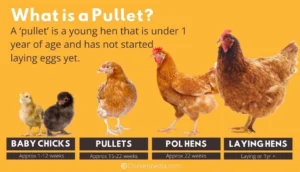
Started pullets are much closer to maturity.
A pullet around 16 weeks old, for example, may be approaching the laying stage, although she may still need time before producing her first egg.
Mature laying hens can potentially provide eggs much sooner because they have already reached reproductive maturity.
Your choices can therefore be thought of this way:
Chicks: longest wait.
Young pullets: shorter wait.
Laying hens: potentially the quickest route to eggs.
If you are willing to wait and want to experience the entire growing process, chicks remain an option. If waiting several months for eggs is not appealing, consider pullets or mature hens.
Step 3: Do You Have a Brooder Setup?
The next question is practical:
Do you already have a brooder setup?
If you do, raising chicks becomes easier because you already have some of the necessary equipment.
If you do not, you need to purchase or build a suitable brooding area before the chicks arrive.
A brooder needs to provide warmth, protection, appropriate bedding, food, water, and enough space for growing chicks. It should also be easy to clean and designed to reduce hazards.
The brooder stage is temporary, but it is an important part of raising chicks.
If you are starting from scratch and do not want to invest in this equipment, started pullets can simplify the process.
With a fully feathered pullet, you generally do not need the same supplemental heating arrangement used for young chicks.
However, you still need a safe coop, appropriate feed, clean water, and predator protection.
Step 4: Are You Comfortable Managing Young Birds?
Chicks require more hands-on attention than mature chickens.
During their early development, you need to monitor their environment, make sure they have constant access to food and water, clean bedding when necessary, and watch for signs of problems.
You also need to increase their available space as they grow.
For an experienced chicken keeper, these tasks may feel routine.
For a beginner, they can seem like a lot to learn at once.
If you enjoy hands-on animal care and want to learn the process, chicks may be a good choice.
If you prefer a simpler beginning, started pullets can eliminate much of the early-stage management.
The Decision Tree at a Glance
Here is a simple way to think about your decision:
Do you want to raise baby chicks?
→ Yes: Consider chicks.
→ No: Continue.
Do you want eggs relatively soon?
→ Yes: Consider started pullets or laying hens.
→ No: Continue.
Do you have a brooder and want to use it?
→ Yes: Chicks are an option.
→ No: Consider pullets or hens.
Are you comfortable managing young birds for several months?
→ Yes: Chicks or younger pullets may work.
→ No: Started pullets may be easier.
Do you want eggs immediately or as soon as practical?
→ Consider mature laying hens, while carefully checking age and health.
This simple process can eliminate many unnecessary choices.
What If Your Priority Is the Lowest Starting Cost?
Many beginners begin with one question:
“Which chickens are cheapest?”
Day-old chicks often have the lowest purchase price. But the purchase price does not represent your total cost.
You may need a brooder, heat source, bedding, chick feed, equipment, and electricity.
You will also be feeding the birds for months before they begin laying.
Therefore, if your goal is simply to save money, compare the total cost rather than the price of the bird itself.
If you already have brooding equipment, chicks may make more financial sense.
If you have no equipment and do not want to buy it, the higher purchase price of a started pullet may be easier to justify.
What If You Want Eggs as Soon as Possible?
If your main goal is fresh eggs, you probably do not want to start with day-old chicks unless you are comfortable waiting.
A mature laying hen may already be producing eggs.
However, do not buy an adult hen based solely on the promise of immediate production. Ask about the bird’s age, breed, health, and laying history when that information is available.
A younger started pullet provides another option. You are still buying a young bird, but you have already skipped the chick stage.
Keep in mind that even a pullet close to laying age is not guaranteed to start laying immediately.
What If You Don’t Want a Brooder?
This is one of the strongest reasons to consider started pullets.
A brooder can be useful, but it adds another temporary chicken-management system to your setup.
You have to establish it, monitor it, clean it, maintain appropriate conditions, and eventually transition the birds out of it.
If your goal is straightforward backyard chicken keeping, you may prefer to skip this stage.
A started pullet can arrive ready for normal chicken housing, provided she is appropriately acclimated and your coop and run are ready.
For many beginners, this makes the first chicken-keeping experience less complicated.
What If You Want to Raise Chickens From Day One?
On the other hand, some people specifically want the chick experience.
Maybe you want to watch the birds grow. Maybe you want children to learn about animal development. Maybe you enjoy the hands-on aspect of raising young animals.
In that situation, buying pullets simply because they are easier may defeat part of the purpose.
Chicks offer an opportunity to observe development at every stage.
You will need to be prepared, though. Do not buy chicks first and figure out the brooder later.
Prepare the brooder, feed, water, bedding, and permanent housing before the birds arrive.
What About Families With Children?
Chicks can be particularly interesting for families because children can observe rapid changes as the birds grow.
But young children should always be supervised around poultry.
Chicken care should be treated as an opportunity to learn responsibility, not as a reason for children to handle birds without adult guidance.
If your family wants the full experience of raising chicks, starting with day-old birds can be meaningful.
If you simply want children to interact with an established backyard flock, older pullets or hens may require less intensive management.
Don’t Forget Local Rules
Before purchasing any chickens, check your local rules.
Chicken-keeping regulations can vary between municipalities, counties, and other jurisdictions. Some locations may limit the number of birds, regulate coop placement, or have restrictions involving roosters.
This matters regardless of whether you buy chicks, pullets, or hens.
There is little point in choosing your ideal flock size before confirming that you are allowed to keep that number of birds.
Your Personal Chicken-Buying Profile
You can also make the decision by identifying which statement sounds most like you.
“I want the cheapest bird possible.”
Look at chicks, but calculate the full cost of brooding and raising them.
“I want eggs without waiting several months.”
Consider mature laying hens or started pullets.
“I don’t want to deal with a brooder.”
Started pullets may be a practical choice.
“I want to experience raising chickens from day one.”
Chicks are the obvious starting point.
“I want a balance between young birds and less work.”
Consider started pullets.
“I want an established flock right away.”
Mature hens may fit your goal, provided you carefully evaluate their age and health.
Final Decision: Match the Bird to Your Goal
Choosing your first chickens is not really about finding one universally “best” option.
It is about matching the bird to the experience you want.
Choose chicks if you want to raise chickens from the beginning and are prepared for brooding.
Choose pullets if you want younger birds but would rather skip the most demanding chick stage.
Choose mature hens if your priority is an established flock and potentially getting eggs sooner.
For many beginners, the most useful question is not “Which chicken should I buy?” but:
“How much work do I want to do before my chickens become part of my normal backyard routine?”
Once you answer that question, the decision between chicks, pullets, and hens becomes much simpler.