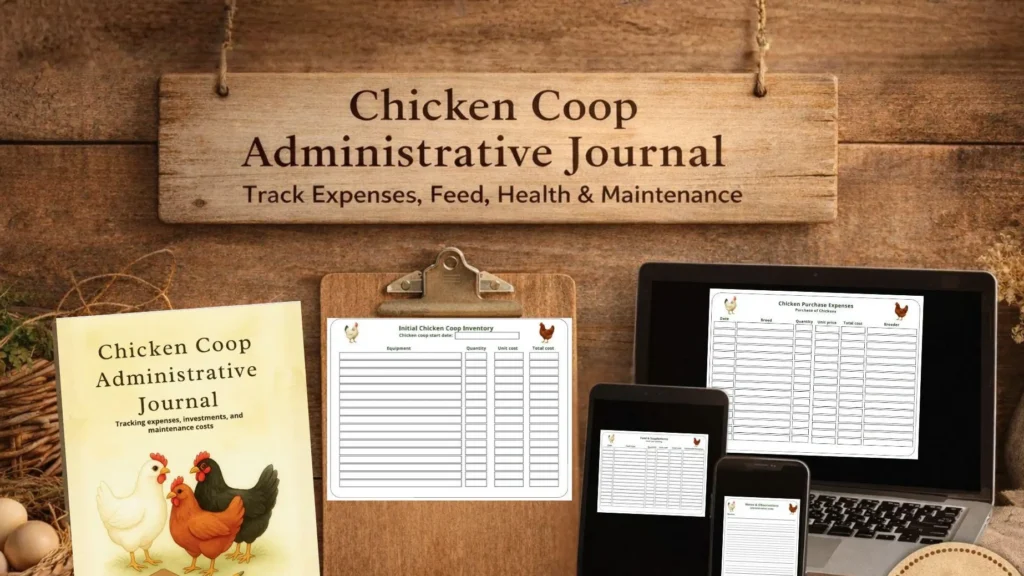
Before bringing chickens home, one of the most useful things you can do is create a realistic first-year budget.
It is easy to underestimate the cost of backyard chickens because the birds themselves may seem inexpensive. A few chicks might cost only a small amount, but the complete setup can include a coop, fencing, feeders, waterers, feed, bedding, predator protection, and emergency care.
The first year is especially important because you are paying for both startup infrastructure and ongoing flock expenses.
This guide provides a simple backyard chicken budget template you can copy into a notebook or spreadsheet. The goal is to help you calculate your expected first-year cost and, eventually, your approximate cost per dozen eggs.
Step 1: Start With Your Number of Chickens
The first number in your budget is the flock size.
Write down:
Number of chickens: ______
For example, you might plan to start with six hens.
Flock size affects almost every other part of the budget.
More chickens generally require more feed, more bedding, more space, and potentially larger housing. A larger flock may also produce more eggs, but it will not necessarily make your operation cheaper.
Starting with the number of birds you can realistically house and care for is more important than choosing a number based solely on expected egg production.
Also check local rules before purchasing chickens. Depending on where you live, there may be restrictions involving flock size, roosters, coop placement, setbacks, or other requirements.
Step 2: Calculate One-Time Costs
Your first category should be One-Time Costs.
These are expenses primarily associated with establishing your flock.
Use this template:
| One-Time Expense | Estimated Cost |
|---|---|
| Chickens or pullets | $_____ |
| Chicken coop | $_____ |
| Chicken run | $_____ |
| Fencing | $_____ |
| Predator protection | $_____ |
| Feeder | $_____ |
| Waterer | $_____ |
| Nesting boxes | $_____ |
| Brooder equipment | $_____ |
| Feed storage | $_____ |
| Initial bedding | $_____ |
| Initial feed | $_____ |
| Grit/calcium supplies | $_____ |
| Cleaning supplies | $_____ |
| Other | $_____ |
| Total Startup Cost | $_____ |
Not every household will need every category.
For example, if you buy started pullets rather than day-old chicks, you may not need a full brooder setup.
If you build your own coop, your coop cost may be much lower than the price of a commercial model.
The important thing is to use your actual expected prices rather than generic numbers whenever possible.
Step 3: Calculate Your Monthly Costs
Once your flock is established, you will have recurring expenses.
The most important is usually feed.
A simple monthly budget template looks like this:
| Monthly Expense | Estimated Cost |
|---|---|
| Chicken feed | $_____ |
| Bedding | $_____ |
| Grit | $_____ |
| Oyster shell/calcium | $_____ |
| Treats | $_____ |
| Cleaning supplies | $_____ |
| Maintenance | $_____ |
| Other | $_____ |
| Total Monthly Cost | $_____ |
Your monthly costs will vary throughout the year.
You might spend more on bedding during certain seasons. You might purchase maintenance supplies only occasionally.
That is why it can be useful to calculate an average monthly cost rather than expecting the same bill every month.
Step 4: Calculate Feed Cost From Your Local Price
Feed is one of the easiest costs to calculate if you know your local price.
First determine the price per pound.
For example, suppose a 50-pound bag costs $30.
The calculation is:
$30 ÷ 50 = $0.60 per pound
Now estimate your flock’s monthly consumption.
For planning purposes, suppose six adult hens consume approximately 45 pounds per month.
Then:
45 × $0.60 = $27
Your estimated monthly feed cost would be approximately $27 under this example.
Your actual consumption can vary based on the birds, weather, feed waste, age, breed, and management system.
The best method is to track your real feed purchases once your flock is established and update your spreadsheet.
Step 5: Calculate Annual Operating Costs
Once you know your monthly operating cost, multiply it by twelve.
The formula is:
Annual Operating Cost = Monthly Operating Cost × 12
For example, if your average monthly chicken expenses are $60:
$60 × 12 = $720
Your estimated annual operating cost would be $720.
However, you may also have expenses that do not occur every month.
This is where an Annual Costs section becomes useful.
| Annual Expense | Estimated Cost |
|---|---|
| Equipment replacement | $_____ |
| Veterinary care | $_____ |
| Seasonal supplies | $_____ |
| Coop repairs | $_____ |
| Replacement birds | $_____ |
| Other annual expenses | $_____ |
| Total Annual Costs | $_____ |
Do not automatically add these expenses to your monthly budget if they are already included there. The purpose of this section is to capture expenses that would otherwise be forgotten.
Step 6: Create an Emergency Reserve
Chickens are living animals, so a realistic budget should include an emergency reserve.
You might need unexpected money for:
- An injured bird
- Illness
- Veterinary care
- Emergency repairs
- Damaged fencing
- Replacement equipment
- Unexpected weather-related problems
Create a separate category:
Emergency Reserve: $________
This money does not necessarily represent money you expect to spend.
It is money you are deliberately setting aside so that an unexpected event does not completely disrupt your household budget.
Keeping the emergency reserve separate from your normal operating costs also makes your calculations easier to understand.
Step 7: Calculate Your First-Year Cost
Now you can combine the numbers.
The basic formula is:
First-Year Cost = Startup Costs + 12 Months of Operating Costs + Annual Costs + Emergency Reserve
For example, imagine your hypothetical budget looks like this:
Startup Costs: $800
Monthly Operating Costs: $55
Annual Costs: $150
Emergency Reserve: $200
First calculate your twelve months of operating expenses:
$55 × 12 = $660
Then:
$800 + $660 + $150 + $200 = $1,810
Your estimated first-year chicken budget would therefore be:
$1,810
This number may look much larger than the price of the chickens themselves.
That is normal.
The first year includes the infrastructure required to establish the flock.
Step 8: Separate First-Year Cost From Ongoing Cost
This is one of the most important ideas in backyard chicken budgeting.
Your first-year cost and your ongoing annual cost are not the same thing.
Suppose you spend $800 on a coop, run, equipment, and chickens during the first year.
You generally will not buy all of those things again the following year.
Your second-year budget might therefore look more like:
Feed + bedding + supplements + maintenance + medical reserve + occasional replacement costs
This means the financial picture can change after the initial setup.
For long-term planning, create two numbers:
First-Year Cost: $_____
Estimated Annual Ongoing Cost: $_____
This prevents you from assuming that every year’s expenses will be identical to the first year’s expenses.
Step 9: Calculate Your Egg Production
Now comes the part many new chicken keepers are curious about: the cost of your eggs.
First estimate the total number of eggs your flock produces.
For example:
Number of hens: 6
Estimated eggs per hen per year: 250
Then:
6 × 250 = 1,500 eggs
Convert eggs into dozens:
1,500 ÷ 12 = 125 dozen
This is only a planning estimate. Actual production varies with breed, age, season, nutrition, daylight, health, and individual birds.
Avoid building your financial plan around a perfect production scenario.
A conservative estimate is usually more useful.
Step 10: Calculate Your Cost Per Dozen Eggs
Once you have your annual costs and estimated egg production, you can calculate cost per dozen.
The basic formula is:
Cost Per Dozen = Annual Chicken Costs ÷ Dozens of Eggs Produced
Suppose your annual operating costs are $700 and your flock produces 125 dozen eggs.
Then:
$700 ÷ 125 = $5.60 per dozen
That would be your approximate ongoing production cost per dozen under this example.
But if you include the entire first-year investment of $1,810:
$1,810 ÷ 125 = $14.48 per dozen
That creates a very different result.
This is why it is useful to calculate both:
First-Year Cost Per Dozen
and
Ongoing Cost Per Dozen
Step 11: Compare With Your Local Egg Price
Finally, enter the price you actually pay for eggs.
Write:
Local supermarket egg price per dozen: $_____
Then compare it with your calculated backyard egg cost.
Do not assume that backyard eggs will automatically be cheaper.
During the first year, startup infrastructure can make home-produced eggs significantly more expensive.
Even after the initial investment, feed and other recurring expenses remain.
The comparison is simply a financial reference point. It does not account for the personal value you may place on freshness, animal keeping, gardening, food production, or the enjoyment of having chickens.
Your Complete Backyard Chicken Budget Template
Here is the entire process in one place:
Flock Information
Number of chickens: ______
Estimated eggs per hen per year: ______
Estimated annual eggs: ______
Estimated annual dozens: ______
One-Time Costs
Coop: $______
Run/fencing: $______
Chickens: $______
Equipment: $______
Predator protection: $______
Brooder: $______
Initial feed/bedding: $______
Other: $______
Total Startup Cost: $______
Monthly Costs
Feed: $______
Bedding: $______
Supplements: $______
Treats: $______
Maintenance: $______
Other: $______
Total Monthly Cost: $______
Annual Costs
Monthly Cost × 12: $______
Veterinary/medical: $______
Repairs: $______
Seasonal supplies: $______
Replacement birds/equipment: $______
Total Annual Operating Cost: $______
Emergency Reserve
Emergency Fund: $______
Final Calculation
First-Year Cost = Startup + Annual Operating + Emergency Reserve
First-Year Cost: $______
First-Year Cost Per Dozen: $______
Ongoing Annual Cost: $______
Ongoing Cost Per Dozen: $______
Local Store Egg Price: $______
Final Thoughts
A backyard chicken budget does not need to be complicated.
The key is separating the expenses into five categories:
One-Time Costs → Monthly Costs → Annual Costs → Emergency Reserve → Egg Cost
Once you enter your actual chicken price, coop cost, local feed price, flock size, and expected egg production, you can build a much more realistic picture of what your flock will cost.
Most importantly, don’t use the price of a chicken as your definition of the cost of keeping chickens.
The real question is:
How much will it cost to establish, feed, house, maintain, and care for the entire flock for one year?
Calculate that number before buying the birds, and you will have a much clearer financial picture from the very beginning.