If you are thinking about raising chickens in your backyard, one of the first questions you will probably ask is, “How many chickens can I legally keep?”
Unfortunately, there is no single answer for every American homeowner.
Backyard chicken limits are generally determined by local regulations, and those rules can vary significantly between cities, counties, zoning districts, and property sizes. One community might allow a small flock on a typical residential lot, while another may calculate the maximum number of birds based on acreage.
This is why a friend’s backyard flock is not necessarily a reliable guide to what you can legally keep.
Before ordering chicks, it is worth understanding how local flock limits work and what terms such as per lot, per household, per acre, and lot-size-based limits actually mean.
What Does “Per Lot” Mean?
A rule described as a limit “per lot” generally connects the maximum number of chickens to a particular parcel of land.
For example, an ordinance could establish a maximum number of hens that may be kept on a residential lot. In this situation, the limit is associated with the property rather than simply with the number of people living in the home.
This distinction can matter when several people live at the same address.
If a regulation says a certain number of chickens are permitted per lot, adding another household member does not necessarily increase the allowable flock size.
It can also matter when someone owns multiple parcels. Multiple properties may not automatically be treated as one property, but the exact legal treatment depends on the local ordinance.
Always read the definition section of the applicable code. Terms such as “lot,” “parcel,” “premises,” and “property” may have specific legal meanings.
What Does “Per Household” Mean?
A “per household” restriction focuses on the residence or household rather than simply the physical parcel.
This type of rule can prevent residents from increasing their flock simply because multiple families or individuals live at the same address.
For example, if an ordinance establishes a maximum number of chickens per household, the limit may apply collectively to the residents rather than giving each individual their own allowance.
This is particularly important in situations involving:
- Multiple adults in one home
- Rental properties
- Accessory dwelling units
- Shared properties
- Multiple families living on one parcel
Again, the wording matters. “Per household” and “per lot” are not interchangeable terms.
Lot-Size-Based Chicken Limits
Some communities use the size of the property to determine how many chickens are allowed.
This approach recognizes that a large residential parcel may have more available space for an appropriate coop and enclosure than a small urban lot.
A local regulation might establish different flock limits for different property-size categories.
For example, the rule could distinguish between smaller residential lots and larger parcels, with different maximum numbers for each category.
This means that simply searching for “how many chickens are allowed in [city]” may not be enough.
You may need to determine your actual lot size first.
If your property is close to a regulatory threshold, do not guess. Check the official property or zoning records and then compare the measurement with the current ordinance.
What Does “Per Acre” Mean?
Acreage-based regulations calculate poultry limits according to the amount of land available.
An acre is 43,560 square feet, but you should not automatically assume that owning an acre means you can keep a particular number of chickens.
The relevant regulation may specify a formula, minimum acreage, or other conditions.
For example, a rule could establish a certain number of animals per acre, but the calculation may also be affected by zoning, setbacks, sanitation requirements, or whether the property is considered agricultural or residential.
This is why acreage alone does not determine legality.
A one-acre property inside a city can potentially be subject to very different rules from a one-acre property in an agricultural area outside city limits.
Portland Shows Why Local Rules Matter
Portland, Oregon, provides a useful example of why there is no simple nationwide answer.
Portland’s municipal code includes specific regulations concerning keeping chickens and other fowl, including provisions tied to residential properties and lot size.
Rather than assuming that every Portland property has exactly the same conditions, homeowners need to consult the current local code and determine how the rules apply to their particular property.
The broader lesson is more important than the specific Portland rule: city chicken regulations can use detailed property-based requirements rather than one simple national standard.
Rules can also be amended, so an article, forum comment, or social media post from several years ago may not accurately describe today’s requirements.
Why “My Neighbor Has Eight Chickens” Proves Nothing
Imagine that your neighbor keeps eight hens and has never received a complaint.
You might conclude that eight chickens must be legal in your neighborhood.
That conclusion could be wrong.
Your neighbor may have:
- A larger lot
- A different zoning classification
- An older permit
- A grandfathered situation
- Different HOA rules
- A legally established agricultural use
- A different interpretation of the applicable ordinance
They may also simply be exceeding the local limit without enforcement having occurred.
Legal permission and lack of enforcement are not the same thing.
When planning your own flock, use current government regulations rather than another homeowner’s setup as your benchmark.
Does the Number Include Chicks?
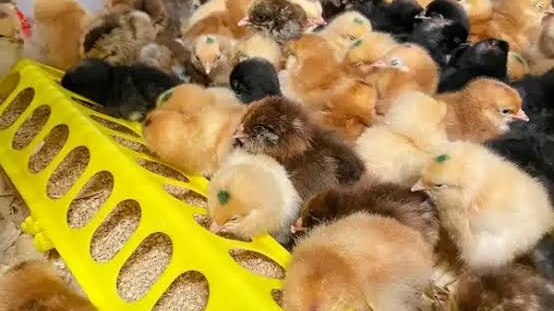
Another question beginners often overlook is whether young chicks count toward the maximum.
Suppose a local rule allows a certain number of chickens. You purchase several chicks intending to keep only the females once they mature.
Depending on the wording of the local regulation, those chicks may still fall under the applicable poultry limit.
The same issue can arise when people temporarily keep extra birds for breeding, raising replacements, or separating sick chickens.
If you are planning a growing flock, determine how the ordinance defines the regulated animals.
What About Roosters?
Flock limits are only part of the calculation.
A local government may establish one maximum number for hens while separately regulating roosters.
In some communities, roosters may be prohibited in certain residential zones even when hens are permitted.
This means that a statement such as “you can have six chickens” may not tell you whether six hens, five hens plus one rooster, or another combination is legal.
Always check whether the ordinance distinguishes between sexes or types of poultry.
HOA Rules Can Reduce Your Options
Government rules are not necessarily the only restrictions you need to consider.
If you live in an HOA community, review the association’s governing documents before purchasing chickens.
An HOA may impose restrictions concerning animals, livestock, noise, structures, or nuisance conditions.
For example, local law might permit a certain number of hens while private community rules impose additional restrictions.
This creates two separate questions:
Does local government law allow the chickens?
Does the HOA allow them under its governing documents?
You may need a “yes” to both.
How to Calculate Your Practical Flock Size
Even when the law allows a certain number of chickens, the legal maximum is not necessarily the ideal flock size for your backyard.
You also need enough space for the coop, run, feeding area, waste management, predator protection, and required setbacks.
A property might legally accommodate a certain number of birds but become difficult to manage at the maximum.
Consider your available space, time, budget, neighborhood environment, and ability to maintain clean and secure housing.
Legal capacity and practical capacity are two different things.
A Simple Research Process
Before purchasing your flock, follow these steps:
1. Identify your jurisdiction.
Determine whether your property falls within city limits or an unincorporated county area.
2. Confirm your zoning classification.
Residential zoning can have different rules from agricultural zoning.
3. Find the current poultry ordinance.
Use an official municipal or county website whenever possible.
4. Check the flock calculation.
Look specifically for “per lot,” “per household,” “per acre,” or lot-size-based language.
5. Check rooster restrictions.
6. Check setback requirements.
7. Review HOA documents if applicable.
8. Contact the appropriate local department if anything is unclear.
Keep a copy of the current rule or written response for your records.
Final Thoughts
There is no universal American backyard chicken limit.
The number of chickens you can legally keep may depend on your city, county, zoning district, lot size, acreage, household, and private community restrictions. Terms such as per lot, per household, per acre, and lot-size-based limit can produce very different results.
That is why searching for a single number—such as “How many chickens can I have in America?”—is usually the wrong approach.
Instead, start with your own property.
Find your jurisdiction, identify the applicable zoning rules, read the current poultry ordinance, and confirm exactly how the flock limit is calculated. Then check rooster, setback, coop, permit, and HOA requirements.
The goal is not simply to find the largest flock your property might legally hold. It is to understand the rules well enough to choose a flock size that works legally, practically, and responsibly for your backyard.